Formal garden design and ideas
Formal garden design means laying a garden out on a plan you can read at a glance: a centre line from the house, paths and beds mirrored either side of it, and clipped evergreen hedges and shapes that hold the pattern all year.
Design my garden
First 3 designs free · No card
Real formal garden ideas
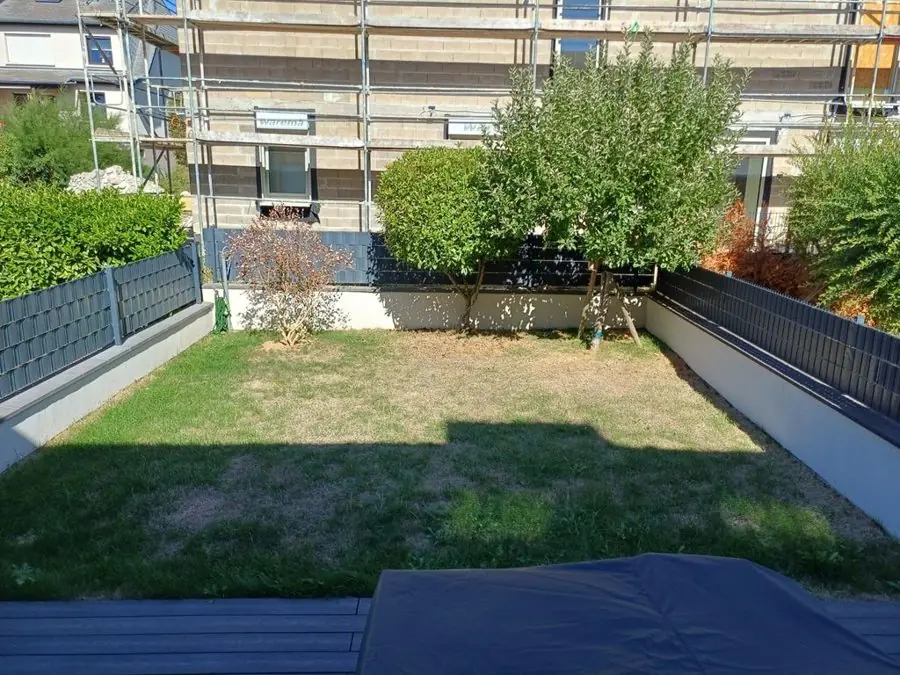
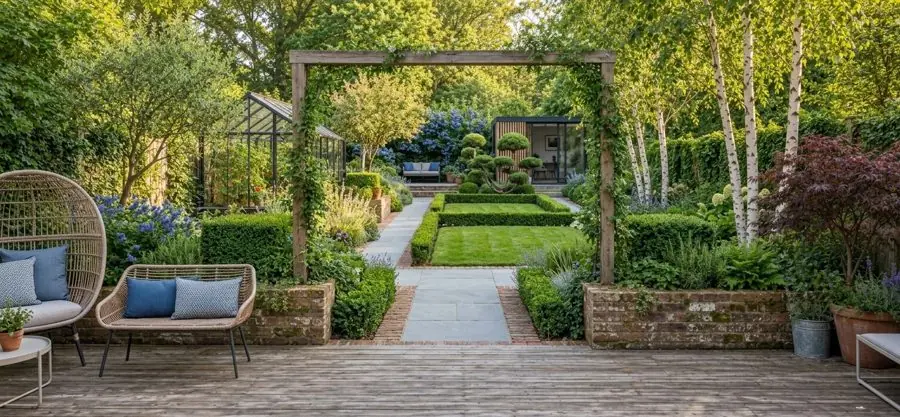
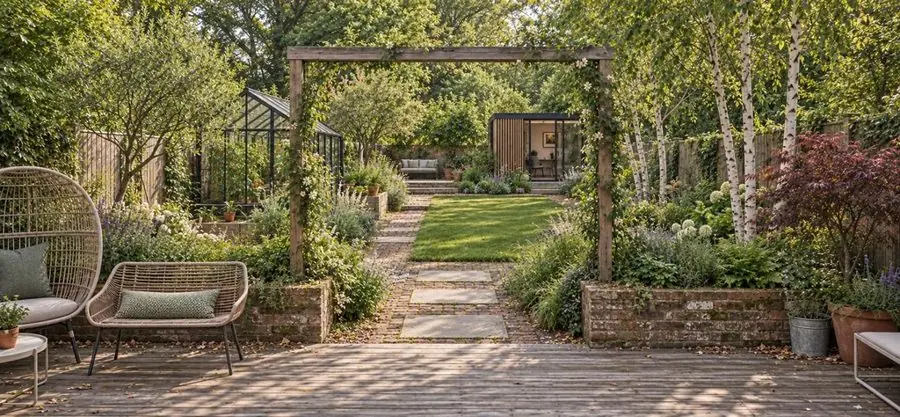
Formal garden images from real gardens redesigned with the app, from a simple formal garden design round a fountain to a parterre of box squares. Tap Before to see how each started, or Get this garden to try the look on yours.
Formal garden layout ideas
Layouts built on straight lines and clipped edges: box squares, a stone fountain, a pergola lawn and straight paths. 6 gardens
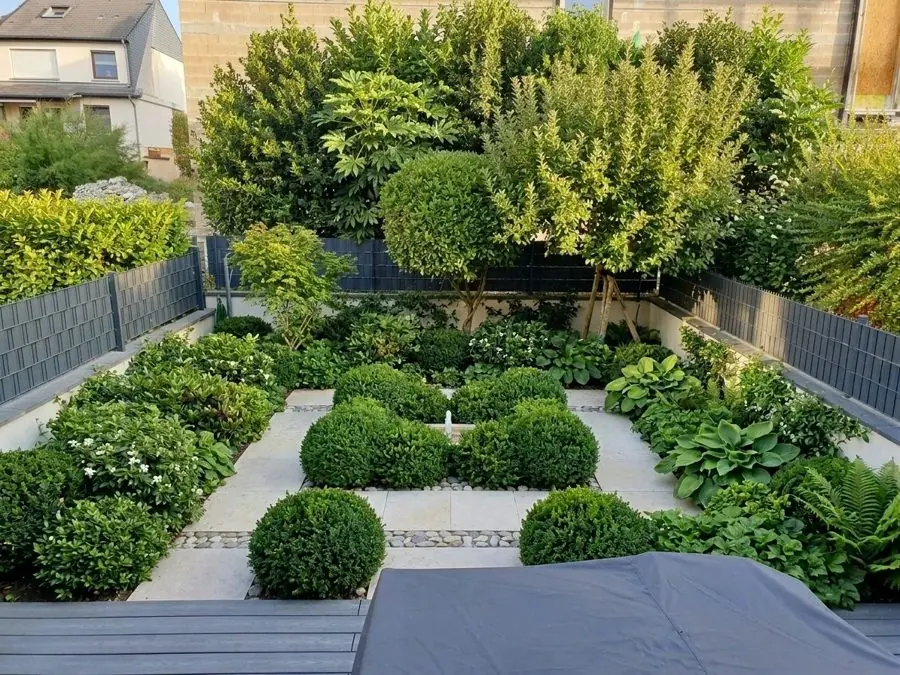
Box squares round a paved centre
Get this garden →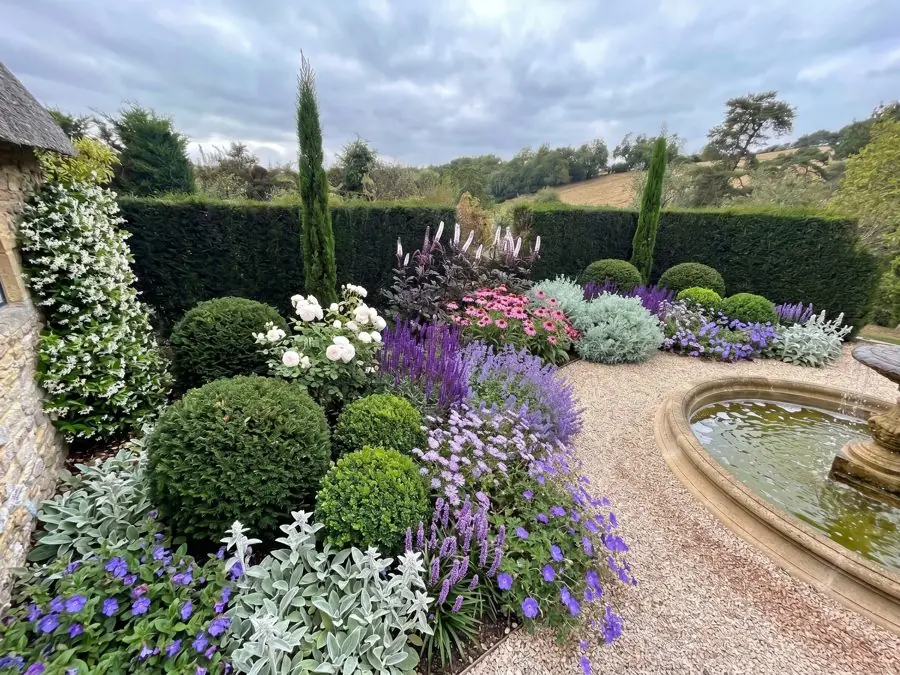
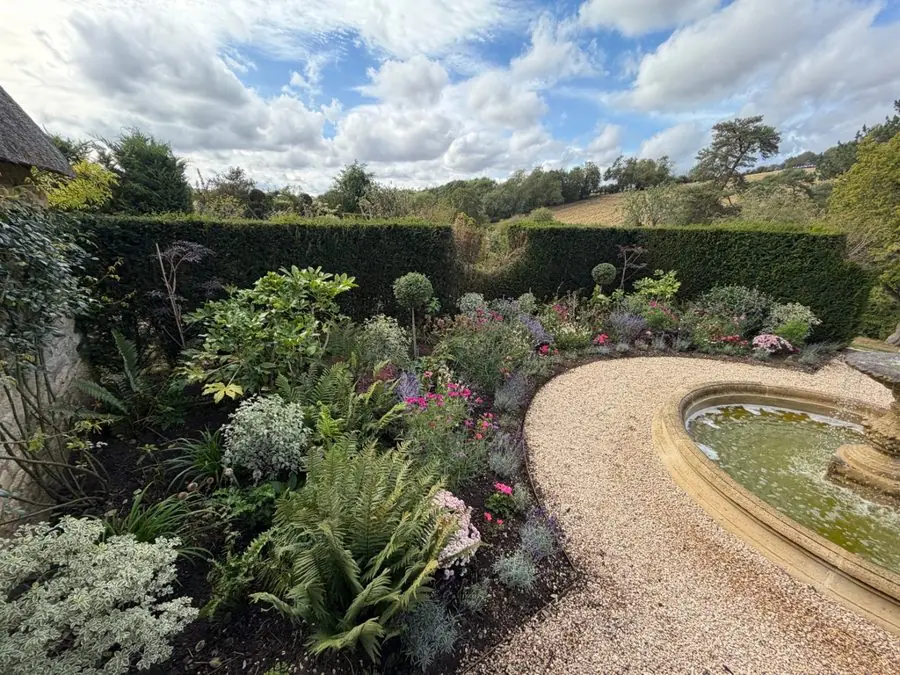
Clipped balls and cypresses beside a stone fountain
Get this garden →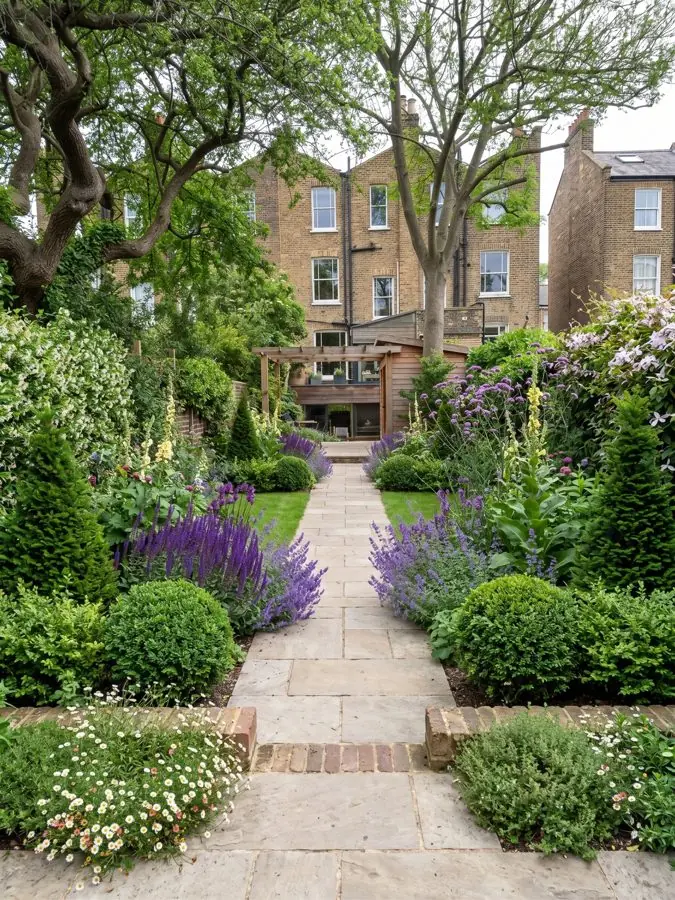
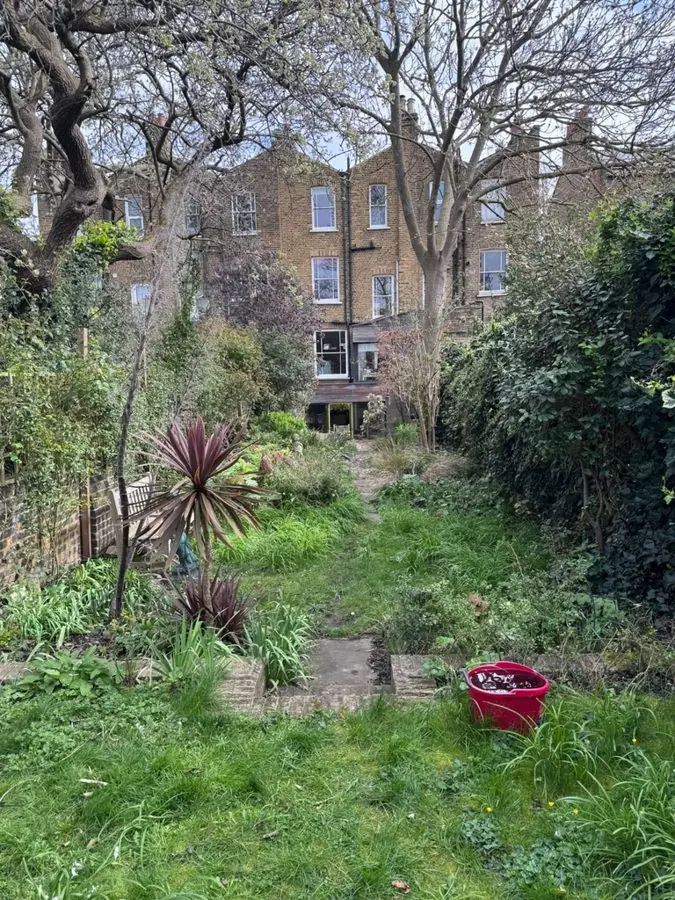
A long town garden with a straight stone path between clipped box balls and lavender
Get this garden →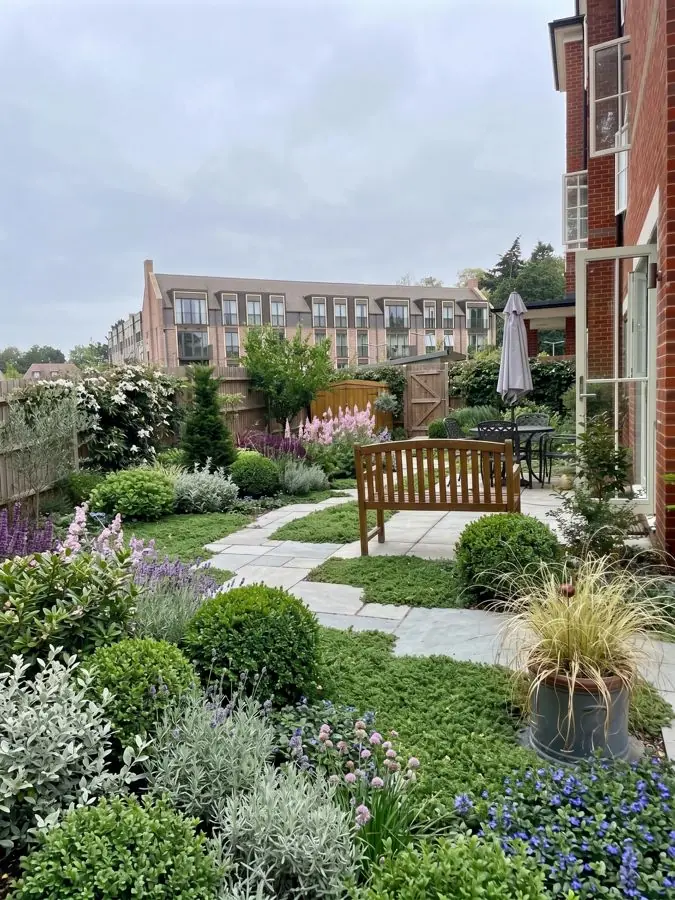
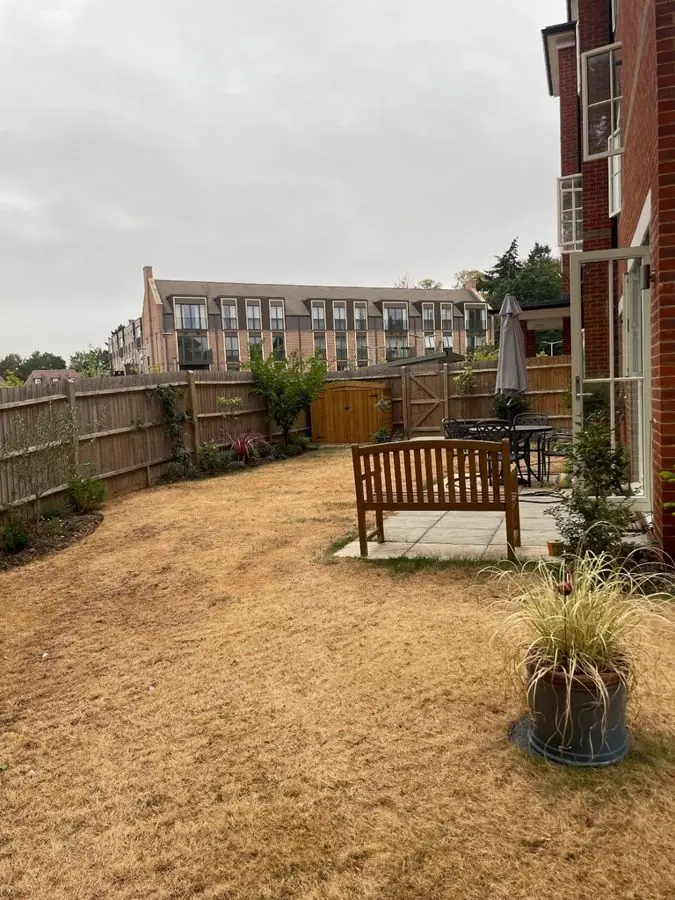
Paths and clipped evergreens by the house
Get this garden →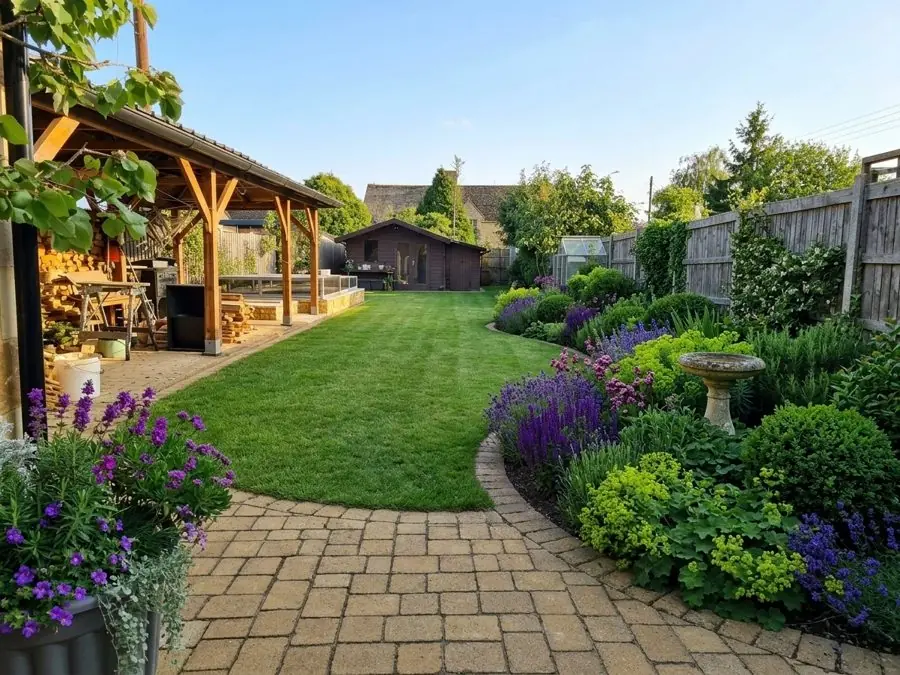
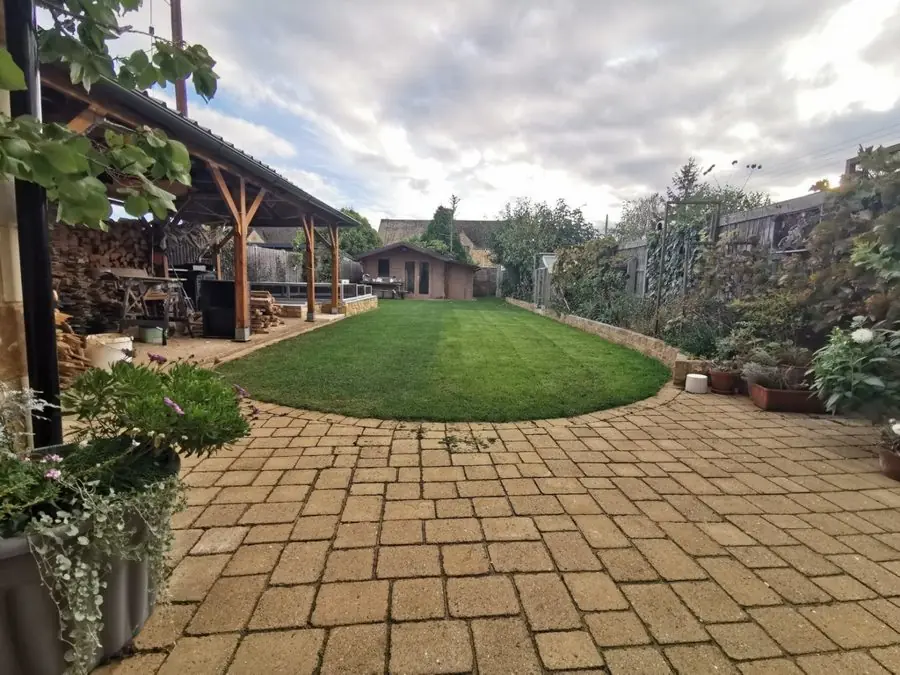
Block paving round an oval lawn, edged with lavender, lady's mantle and clipped balls
Get this garden →Formal planting ideas
Formal planting of clipped balls, standard bays and cloud pruned shrubs, with lavender, salvias and roses between them. 5 gardens
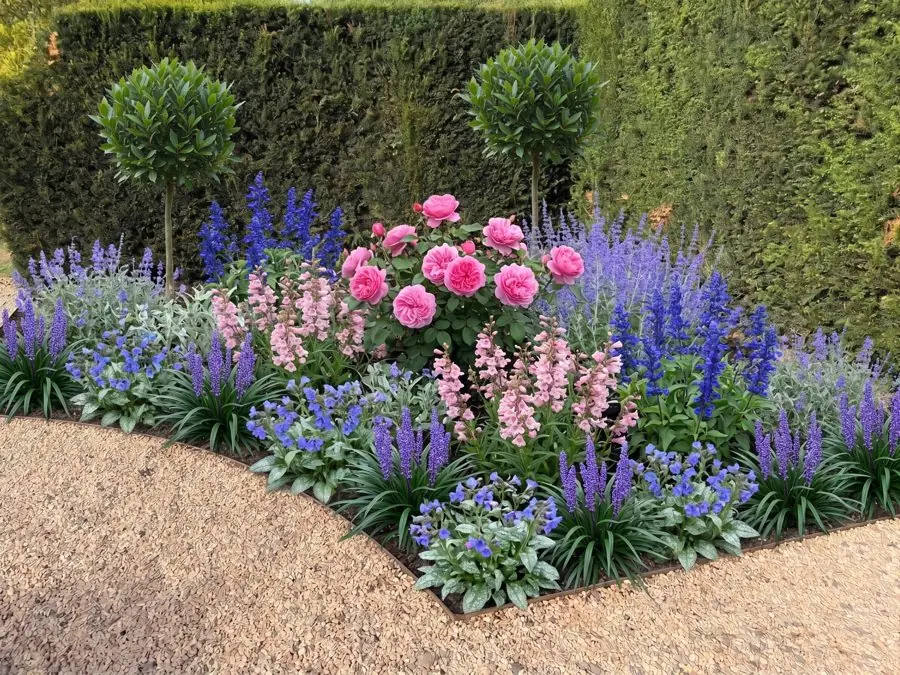
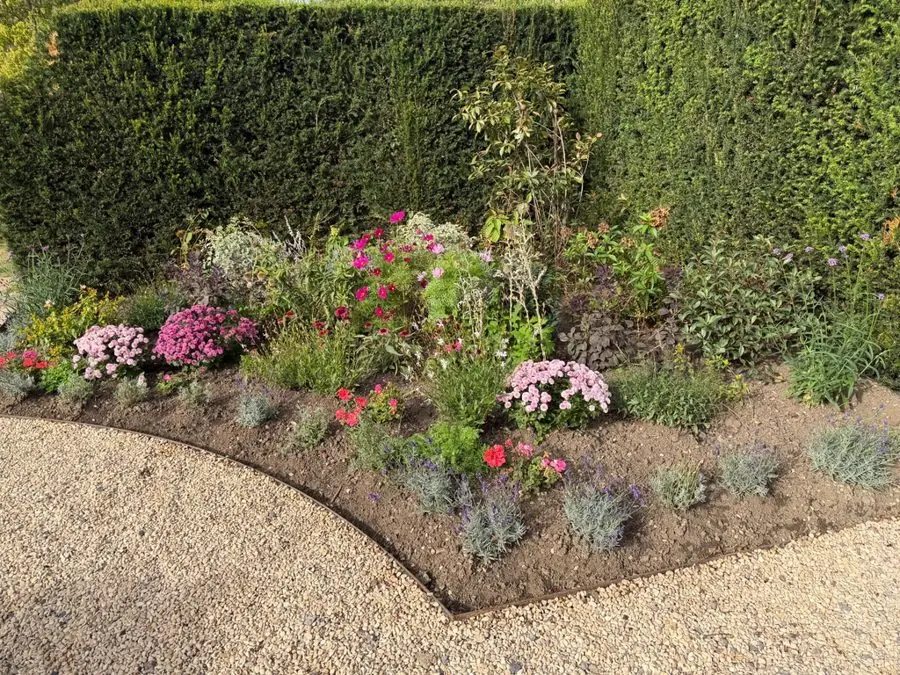
A pair of standard bays behind a border of salvias and roses
Get this garden →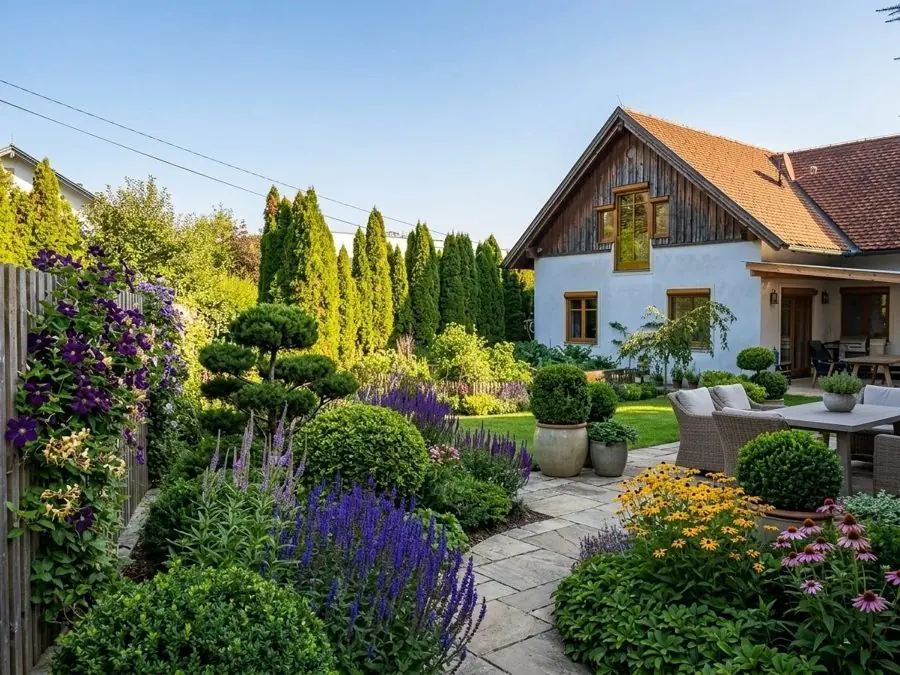
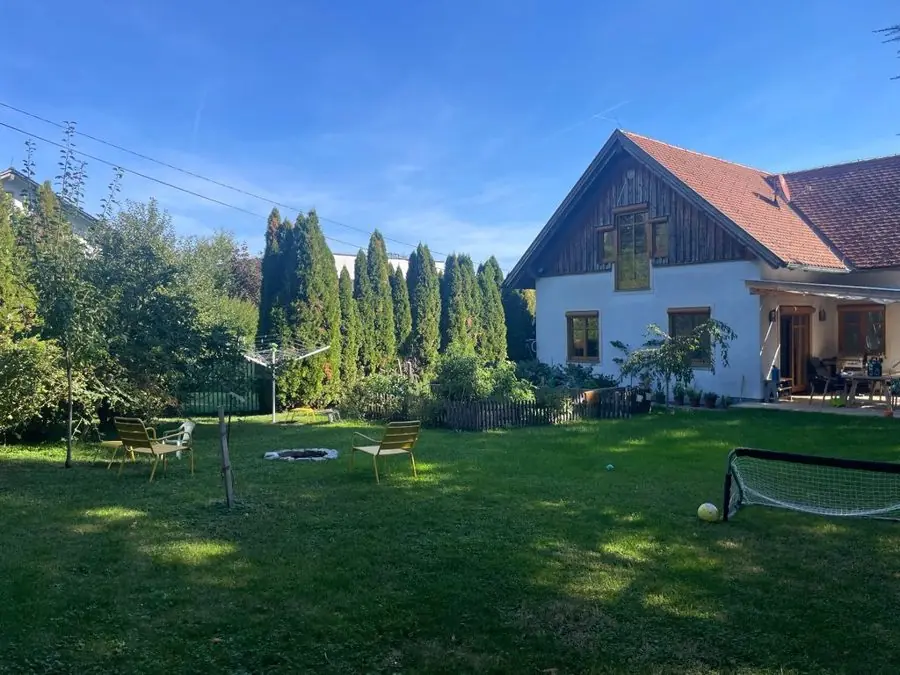
Cloud pruned shrubs and lavender
Get this garden →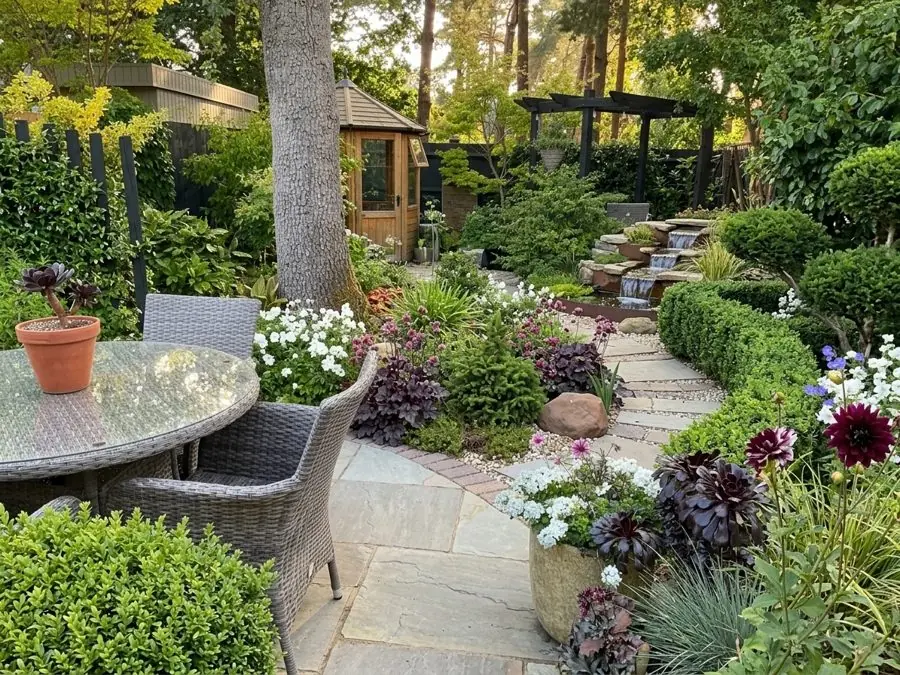
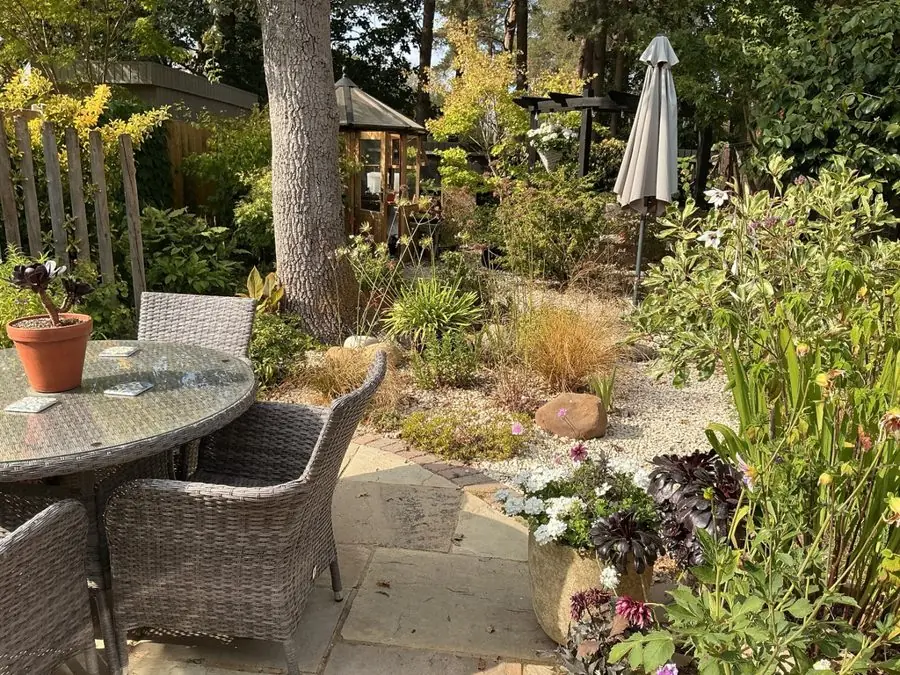
Clipped box and a stone path up to a small water cascade under a pine
Get this garden →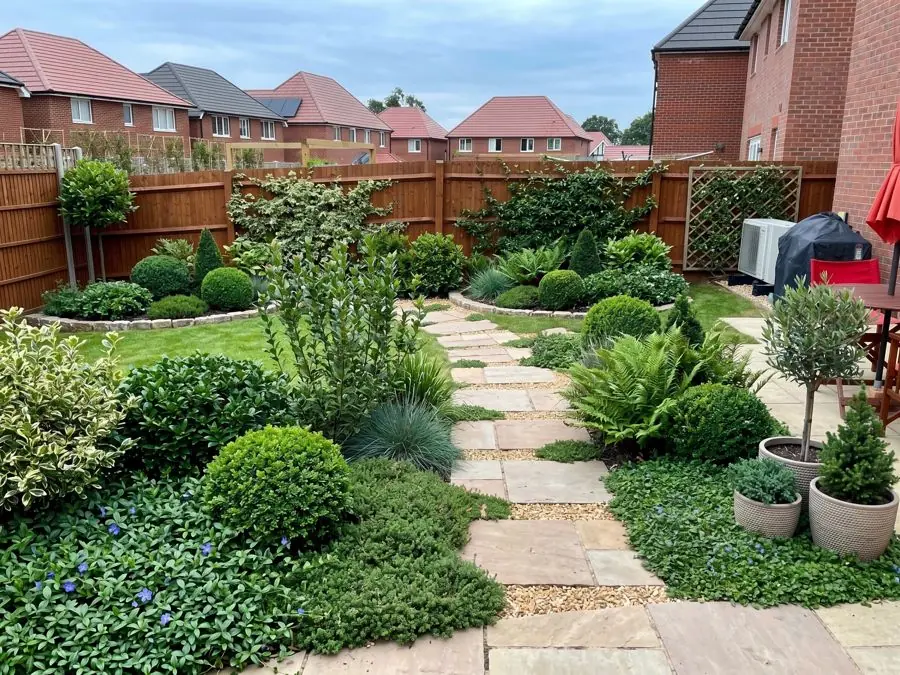
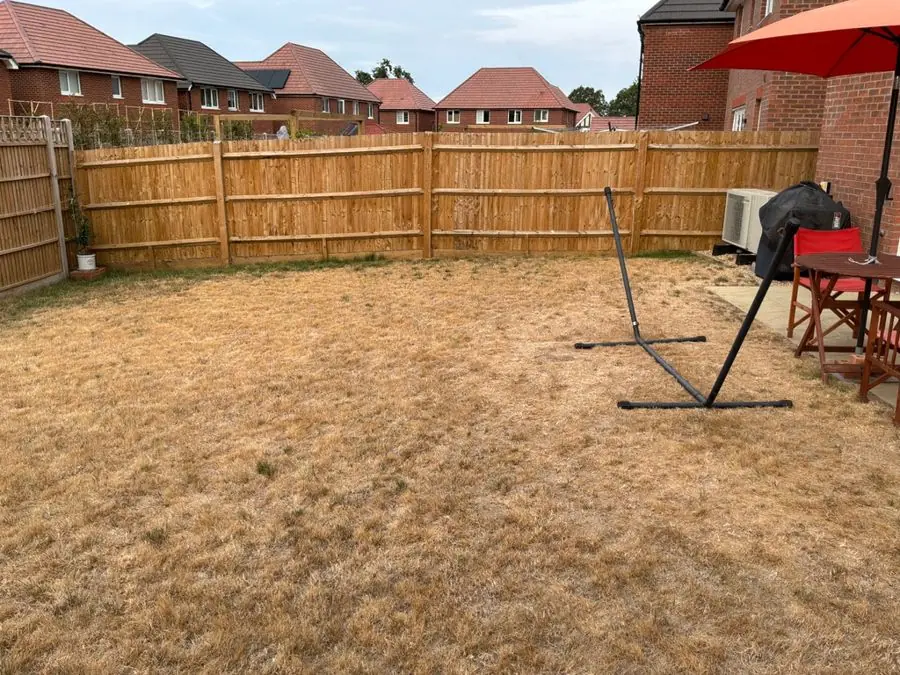
Clipped balls and a stone path
Get this garden →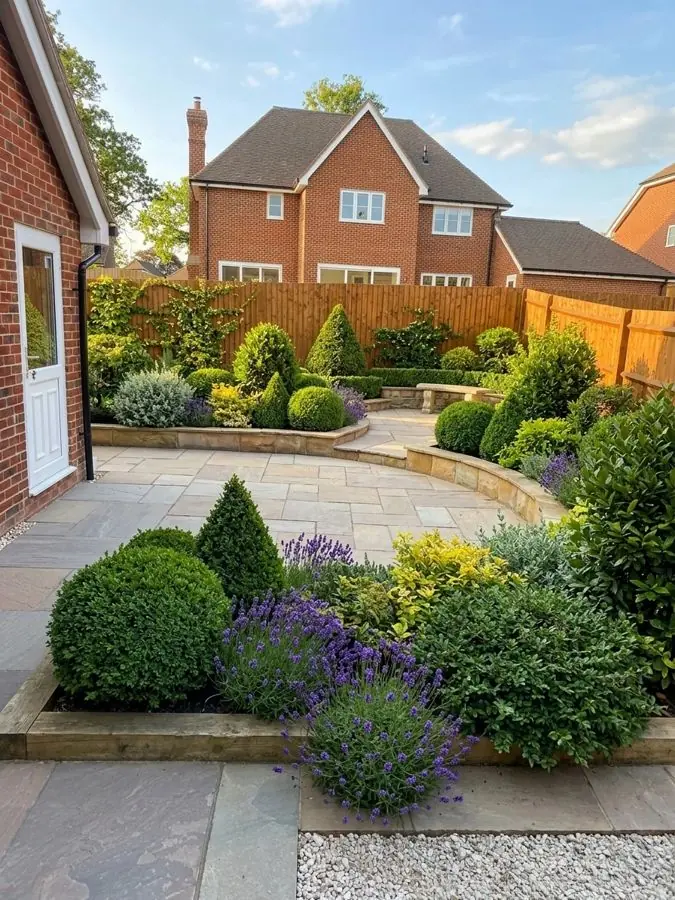
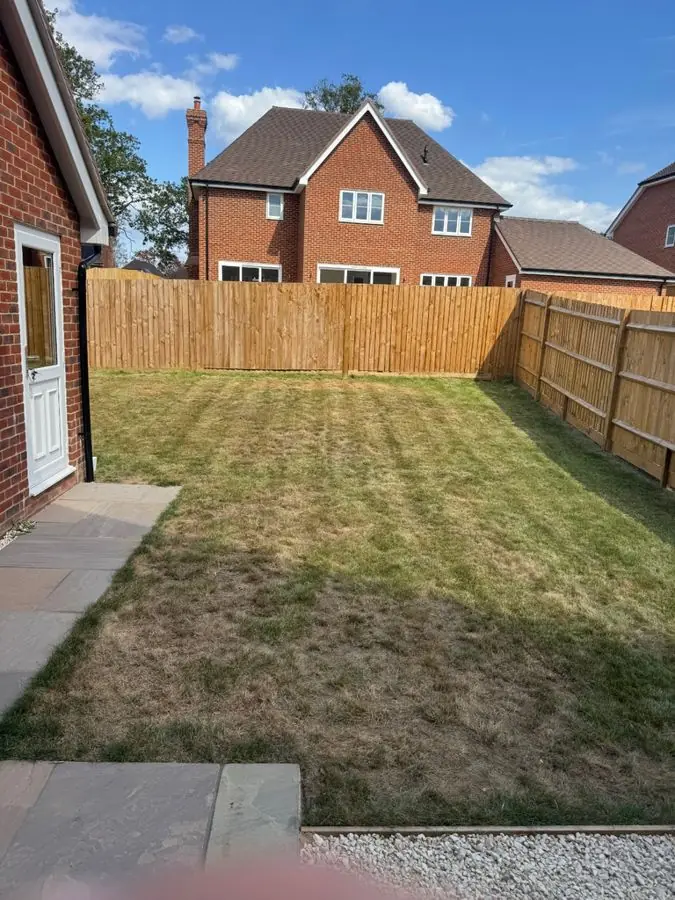
Curved patio with clipped evergreens
Get this garden →How to design a formal garden
The few ideas behind every garden above, and how to plan a formal garden of your own from them.
What makes a formal garden
A formal garden is ordered rather than loose. The paths run straight or in a clear geometry, the two sides mirror each other, and low hedges and clipped shapes give it a structure that looks the same in January as in June. Planting sits inside that frame, a few plants repeated, so the garden looks calm rather than busy.
Formal garden plans and layouts
Most formal garden plans start from one line: the view from the back door or the main window. Run a path down it, put something worth looking at on the end, a seat, an urn or a fountain, and mirror the beds either side. Even a square of lawn edged with low hedges is a formal garden plan in its own right.
Parterres and knot gardens
A parterre is a pattern of beds edged with low hedges, often box squares round a paved or gravel centre, filled with flowers or more clipped shapes. A knot garden is its older, more intricate cousin, with the hedge lines woven over and under each other. Both are made to be seen from above, from an upstairs window or a terrace.
Small formal garden ideas
Formality suits a small garden, because a clear plan makes a small space look deliberate. Keep to one centre line, set a matching pair of pots or standard bays either side of it, and keep the hedges low, below knee height, so the garden never feels boxed in.
See it on your own garden first
Garden Design App designs your garden from a photo. It reads a picture of your garden, keeps the house, fences and trees exactly where they are, and redesigns it in the formal style with plants you could genuinely grow.
From an idea to a plan you can plant
When one of the designs clicks, the Pro and Max plans turn it into a planting plan: every plant named, how big each grows and where each goes, with a month by month flowering calendar and the evergreen structure that keeps a formal garden looking good in winter.
12 formal garden plants
The clipped evergreens that make the structure, and the few flowering plants repeated inside it.
- Box or a box alternative
- Yew
- Hornbeam
- Bay
- Holly
- Portuguese laurel
- Lavender
- Roses
- Alliums
- Salvias
- Catmint
- Hydrangeas
More formal garden ideas

Grey slabs in straight lines between deep planting are the look of our modern garden ideas.

Clipped balls and cones round a gravel terrace: our evergreen structure plants guide names the hedges and shapes that keep a garden in shape through winter.

A lawn and a concrete path become a circular lawn in deep borders, with a flagstone path, in our cottage garden plan makeover.
Formal garden design questions
What is a formal garden style?
A garden laid out on straight lines or a clear geometry, usually mirrored about a centre line, held together by clipped evergreen hedges and shapes, with planting kept to a few plants repeated. It is the most structured garden design there is.
How do I design a formal garden?
Find the centre line, usually the view from the back door, and lay the paths and beds out evenly either side of it. Edge the beds with low clipped hedges, put something to look at on the end of the line, a seat, a pot or a fountain, and repeat a few plants inside the beds.
What is a knot garden?
A pattern of low clipped hedges, traditionally box, laid out so the lines seem to weave over and under each other like a knot, with herbs, flowers or gravel between them. Knot gardens were at their height in Tudor England and were made to be looked down on from the house.
What plants are used in a formal garden?
Clipped evergreens make the structure: box or a box alternative, yew, hornbeam, bay, holly and Portuguese laurel. Inside them go a few flowering plants repeated, such as lavender, roses, alliums, salvias and catmint, often in white, blue and green.
Can I see a formal garden on my own garden?
Yes. Add a photo of your garden, choose the formal and clipped style, and see it redesigned in about a minute. Your house, fences and trees stay.
Are the plants real, and can I buy them?
Yes. With the Pro and Max plans every design names its plants: garden centre favourites and RHS Award of Garden Merit winners, chosen by a professional gardener, with how big each grows and where each goes.
Is it free?
Your first 3 designs are free, with no card needed. The Pro plan is £29 and the Max plan is £49, paid once, with nothing to cancel.
Can I try more than one formal garden idea?
Yes. Make different designs and compare them on your own garden. Your first 3 are free, and Pro, one payment of £29, gives you 20 designs over 14 days, two at a time, so you can see several looks side by side.
Why does my redesign look like high summer?
We show your garden at its peak, in full flower, so you can see how full it can look. It is an artist's impression: your real garden changes through the seasons. Every paid design comes with a flowering calendar, so you know what flowers each month, and evergreen shapes help it look good in winter.
Give your garden a clipped, formal shape.
Try any of these formal garden ideas on your own garden in about a minute. Your first 3 designs are free.
Design my garden