
How we can help
How can you transform your garden to look like the Charleston garden?
Vanessa Bell and Duncan Grant spent decades filling Roger Fry’s frame with flowers good enough to paint. With Garden Design App, you add a photo of your garden, choose the Cottage style with All colours, and ask for the Charleston touches you love: a straight gravel path, cotton lavender round the lawn, hollyhocks by the fence and dahlias for autumn. In just one minute you see your garden redesigned in a painter’s cottage look inspired by Charleston, with your house, trees and fences kept.
- See the look before you spend. Strong colour is the hardest thing to judge before you plant it. Try scarlet poppies and orange tulips against your brick, then a calmer version with more silver, and keep the design you love.
- Plants that will grow for you. With Pro or Max, every plant is named and picked to thrive where you live, in your light and soil, ready to buy, with a flowering calendar that shows the colour handing over from tulips to dahlias.
- Save over £1,900. The average UK garden design costs £1,950, and a designer can take weeks to months to come back with a first design. Garden Design App gives you one in just one minute.
Your first 3 designs are free, with no card needed.
See a real Cottage garden redesignWhat Charleston Farmhouse is, and who made its garden
In May 1916 Virginia Woolf wrote to her sister, the painter Vanessa Bell, urging her to take an empty farmhouse in the Sussex Downs. It had, Woolf wrote, “a charming garden, with a pond, and fruit trees, and vegetables, all now rather run wild, but you could make it lovely.” Alice Vincent
By the autumn Bell had moved in with her husband Clive Bell, the painter Duncan Grant and David Garnett, who took farm work nearby as conscientious objectors. Over the next half century Charleston became the Bloomsbury Group house in the country, where Maynard Keynes stayed for long spells and Woolf, E. M. Forster, Lytton Strachey and Roger Fry often visited. Charleston history
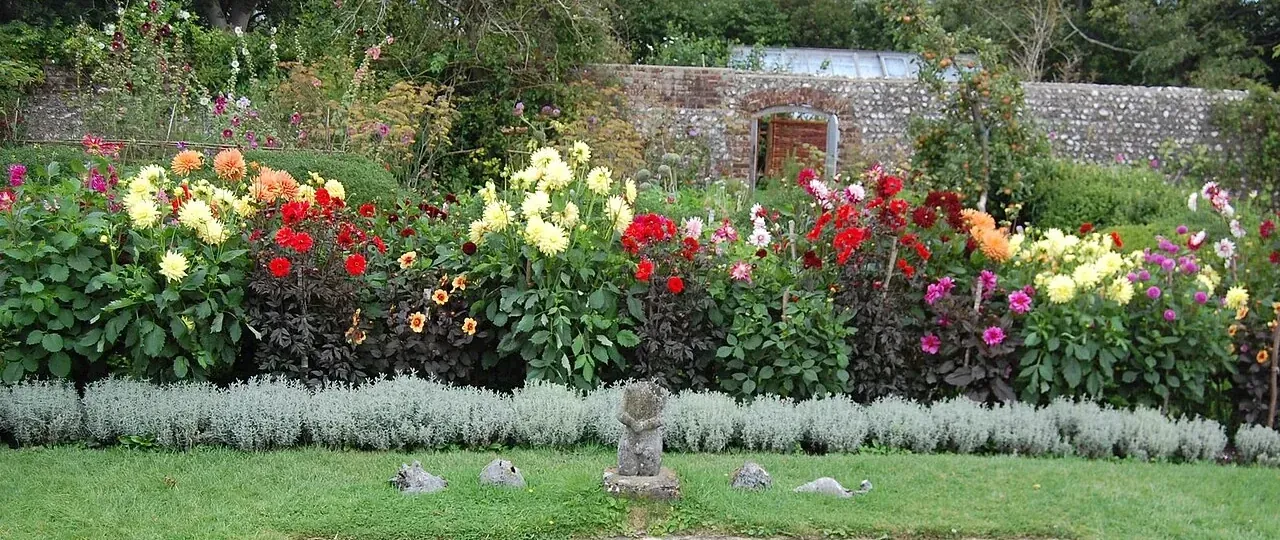
At first the garden was for food: mud and potatoes, and a desolate place, as Bell’s son Quentin remembered it. Then, in 1918, Roger Fry laid out the half acre walled cottage garden behind the house: straight gravel paths and borders running from the house, a large rectangular lawn between them, and a box hedge screening off the vegetable garden at the north end. Bell and Grant spent the following decades filling that frame. They made mosaic floors and painted tiles around the pond in the lawn, and sculpture appeared on the walls, in the orchard and by the farm pond, some of it life size work by Quentin Bell. Alice Vincent · Gardens Illustrated · Charleston history
What the Charleston garden is famous for is colour. Bell chose plants good enough to paint, in a border or a vase, and described the result as “a medley of apples, hollyhocks, plums, zinnias, dahlias”. Writing in 1922, Woolf pictured her sister emerging from “a great variegated quilt of asters and artichokes”. Bell and Grant’s daughter, Angelica Garnett, summed it up: it “was not a gentleman’s garden or a gardener’s garden, it was always an artist’s garden”. Gardens Illustrated · Alice Vincent
Vanessa Bell died at Charleston in 1961. Duncan Grant died in 1978. The Charleston Trust, a charity set up in 1980, saved the place, and the landscape architect Sir Peter Shepheard restored the garden from that year, with later gardeners working out what had grown there from the artists’ flower paintings, letters and old seed packets. Today the Vanessa Bell house and garden are open to visitors, Charleston in Firle hosts the Charleston Festival of the Garden each July, and the walled garden is still planted for colour, with Harry Hoblyn as head gardener since 2020. For opening times, check the Trust’s own website at charleston.org.uk. Gardens Illustrated · Charleston history · Alice Vincent · National Garden Scheme
Why the Charleston garden works: six ideas to borrow
Charleston was made by painters, and its habits come from looking at flowers the way a painter does. These are the ideas worth taking home when planning a Charleston border of your own, and each of them works in an ordinary garden.
A firm frame, loose planting
Mark Divall, head gardener when Gardenista visited, put it simply: “The garden looks formal in winter. The brick paths and beds form a frame; within that it’s plant anarchy in summer.” Straight paths and clipped edges are what stop an abundant cottage border from looking like a mess. Lay the lines first and the plants can be as free as you like. Gardenista
Silver to calm strong colour
Duncan Grant thought English landscapes were “too green”, and he and Bell borrowed the idea of grey foliage from France and Italy. Harry Hoblyn says silver grey matters at Charleston because they spent a lot of time in the Mediterranean. Cotton lavender still edges the lawn, and tall silver cardoons stand above a cloud pruned box hedge. Silver gives the eye somewhere to rest between the reds, oranges and magentas, so the colours read as a painting rather than a clash. Gardenista · Toast · Gardens Illustrated
Plants chosen for their shape
Hoblyn points out that there are more cut flower paintings from Charleston than paintings of the garden, and that a flower was often picked for its form or its colour. Red hot pokers were the one they painted a lot, along with cardoons, sea hollies and globe thistles. Pick a few plants with a strong outline and repeat them, and a border looks deliberate even when it is crowded. Toast
Repeat one shape: the circle
Vanessa Bell loved circles, and they run through the house and out into the garden, where round clumps of cotton lavender surround the lawn, grown hard with the flower buds taken off to keep them tight. Round clumps of silver, or a few clipped balls, give an ordinary plot the same steady rhythm. Gardenista
A season that keeps handing over
Charleston is planted in succession: colourful bulbs in early spring, roses and towering hollyhocks in summer, then dahlias and Michaelmas daisies in autumn. Self seeders such as cow parsley, red campion and valerian fill the gaps, and Hoblyn steers them rather than fighting them. “It should always feel like a cottage garden,” he says. National Garden Scheme · Gardens Illustrated
Let the house spill into the garden
Quentin Bell said the garden, like the house, was “not intended to be tasteful or restrained. It is as though the exuberant decoration of the interior has spilled through the doors.” Mosaic floors and hand painted tiles surround the pond in the lawn, and classical busts from a local art school sit on top of the wall. At home, one tiled edge, a painted pot or a single sculpture among the flowers brings some of the same spirit. Gardens Illustrated
The Charleston plants through the year
First, the plants that published accounts name at Charleston itself. Then the plants in our Charleston look, the planting list behind our cottage theme inspired by this garden, season by season. Where a plant is said to grow at Charleston, the garden features we read name it there; every other choice is our own, in the same spirit.
Charleston plant list from published accounts
- Cotton lavender and cloud pruned box
- Roger Fry’s Santolina chamaecyparissus still edges the lawn, and tall cardoons stand above a cloud pruned box hedge. Gardens Illustrated
- Hollyhocks and cardoons
- Hoblyn says hollyhocks are essential and tower everywhere in high summer, and cardoons feature prominently, painted for their flowers or their leaves. Toast
- Red hot pokers, sea hollies and globe thistles
- Flowers picked for their form or their colour and painted; red hot pokers were “the one they’d paint a lot”. Toast
- Parrot tulips, bearded iris and oriental poppies
- Parrot tulips appear in Bell’s paintings, and Iris germanica and the poppy ‘Beauty of Livermere’ line the gravel path by the entrance. Gardens Illustrated
- Valerian, fennel, foxgloves and heritage roses
- All named in the garden, with cranesbill ‘Johnson’s Blue’, self seeded catmint, and magenta Byzantine gladioli among self seeded daisies by the garden room door. Gardens Illustrated
Dahlias and Michaelmas daisies close the season each autumn, and self seeders such as cow parsley, red campion and valerian are steered rather than fought. National Garden Scheme · Gardens Illustrated
Plants for a Charleston look at home
Our cottage theme inspired by Charleston follows the same hand over through all four seasons. Each season below shows the plants in our Charleston look, then what our sources say grows at Charleston itself. Start with a plant or two for each season, and repeat them down the border.
| Season | What to plant |
|---|---|
| Spring | Parrot tulips, irises and poppies Parrot tulips grow at Charleston and appear in Bell’s paintings; our Charleston look uses the near black Tulipa ‘Black Parrot’ with the orange ‘Ballerina’. By the entrance, bearded iris (Iris germanica) and the scarlet oriental poppy ‘Beauty of Livermere’ line the gravel path in late spring, and magenta Byzantine gladioli push up through self seeded daisies by the garden room door. Seen at Charleston: parrot tulips, bearded iris, the poppy ‘Beauty of Livermere’ and Byzantine gladioli. Gardens Illustrated |
| Summer | Hollyhocks, cardoons and red hot pokers Hollyhocks (Alcea rosea) tower everywhere in high summer, and our look uses the near black ‘Nigra’. With them come the famous cardoons (Cynara cardunculus), painted often and silver all season, then valerian, fennel, foxgloves, cranesbill ‘Johnson’s Blue’, catmint and heritage roses. Our look adds red hot pokers (Kniphofia ‘Nancy’s Red’), the flower they painted a lot, with sea hollies, globe thistles, phlox and sunflowers to paint. Seen at Charleston: hollyhocks, cardoons, valerian, fennel, foxgloves, cranesbill, catmint and heritage roses, with red hot pokers, sea hollies and globe thistles in the paintings. Toast · Gardens Illustrated |
| Autumn | Dahlias and Michaelmas daisies Dahlias and Michaelmas daisies close Charleston’s season. Our look uses Dahlia ‘Bishop of Llandaff’, ‘David Howard’ and ‘Café au Lait’, Michaelmas daisy ‘Purple Dome’ (Symphyotrichum novae-angliae), colchicums and the scarlet hips of Rosa moyesii ‘Geranium’. Seen at Charleston: dahlias and Michaelmas daisies. National Garden Scheme |
| Winter | The frame shows This is when the frame shows. Clipped box and Roger Fry’s cotton lavender (Santolina chamaecyparissus) carry the garden at Charleston all year. Our look adds rosemary, a clipped bay by the door, the Corsican hellebore (Helleborus argutifolius) for green flowers from February, a scented daphne and a winter flowering mahonia. Seen at Charleston: cloud pruned box and Fry’s cotton lavender edging the lawn. Gardens Illustrated |
How to get the Charleston look in an ordinary garden
Charleston’s walled garden is half an acre, but its habits scale down to a normal plot. Start with one bed you can see from the house or walk past often, and try the frame and a few painter’s flowers there before buying for the rest of the garden.
Start with the frame
Begin as Fry did. Decide where one straight path will run from the back door and where the edges of the beds and lawn will be, then mark them with gravel, brick or a low clipped edge. Add a silver edge next, a line or round clumps of cotton lavender along the lawn. Only then fill the beds.
Use one path in a small garden
One straight gravel path with a bed each side is enough. Put the tall plants, hollyhocks and cardoons, against the fence where they can tower without shading everything, and keep the front of the bed low and silver. Charleston’s own walls carry climbing roses, so use your fences the same way. Our cottage garden design page shows cottage gardens of every size if you want more layouts to borrow from. Gardens Illustrated
Silver in sun, green in shade
Charleston has shade too, under its many fruit trees. Gardenista found that, for all the love of grey foliage, green thrives more easily there. Gardens Illustrated adds that Fry’s cotton lavender has struggled in the damp, shaded chalky soil. So give the silver plants your sunniest strip and let green leaves and shade tolerant flowers, such as foxgloves, astrantias and the Corsican hellebore in our Charleston look, carry the rest. Our cottage garden plants guide has more plants for different spots. Gardenista · Gardens Illustrated
On a budget, spend on the path
Bell started with mud and potatoes and brought artichoke roots with her, the beginnings of the cardoons that filled her paintings for decades. Spend first on the path and the edging, because they last, then fill the beds cheaply: bulbs in autumn, cosmos and sunflowers from seed, and self seeders such as foxgloves and columbines. Grow flowers you would want to cut for a vase, as Bell did, and the garden pays you back indoors too. Alice Vincent
Garden Design App
How can we help you transform your garden to look like the Charleston garden?
Planning a painter’s garden is hard to do in your head. A painter’s garden is all about colour, and strong colour is the hardest thing to judge before you plant it. Will scarlet poppies and orange tulips sit happily against your brick, or does your garden want more silver to calm them? It is hard to picture hollyhocks against your fence or a silver edge round your lawn until you see them. Mistakes cost money, and a whole season to find out. Garden Design App takes the guesswork away. It redesigns your own garden in a painter’s cottage look inspired by Charleston, one border or the whole garden, so you see the result before you buy a single plant.
Think of a July afternoon: a straight gravel path running from the back door between beds crammed with colour, hollyhocks towering against the fence, silver cardoons standing tall beside them and red hot pokers flaring in between, with round clumps of cotton lavender holding the edge of the lawn. By September the dahlias and Michaelmas daisies have taken over, and there are still flowers to cut for a jug on the kitchen table. In winter the path, the box and the silver keep it all looking deliberate. Ask for exactly that, and the app draws it into your garden, around the house, trees and fences you already have.
What you can ask for
Type any of these into the “Anything else?” box, in your own words:
- A straight gravel path from the back door, with a bed of colour each side
- Round clumps of silver cotton lavender all round the lawn
- Hollyhocks towering against the fence, with tall silver cardoons beside them
- Red hot pokers, sea hollies and globe thistles for strong shapes
- Dahlias and Michaelmas daisies to carry the colour into autumn
- A small rectangular pond in the lawn, with climbing roses on the fences
How to design a Charleston cottage garden in five steps
- Start a free garden design. Press “Start my free garden design” and add a photo of the part of the garden you want to transform. Your house, trees and fences stay where they are.
- Choose Cottage for the style, then pick All colours for the colours. Harry Hoblyn says Charleston should always feel like a cottage garden, and a painter’s palette uses every colour, which is why Cottage with All colours is the place to start.
-
Ask for the Charleston touches you love in the “Anything else?” box.
“Put a straight gravel path from the back door with a bed each side, round clumps of silver cotton lavender along the lawn, hollyhocks and cardoons by the fence, and dahlias for autumn.”
- See your garden transformed in just one minute. Look at the colours against the house, trees and fences the app keeps, and know whether scarlet and orange suit your brick before you spend a penny on plants. Try a gravel path one way and a lawn edged with cotton lavender another, and keep the version you would be happy to live with.
- Turn it into a garden you can plant. With Pro or Max (£29 or £49, paid once), every plant in your design is named, picked for your light and soil and ready to buy, with the pot size and how tall it grows. A care guide and flowering calendar keep the colour coming, from parrot tulips in spring to dahlias in autumn.
Why try it with Garden Design App first?
No guesswork
You don’t need to know the name of a single plant. You see the colours against your own fence, lawn and patio before you spend anything on them, and if the reds fight with your brickwork, you ask for more silver to calm them.
Plants that will thrive
Pro and Max pick every plant to thrive where you live, in your light and soil, and name each one ready to buy. That matters for a painter’s border: even at Charleston, Fry’s cotton lavender has struggled in damp shade. Measured borders also tell you how many of each to buy.
Your garden stays familiar
Your house, trees and fences stay where they are, so the design fits the garden you already have, whether that’s one border or the whole plot.
A design in just one minute
A garden designer can take weeks to months to come back with a first design, and the average UK garden design costs £1,950. Save over £1,900, and start today with 3 free designs.
A real garden, before and after
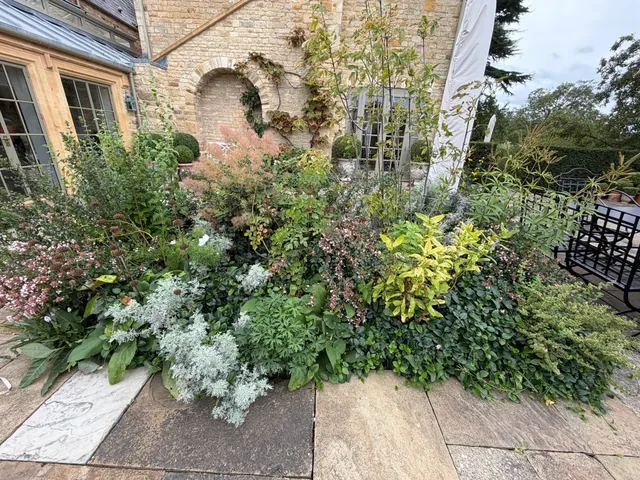 Original garden
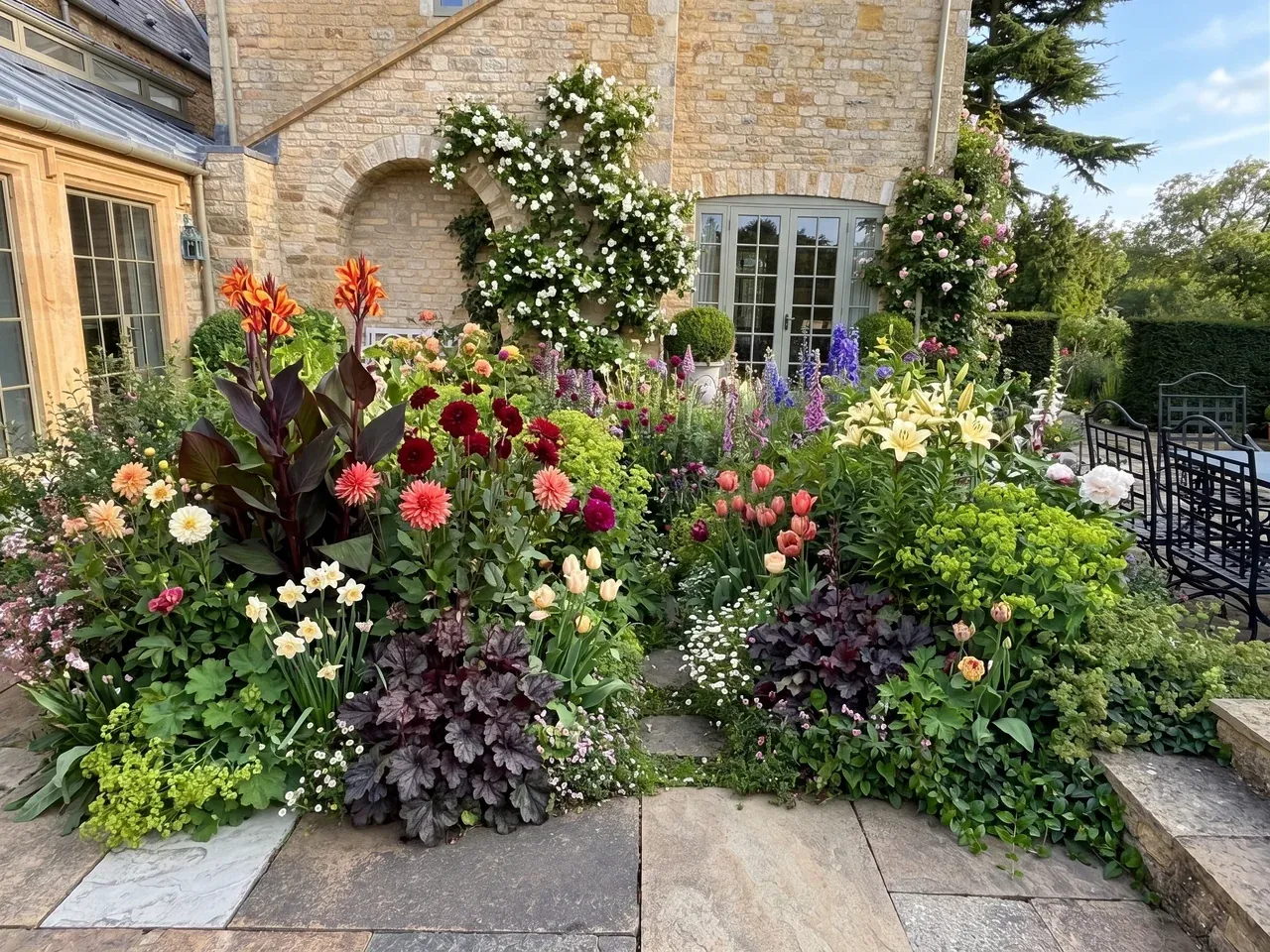 Cottage design
Over 500 garden designs made.
Try a layout before you spend on plants or a designer
If the hollyhocks shade the bed or the path cuts across the lawn in the wrong place, try a second layout while it’s still easy to change. Once you’ve found a layout you like, the planting list with Pro or Max tells you what to buy, so you can go to the garden centre with a plan. A garden designer can visit, measure and oversee the build. When you want that help, bring the look you found here.
Start with 3 free designs
Your first 3 designs are free, with no card needed, so you can test the Charleston look three times before you buy a single plant: a gravel path one way, a lawn edged with cotton lavender another, and a bolder mix of reds and oranges. For more ideas, our cottage garden design page shows real gardens redesigned in the Cottage style, our design my garden page shows how it works, and our famous gardens guide has more great gardens to borrow from.
What you get with Garden Design App
Start free. When you’re ready for a plan you can plant from, choose Pro or Max. One payment, no subscription.
- Free £0
- Your first 3 designs
- Lower quality images with a watermark
- Pro £29
- 20 designs over 14 days
- 5 free designs on top
- 2 designs at once, side by side
- Max £49
- 50 designs over 30 days
- 10 free designs on top
- 4 designs at once, side by side
Turn the design you love into a garden you can plant
Every Pro or Max design comes with a Garden Transformation Pack: the plants, layout, materials and features, with a full care guide.
- Know what to buy. Get plants picked to thrive where you live, in your light and soil. Every plant is named, with the pot size to buy and how tall it grows. For a measured border, you also get how many of each plant to buy.
- Plan the whole garden. Get a layout and the features in your design, plus materials from gravel to fencing with whole garden designs.
- Know what to do through the year. Use the care guide to look after your plants and the flowering calendar to see what comes into bloom next.
- See the detail and ask for changes. Get higher quality images without a watermark, and change any design in your own words.
Your first 3 designs are free, with no card needed.
Questions about Charleston Farmhouse
Why is Charleston Farmhouse famous?
It was the country home of the painters Vanessa Bell and Duncan Grant from 1916 and, for half a century, the Bloomsbury Group’s meeting place in the country. They decorated its walls, doors and furniture, and filled the walled garden Roger Fry laid out in 1918 with flowers good enough to paint. The Charleston Trust has cared for it since 1980, and the house and garden are open to visitors. Charleston history · Gardens Illustrated
How can I make my garden look like the Charleston garden?
Give it the three things Charleston is built on: a firm frame of straight paths and clipped edges, silver leaves such as cotton lavender to hold the colour together, and flowers good enough to paint, from spring tulips to autumn dahlias. To try the look before you buy plants, add a photo of your garden to Garden Design App, choose Cottage with All colours, and ask for a gravel path, cotton lavender round the lawn or hollyhocks by the fence in your own words. Your garden is redesigned in just one minute, and your first 3 designs are free.
Where did Vanessa Bell and Duncan Grant live?
Their country home from 1916 was Charleston, a farmhouse in the village of Firle near Lewes in East Sussex. They decorated its walls, doors and furniture and made its walled garden together. Bell died at Charleston in 1961. Grant died in 1978. Charleston history · Gardens Illustrated
Where did the Bloomsbury Group live?
In Sussex, Charleston was the group’s country meeting place for half a century. Clive Bell, David Garnett and Maynard Keynes lived there for long periods, and Virginia Woolf, who lived just over the South Downs at Rodmell, visited often, as did E. M. Forster, Lytton Strachey and Roger Fry. Charleston history · Gardenista
Is the Charleston House garden open to visitors?
Yes. Charleston is open to the public. Opening times and tickets change, so check the Trust’s own website, charleston.org.uk, before you go. Charleston history
Who designed the garden at Charleston?
The art critic Roger Fry laid out the walled garden in 1918, having recently designed his own garden with the help of Gertrude Jekyll. Vanessa Bell and Duncan Grant then planted it and filled it with mosaics, tiles and sculpture over the following decades. Gardens Illustrated · National Garden Scheme
What flowers grow at Charleston?
Hollyhocks, cardoons, roses, parrot tulips, bearded irises, oriental poppies, valerian, fennel, foxgloves, dahlias and Michaelmas daisies, edged by Roger Fry’s cotton lavender and clipped box. The planting follows the flowers Bell and Grant loved to paint. Our season by season table lists plants for a Charleston look at home. Gardens Illustrated · Toast · National Garden Scheme
About the author
Sources
- Gardens Illustrated, Charleston garden, East Sussex
- ‘It was always an artist’s garden’: how the garden at Charleston became Vanessa Bell’s subject by Alice Vincent (syndicated feature, AOL)
- Gardenista, Bloomsbury in Sussex: Garden Visit to Charleston Farmhouse
- Wikipedia, Charleston Farmhouse
- National Garden Scheme, Charleston
- Toast magazine, Charleston gardener Harry Hoblyn in conversation with Matt Collins
- Garden Design App homepage