
How we can help
How can you transform your garden to look like an old English garden?
The gardens on this page took their makers years: Vita and Harold began Sissinghurst in 1930, and Carol Klein has been shaping Glebe Cottage for almost five decades. With Garden Design App, you add a photo of your garden, choose the Cottage style and the colour choice nearest the garden you love, such as White & silver for Sissinghurst’s White Garden, then ask for anything you want, such as “hot reds and oranges inside a low hedge”. In just one minute you see your garden redesigned in that look, with your house, trees and fences kept.
- See the look before you spend. It is hard to picture a white garden or a hot border in your own space. Try the White Garden’s white and silver on one bed, then Great Dixter’s clashing colours, and keep the design you love.
- Plants that will grow for you. With Pro or Max, every plant is named and picked to thrive where you live, in your light and soil, ready to buy, whether you choose a sunny hot border or a shady woodland look.
- Save over £1,900. The average UK garden design costs £1,950, and a designer can take weeks to months to come back with a first design. Garden Design App gives you one in just one minute.
Your first 3 designs are free, with no card needed.
See a real Cottage garden redesignNineteen gardens worth borrowing from
Of all the famous gardens UK gardeners travel to see, these are the easiest to borrow from, because each has one clear idea you can carry home. Some were made by famous gardeners and famous garden designers, others by painters and families, and the list of famous female garden designers among them is long: Gertrude Jekyll, Vita Sackville-West, Margery Fish, Rosemary Verey and Beth Chatto.
All but one are famous gardens in England; Allt-y-bela is in Wales. They are grouped below by colour, by kind and by season. Each card shows the look in a line, tells the garden’s story and links to its own guide, with the plants and the steps to get the look at home.
White, silver and cool colours

The White Garden at Sissinghurst
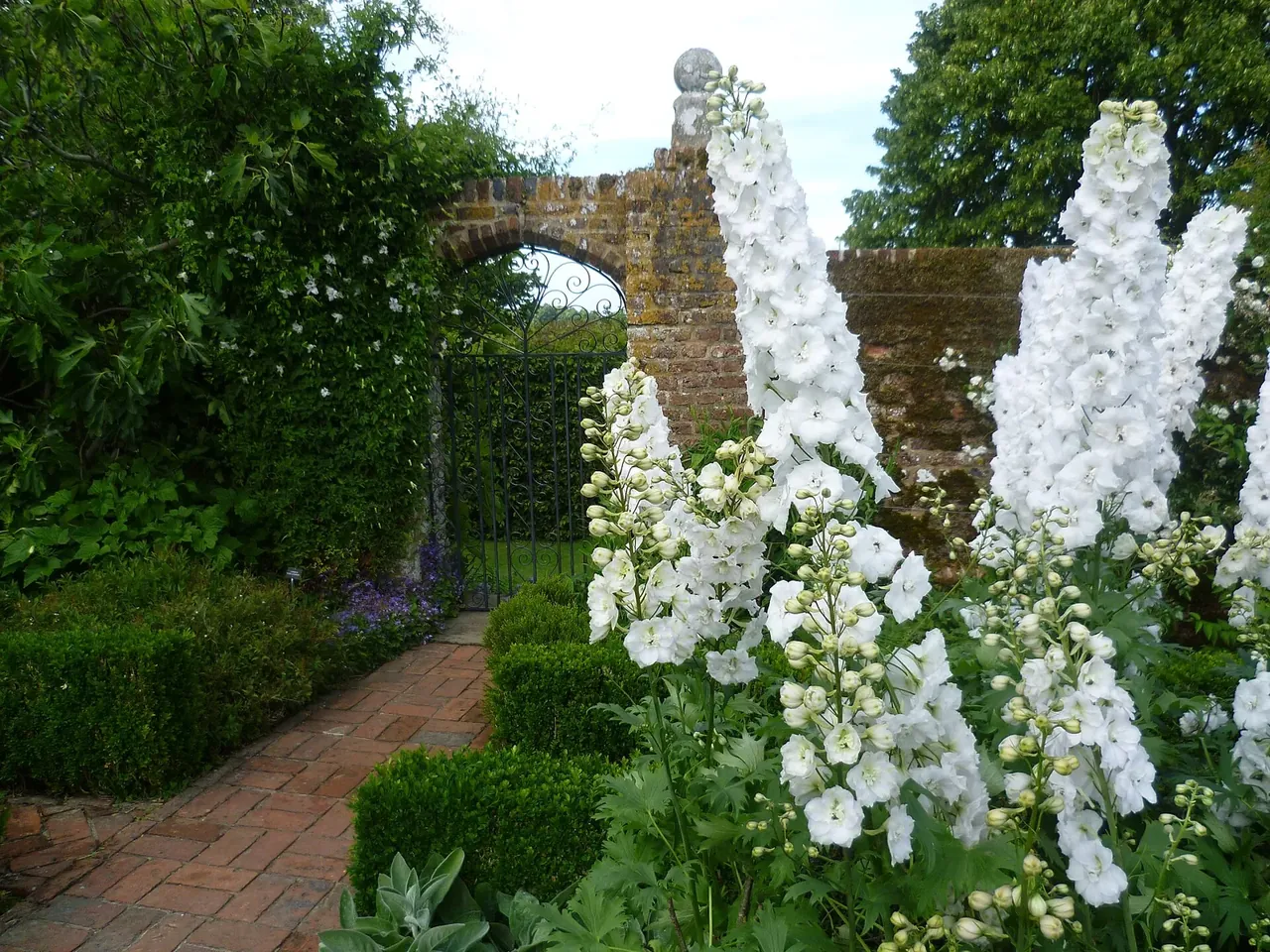
White flowers and silver leaves in low clipped box
Sissinghurst Castle Garden in Kent was made from 1930 by Vita Sackville-West and her husband Harold Nicolson, and the National Trust now cares for it. Its White Garden fills low clipped box hedges with white flowers and silver, grey and green leaves. Our guide to the Sissinghurst White Garden shows how to keep white in flower every season.
White Garden guide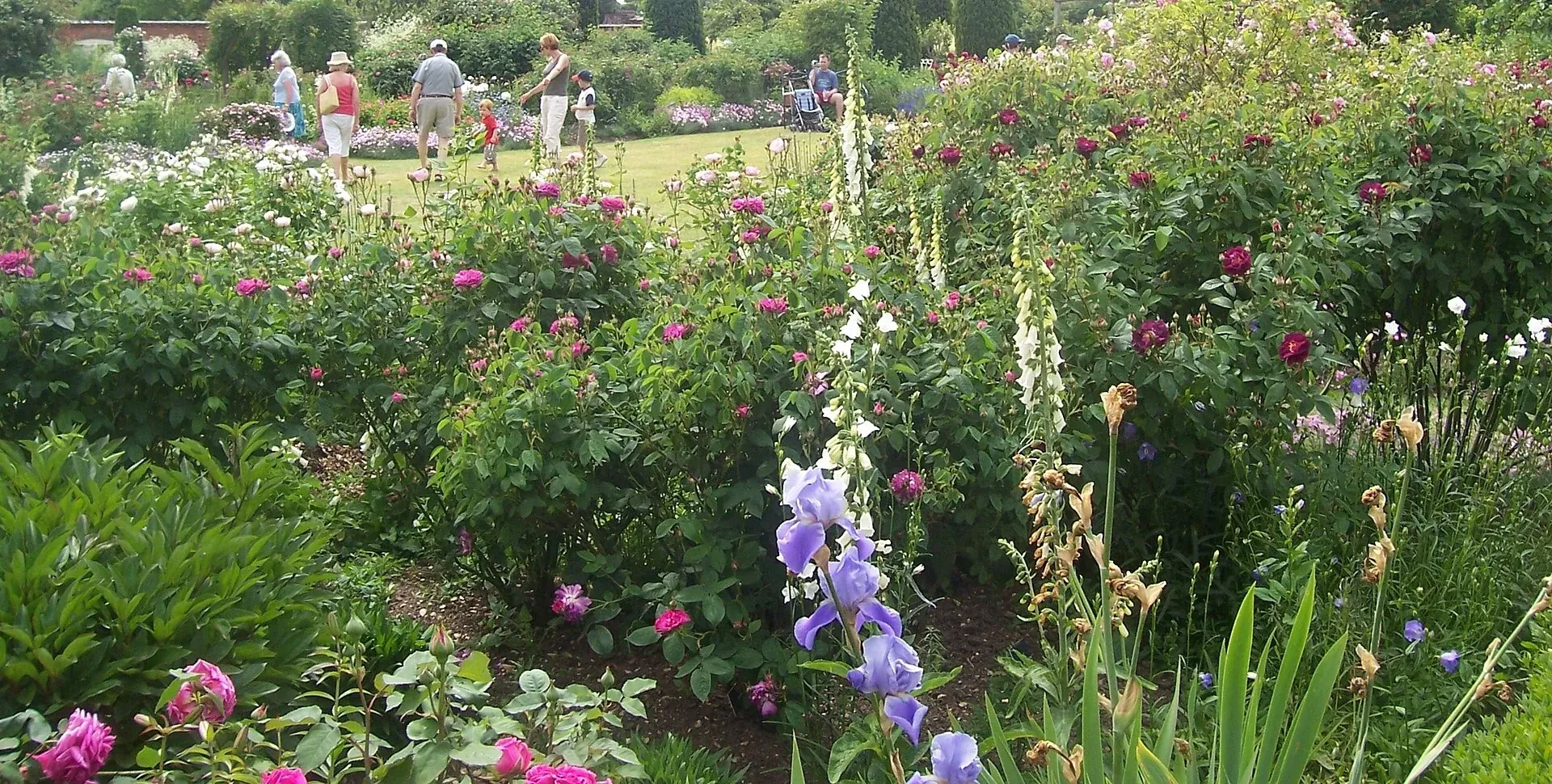

Mottisfont’s walled rose garden
Old roses among blue geraniums, campanulas and foxgloves
At Mottisfont, a National Trust garden in Hampshire, Graham Stuart Thomas laid out a walled garden of old roses in 1972, with blue geraniums, campanulas and white foxgloves among them so the beds look good before and after the roses. Read how to make a rose garden like Mottisfont’s.
Mottisfont guide

Arne Maynard’s border at Cottesbrooke Hall
Pale pinks, deep purples and icy blues over dark plum
Cottesbrooke Hall in Northamptonshire is a garden of hedged and walled rooms shaped with Geoffrey Jellicoe, Sylvia Crowe and Arne Maynard: three famous British garden designers in one place. Maynard’s Statue Walk border keeps to pale pinks, deep purples and icy blues over dark plum. Our Cottesbrooke guide explains that narrow band of colour.
Cottesbrooke guideHot colours and jewel tones
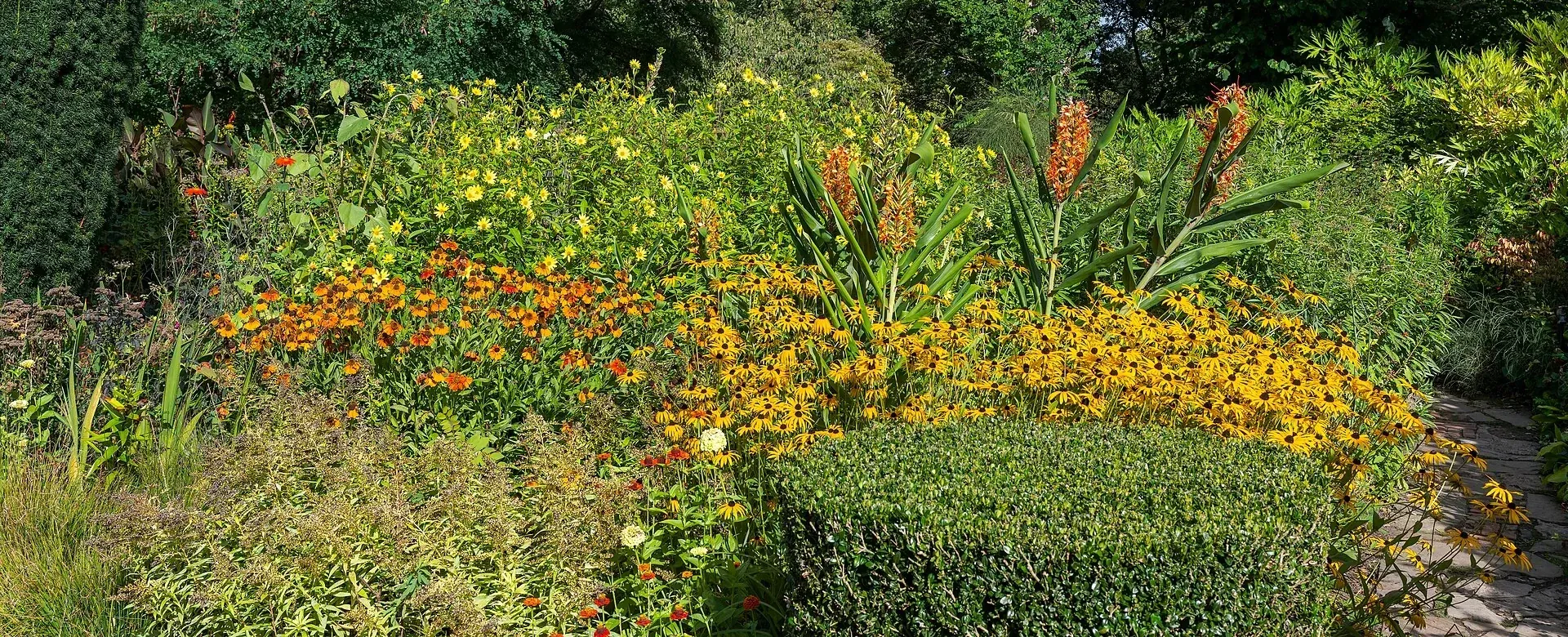

The Cottage Garden at Sissinghurst
Red, orange and yellow crammed into four beds
Sissinghurst’s other famous room is the Cottage Garden, or Sunset Garden: a small, enclosed room of red, orange and yellow flowers crammed into four beds. Harold drew the layout; Vita did the planting. See the Sissinghurst Cottage Garden guide for hot colours in a firm frame.
Cottage Garden guide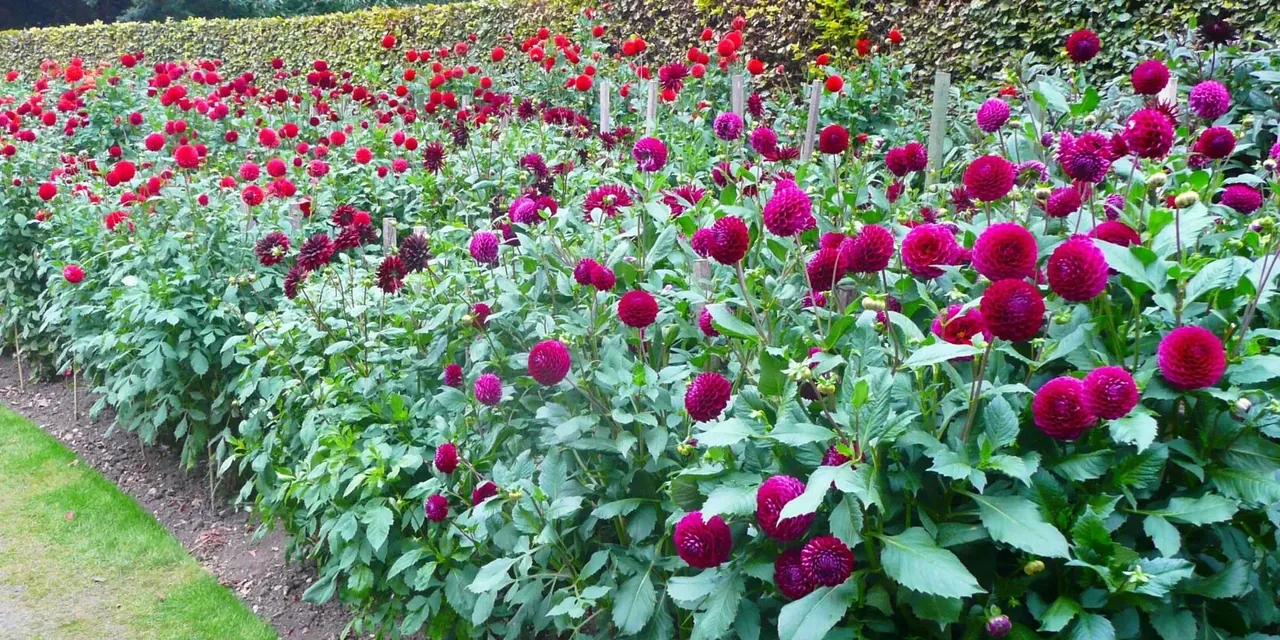

Sarah Raven’s Perch Hill
Plum, wine dark red and hot orange against almost black leaves
Perch Hill is Sarah Raven’s farm garden in East Sussex. Its Oast Garden sets plum, wine dark red and hot orange against almost black leaves, from tulips in late spring to dahlias at the first frosts. The Perch Hill guide shows how to keep to one rich colour family.
Perch Hill guide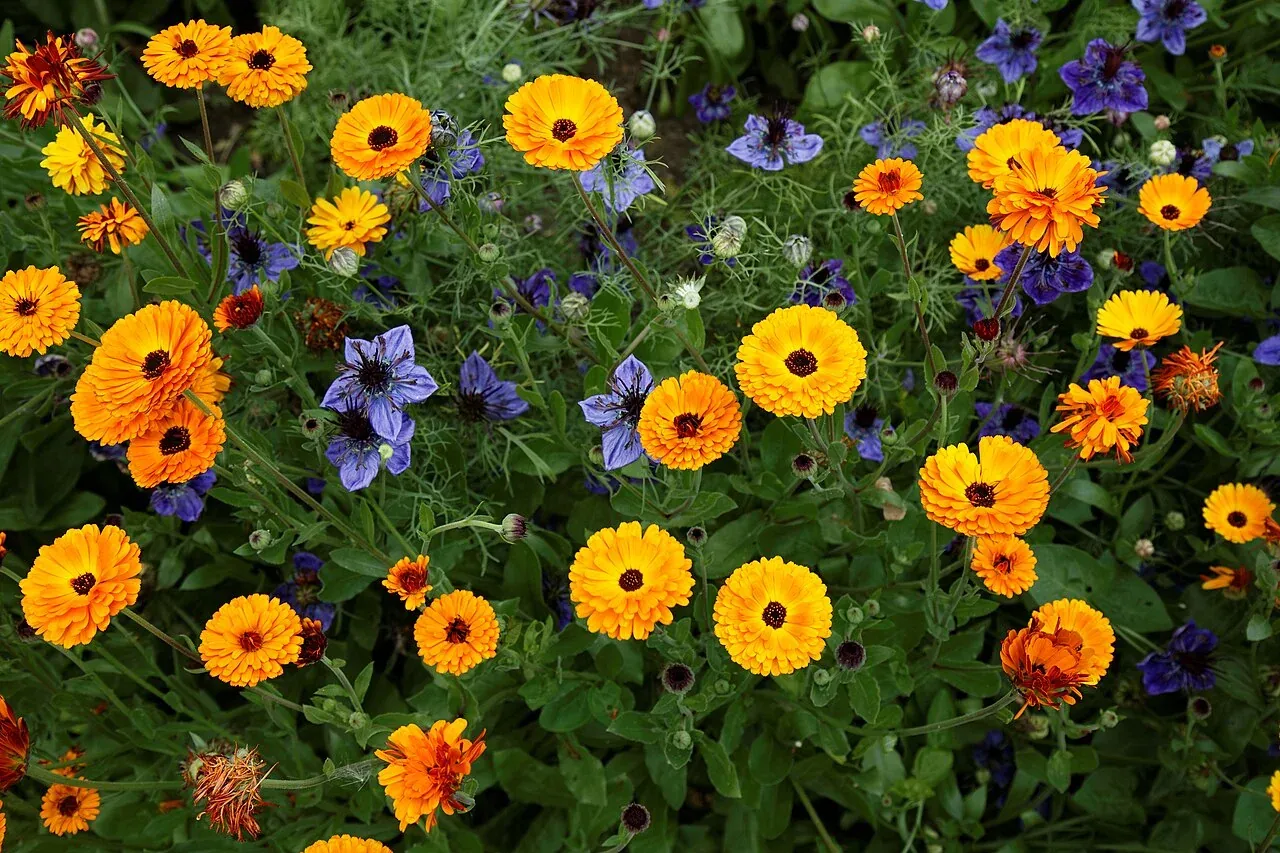

Istvan Dudas’s blue and orange cottage garden
Soft borders sharpened with bright orange and electric blue
The designer Istvan Dudas designed and looks after a private cottage garden in Oxfordshire, sharpening its soft borders with bright orange and splashes of electric blue, and pairing orange with purple, such as tangerine lupins beside lilac alliums. Our blue and orange cottage garden look, inspired by it, makes that pairing the whole scheme. Fine Gardening
Blue and orange guide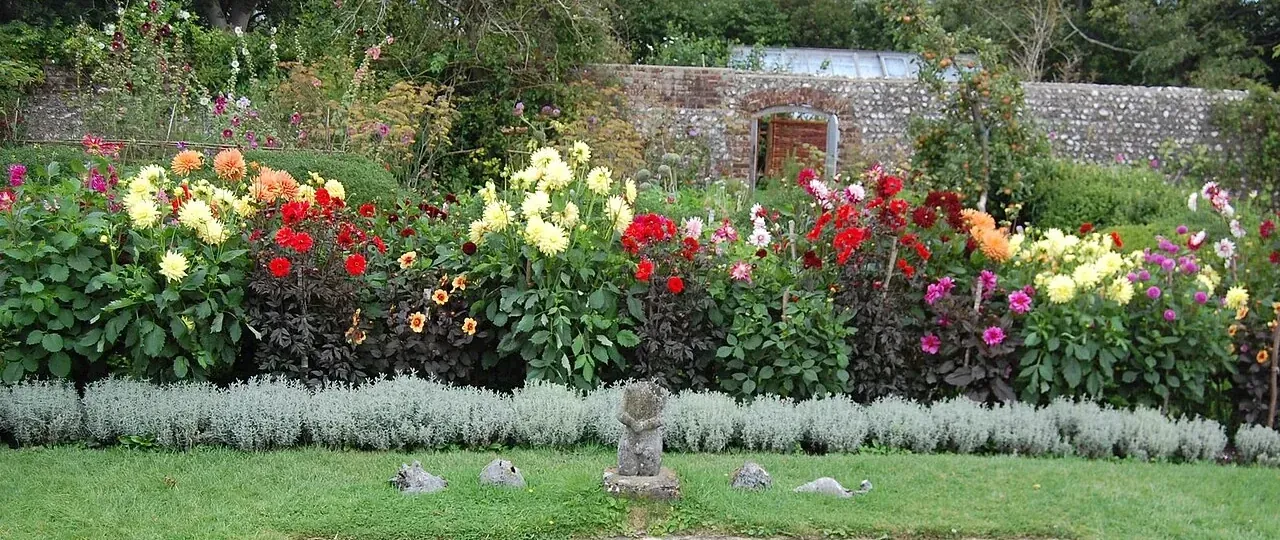

Charleston, the painters’ garden
Strong colour held by gravel paths, box and cotton lavender
Charleston Farmhouse in East Sussex was the country home of the painters Vanessa Bell and Duncan Grant from 1916. Roger Fry laid out its walled garden in 1918: gravel paths, box and cotton lavender around tulips, hollyhocks, red hot pokers and dahlias grown to be painted. Our Charleston guide shows how a simple frame holds strong colour.
Charleston guide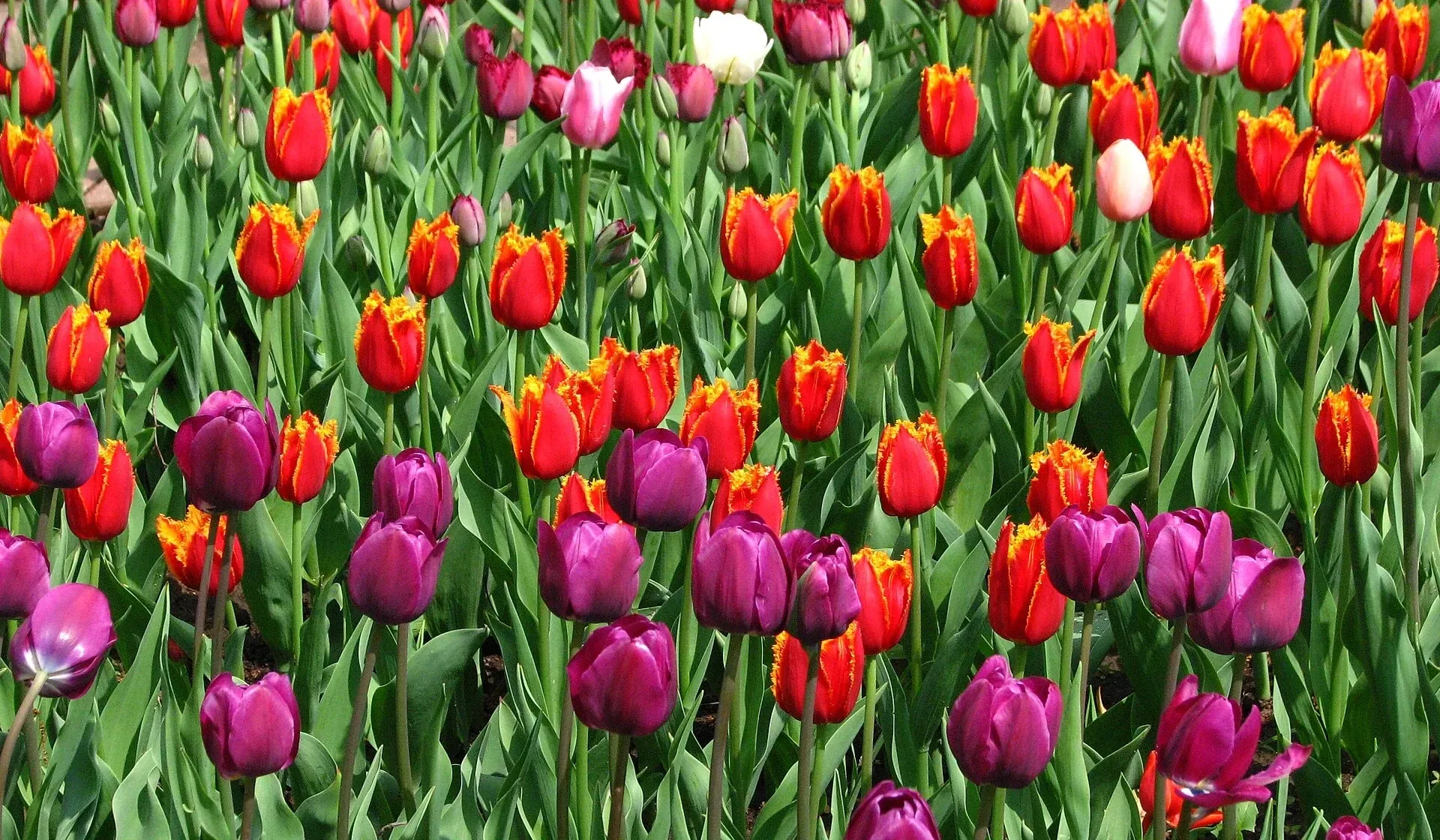

Monty Don’s Jewel Garden
Intense tulips, then dahlias and cannas, in the sunniest spot
Longmeadow is Monty Don’s garden in Herefordshire, and its Jewel Garden celebrates the jewellery business he and Sarah ran in the 1980s: intense tulips in spring, then dahlias and cannas in late summer. Our look inspired by the Jewel Garden at Longmeadow wants your sunniest spot.
Jewel Garden guideGreat borders and garden rooms

Gertrude Jekyll’s colour border at Munstead Wood
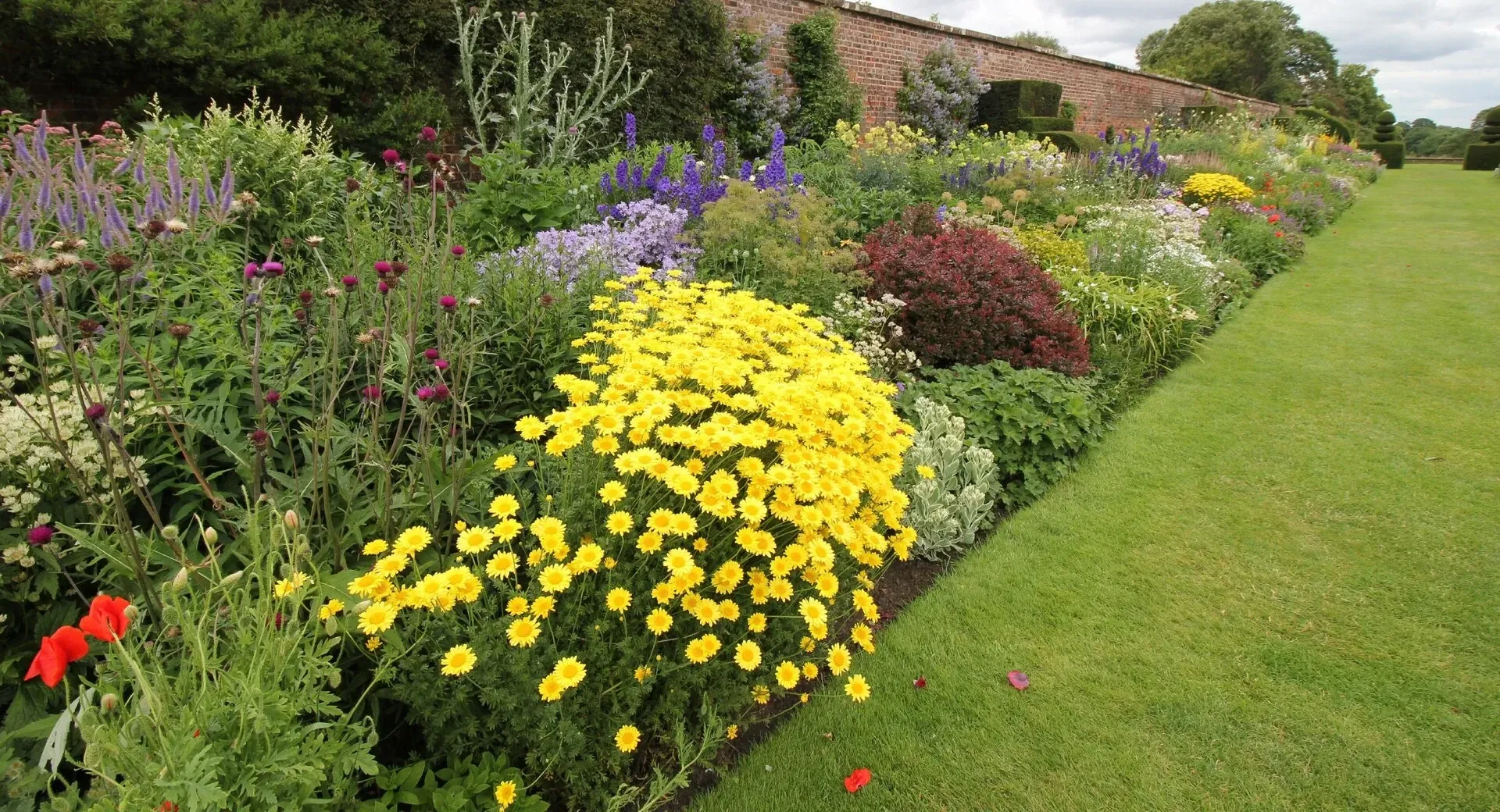
A long border graded from cool blues to hot reds and back
Gertrude Jekyll (1843 to 1932) was a painter turned garden designer whose own garden, Munstead Wood in Surrey, made her name. Its long English garden border ran from blues, white and pale yellow at the western end through orange and red in the middle, cooling to purples and lilacs at the eastern end. The Gertrude Jekyll guide shows how to plant one.
Jekyll border guide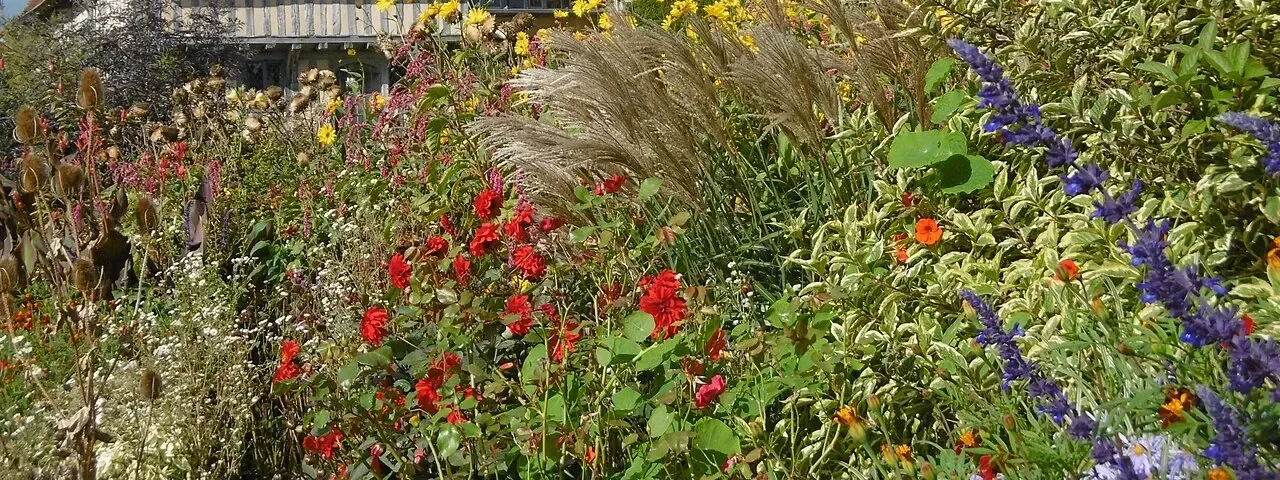

Great Dixter
Packed borders where colours clash on purpose
Great Dixter in East Sussex was the garden of the late writer Christopher Lloyd and is now run by a charitable trust, with Fergus Garrett leading the garden. It is famous for packed mixed borders where colours clash on purpose, inside old yew and box hedges. Read our Great Dixter guide.
Great Dixter guide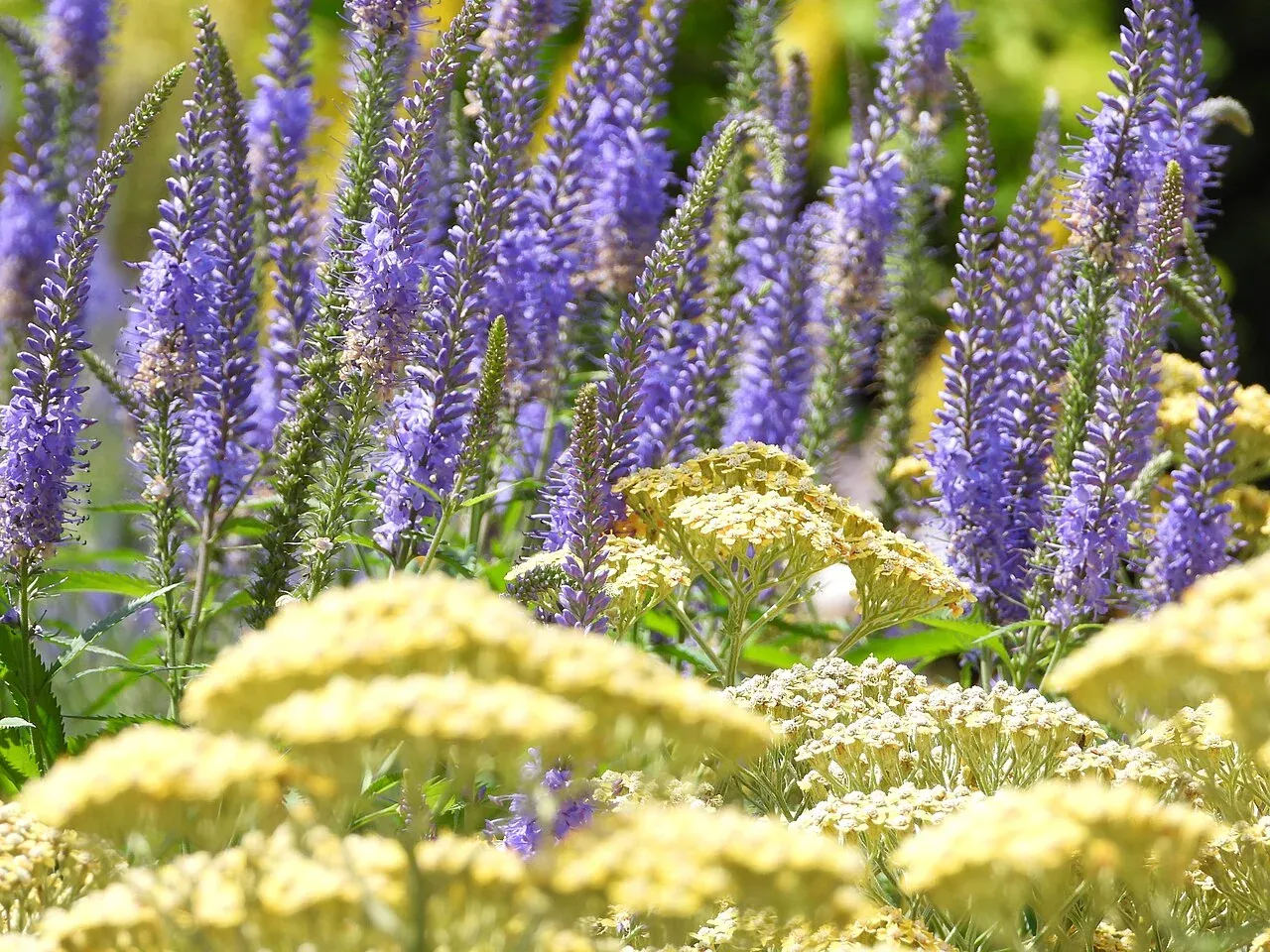

Wollerton Old Hall
Linked garden rooms, each with its own colours
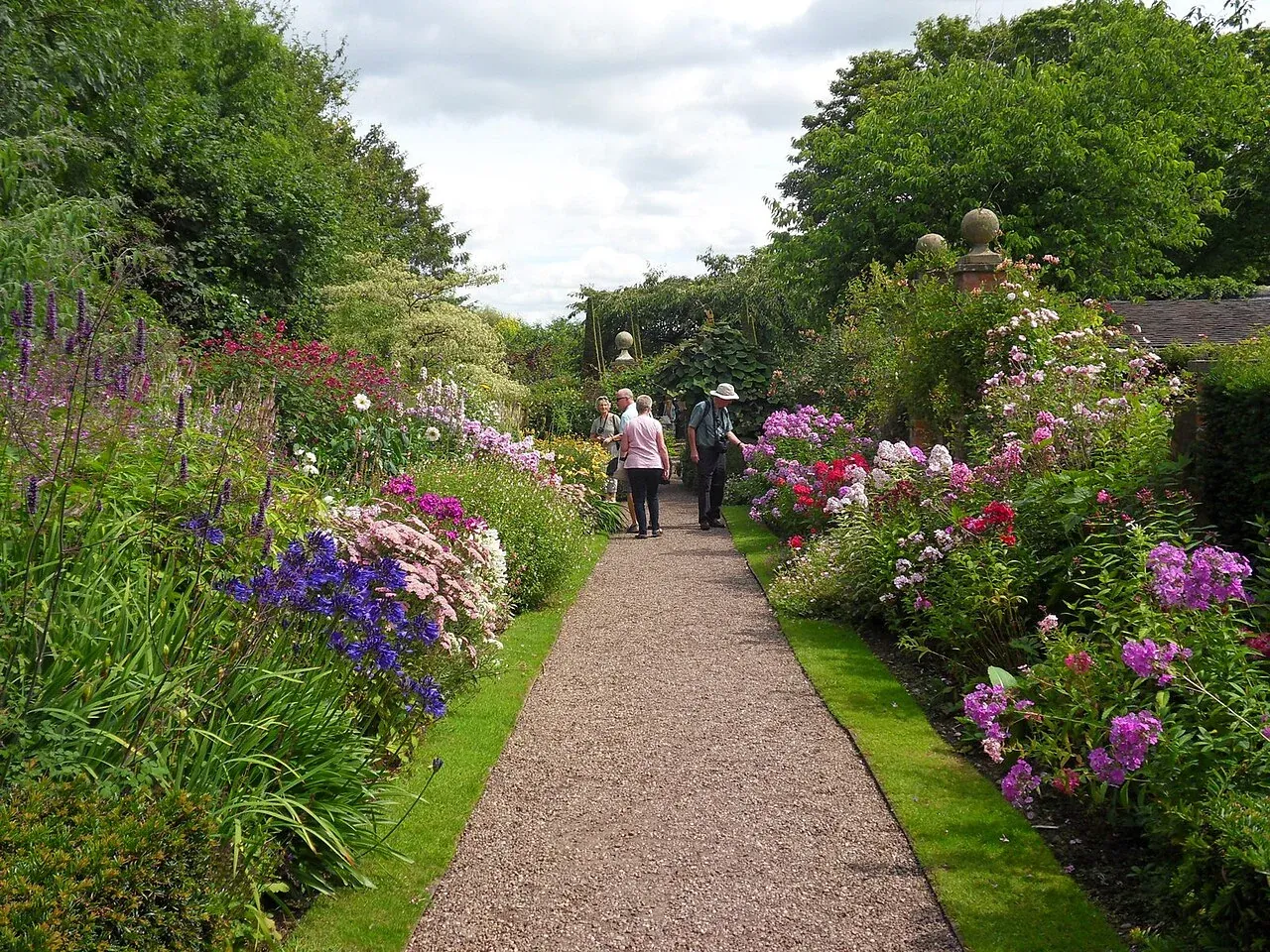
Wollerton Old Hall in Shropshire is a garden of 14 linked rooms, made by Lesley and John Jenkins since 1984. Clipped yew and beech give it bones; one room is lilac with phlox, another a Hot Garden of yellows and reds. Our Wollerton Old Hall guide shows how to give each part of a garden its own colours.
Wollerton guide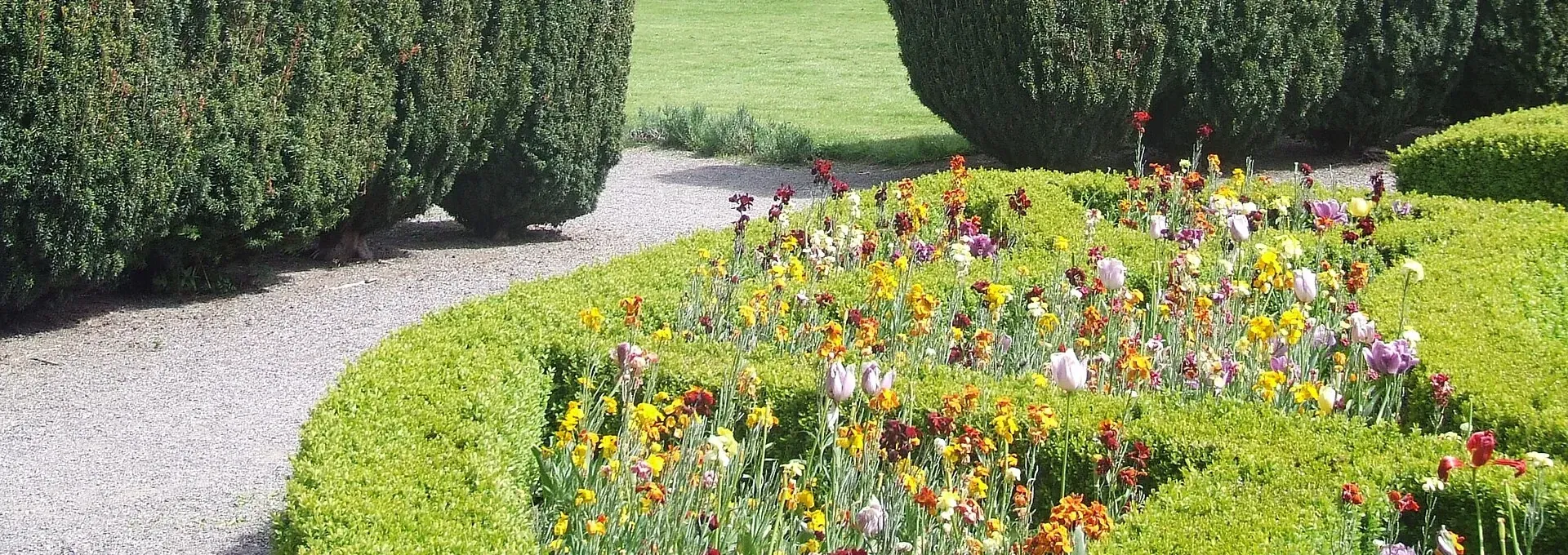

Allt-y-bela, Arne Maynard’s own garden
Clipped shapes by the house, meadow beyond
Allt-y-bela, in Usk in south Wales, is Arne Maynard’s own garden. Clipped yew, beech and box shapes sit near the house, roses are trained over hazel domes and the garden loosens into meadow. See the Allt-y-bela guide for simple clipped shapes and deep magenta roses.
Allt-y-bela guideCottage and kitchen gardens

Beatrix Potter’s Hill Top
Flowers, fruit, herbs and vegetables either side of a path
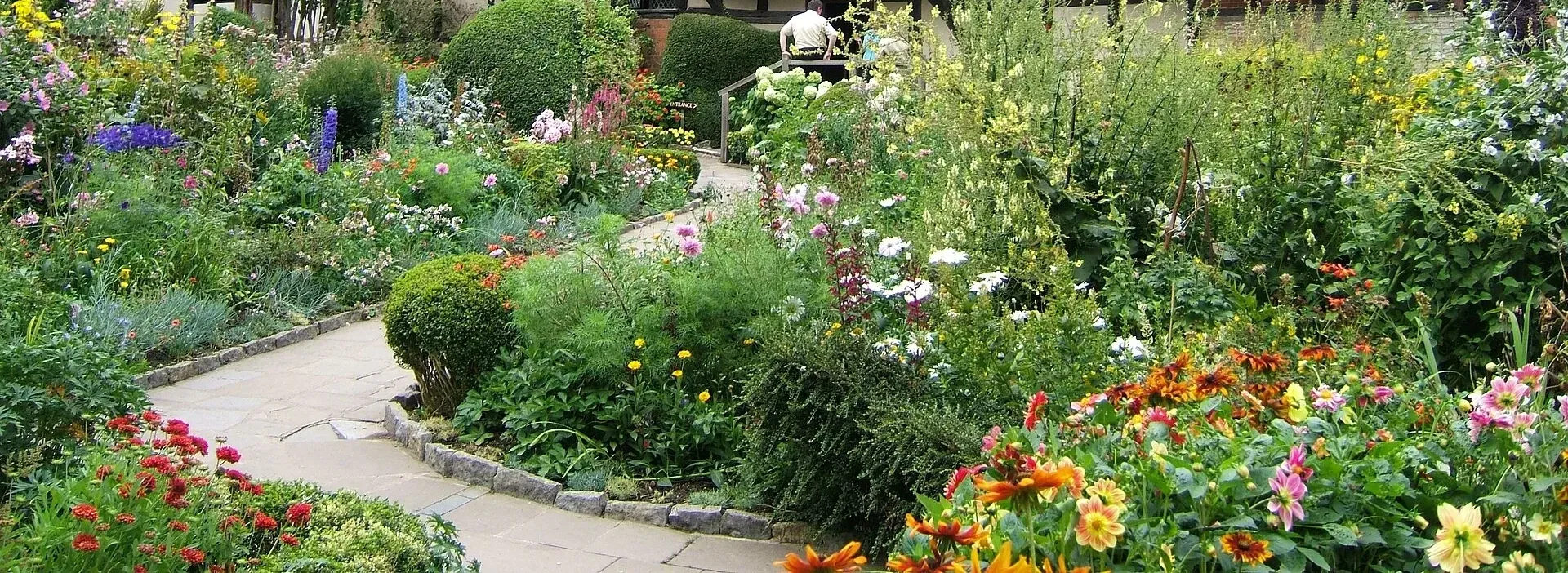
Hill Top is the 17th century Lake District farmhouse Beatrix Potter bought in 1905 and left to the National Trust in 1943. Its small old English cottage garden mixes flowers, fruit, herbs and vegetables either side of a path she drew in her books. Our Hill Top guide brings that mix to an ordinary garden.
Hill Top guide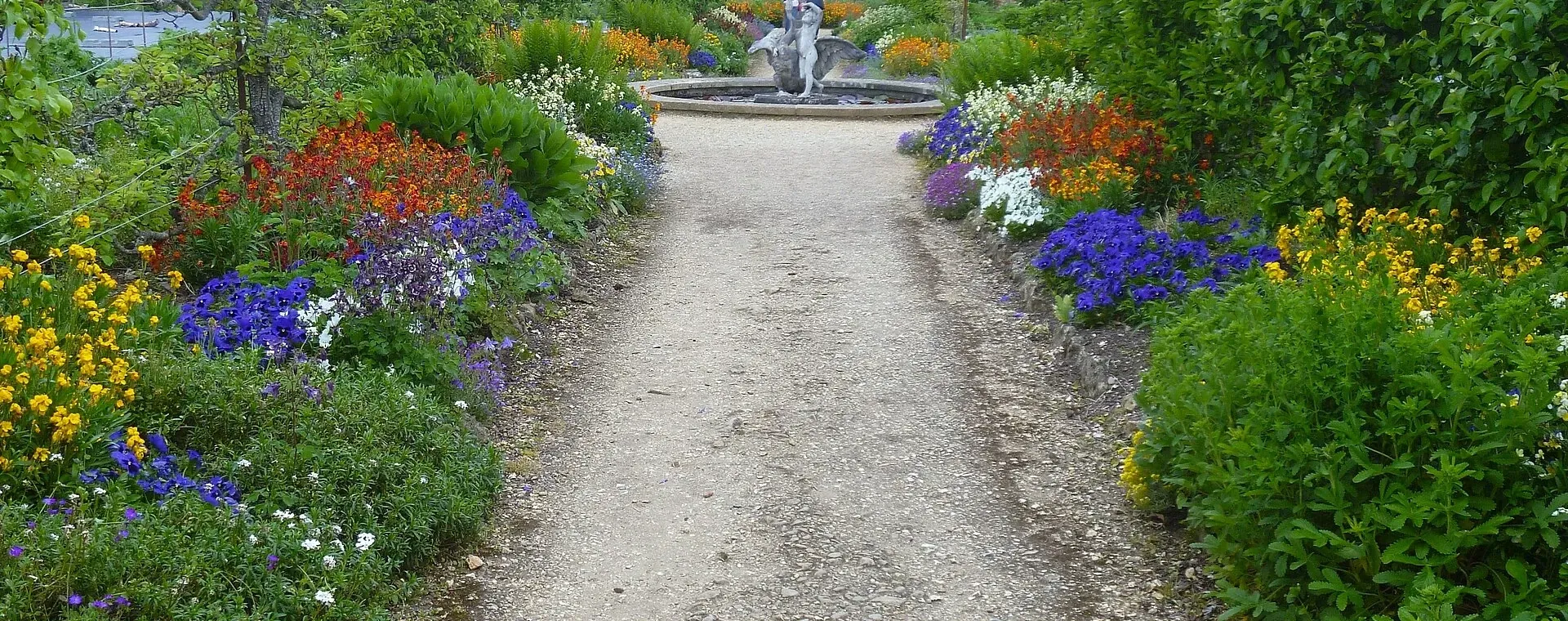

Margery Fish’s East Lambrook Manor
Crazy paving, silver leaves, green flowers and bulbs
Margery Fish made East Lambrook Manor in Somerset from a wilderness after 1937: crazy paving, silver and variegated shrubs, green flowers and bulbs naturalised everywhere. With Hill Top, it is one of the famous cottage gardens most worth copying; see the East Lambrook guide.
East Lambrook guide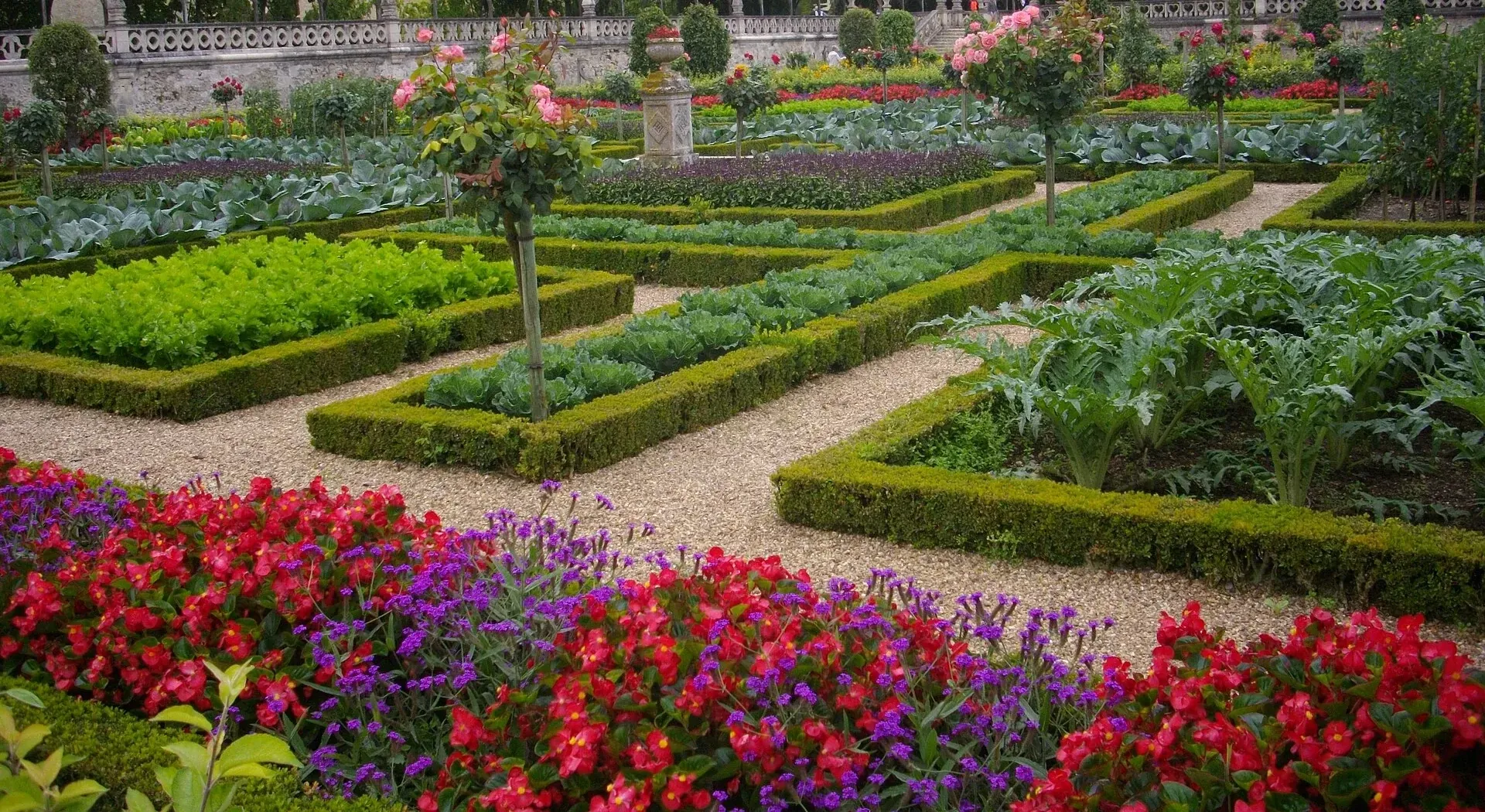

Rosemary Verey’s Barnsley House
Small edged beds of crops and flowers together
In the early 1970s Rosemary Verey made a potager, a kitchen garden laid out to be looked at, at Barnsley House in the Cotswolds, beside a woven box knot. Our Barnsley House guide shows small edged beds of crops and flowers together.
Barnsley House guideWild, woodland and shady gardens
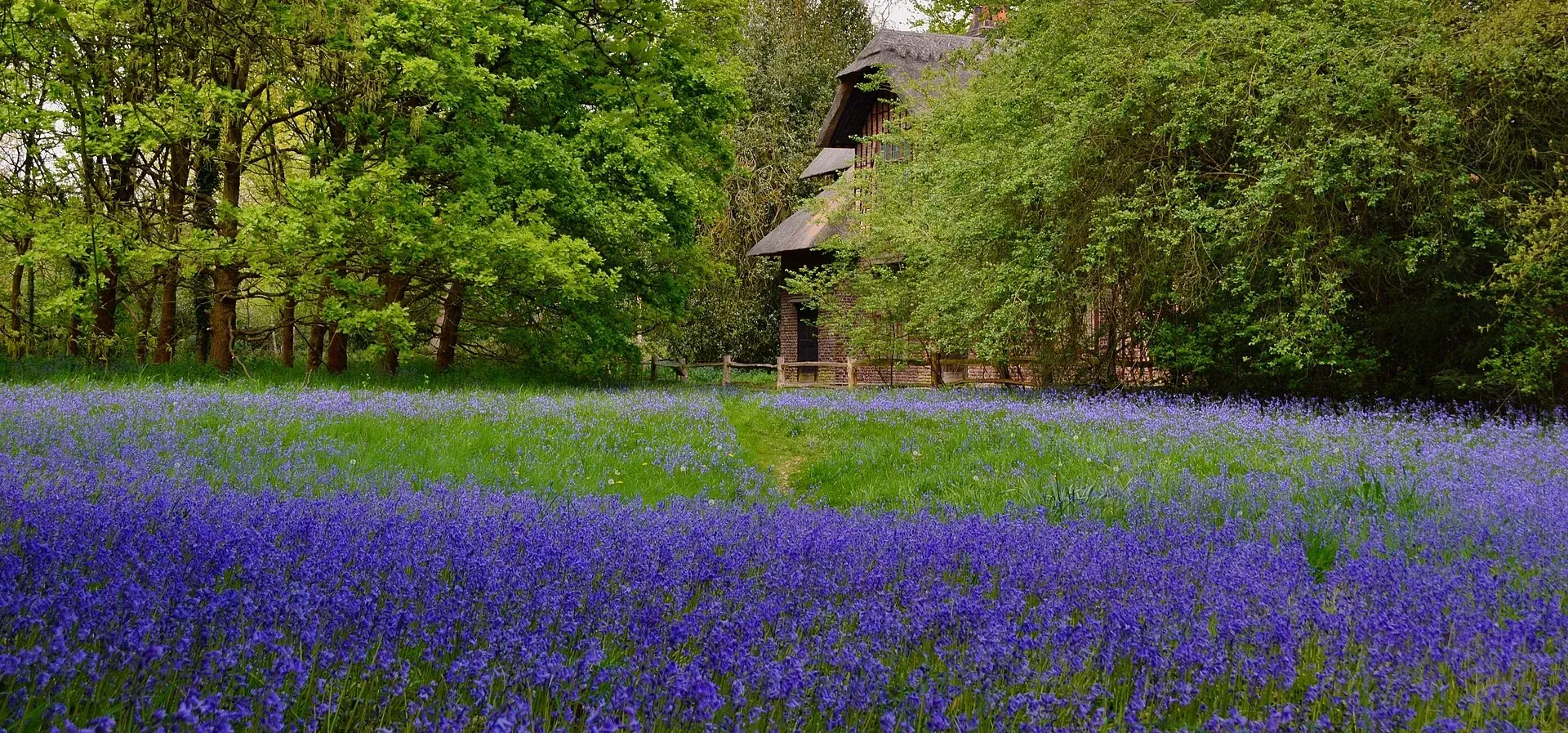

William Robinson’s Gravetye Manor
Bulbs and wild flowers in grass, borders in layers
Gravetye Manor in Sussex is where William Robinson, the Victorian writer of The Wild Garden, made his own garden from 1885: bulbs and wild flowers in the grass, and borders planted in layers from the first snowdrops to the autumn asters. See our Gravetye guide.
Gravetye guide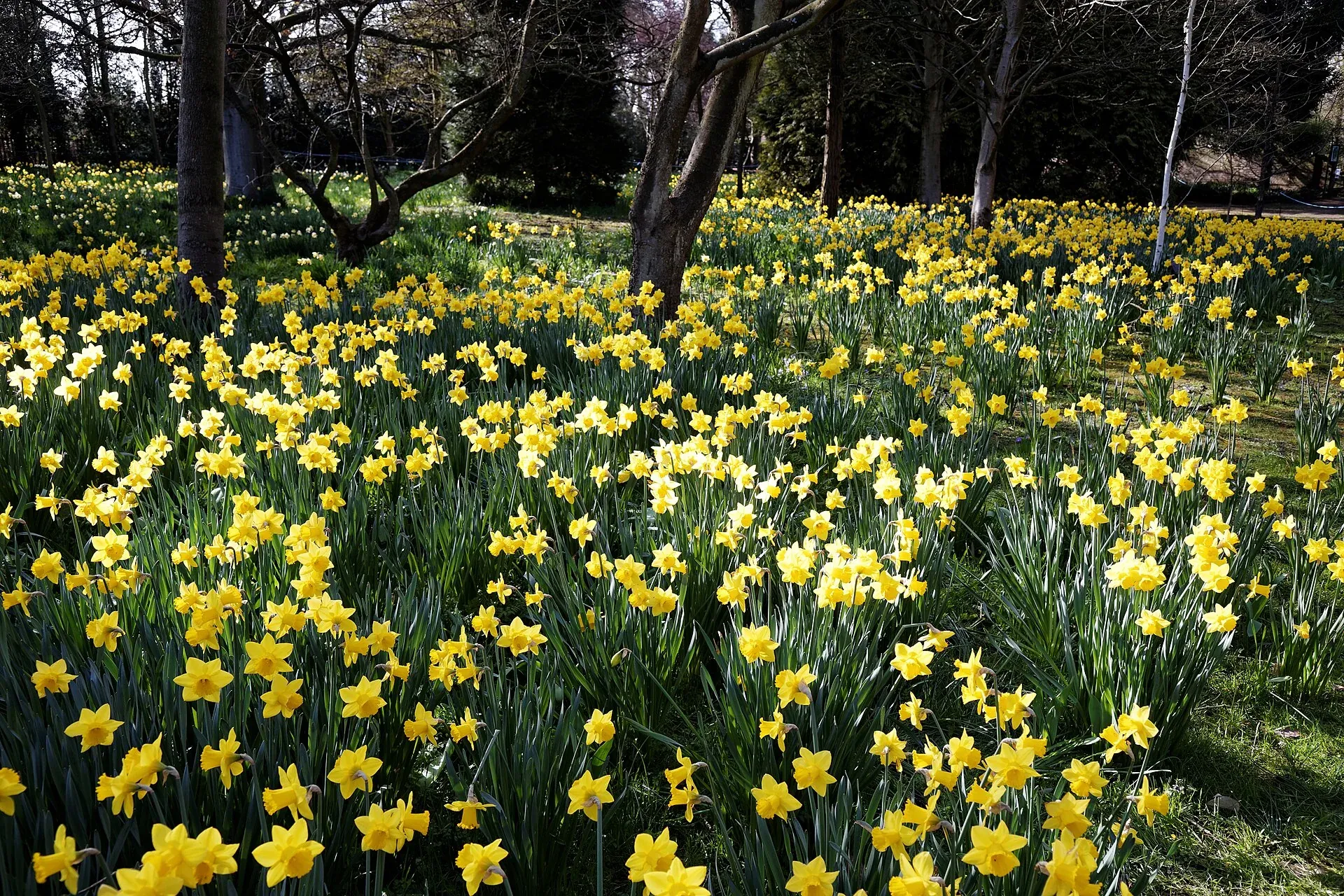

The Beth Chatto Woodland Garden
Ground cover and drifts of bulbs under old oaks
Beth Chatto made the Woodland Garden near Colchester in Essex after the Great Storm of 1987 cleared space under old oaks. Ground cover traps the falling leaves and bulbs flow from snowdrops to daffodils to fawn lilies. Read the Beth Chatto guide if your garden is shady.
Beth Chatto guide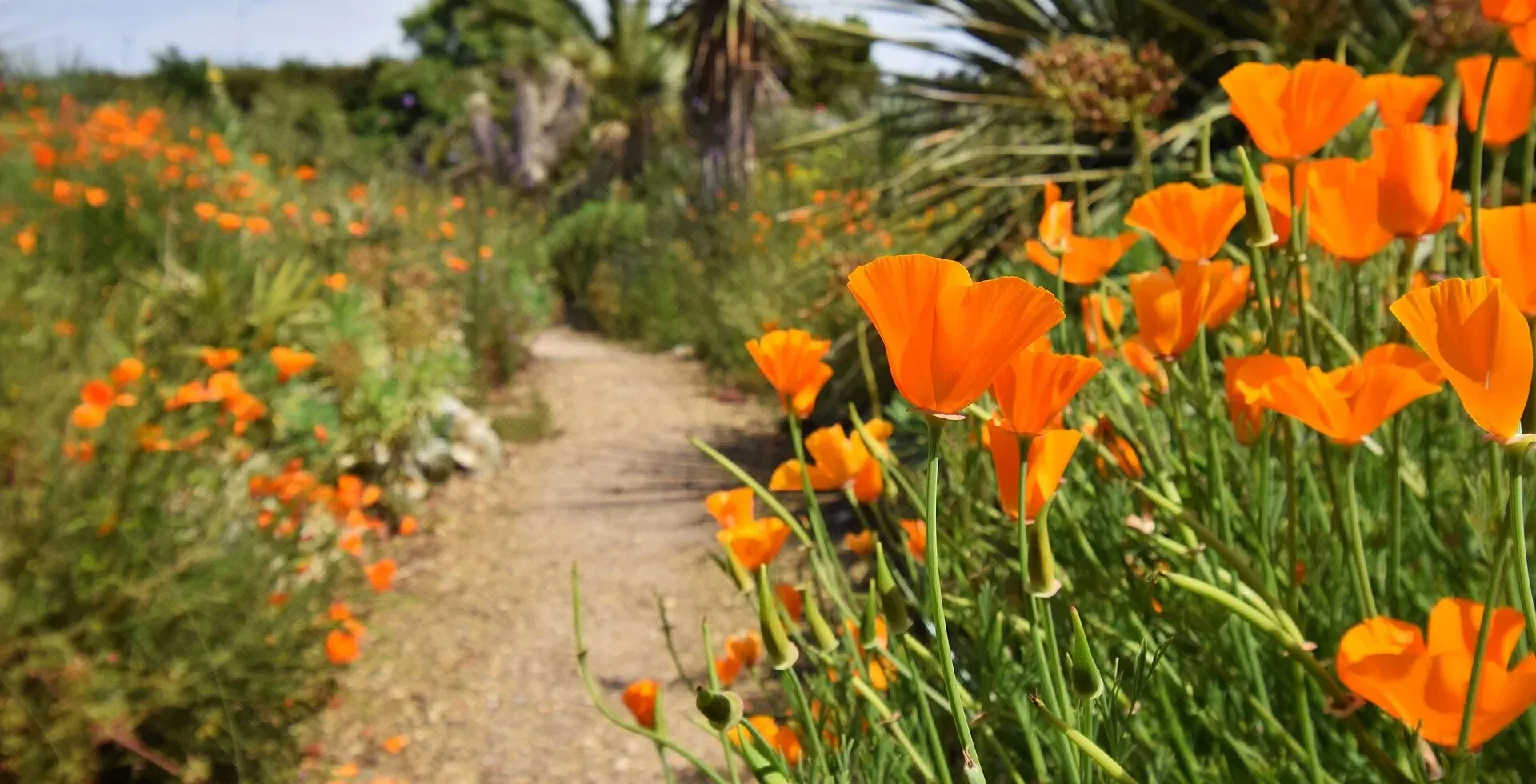

Carol Klein’s Glebe Cottage
Crammed planting grown from seed, carried into shade
Carol Klein has shaped her garden at Glebe Cottage in North Devon for almost five decades, packing its terraces with plants she mostly grew from seed. Our shady look inspired by it carries that crammed planting under trees: see the Glebe Cottage guide.
Glebe Cottage guideA garden for winter
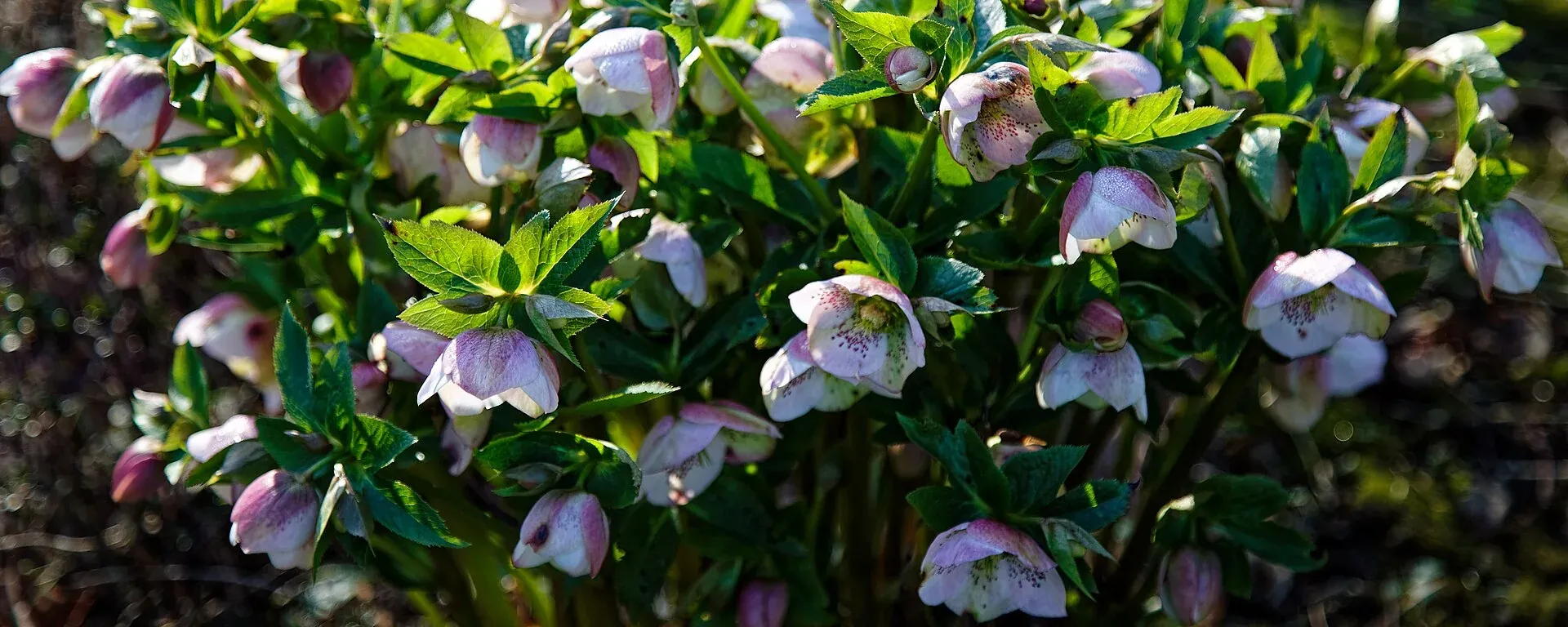

Higher Cherubeer, Devon
Snowdrops, hellebores, scent and glowing stems from January
Jo and Tom Hynes’s garden in Devon glows from January: snowdrops, cyclamen and hellebores under shrubs, the scented Daphne bholua and the orange dogwood ‘Midwinter Fire’. Our winter cottage garden guide shows the look, and our winter interest plants page has more to choose from.
Winter garden guideWhat these gardens have in common
Different as they look, the same few ideas of English garden design run through them, and every one works in a back garden.
A firm frame, loose planting
Box at Sissinghurst and Charleston, yew at Great Dixter and Wollerton: the frame stays tidy all year, so the planting can be as full as you like. This is English garden style at its simplest.
A narrow band of colour
The White Garden keeps to white and silver, Perch Hill to plum and orange. Fewer colours look richer.
Rooms
Wollerton’s lilac room and Hot Garden each keep their own colours, so one garden holds several moods.
Flowers in every season
Plan for something in flower every season, as at Gravetye from snowdrops to asters, so the garden never has a dull month.
Repetition
Jekyll repeated silver leaves through her border. Repeating is what makes English country garden style look planned rather than crowded.
English country garden plants through the year
These are the English country garden flowers and shrubs the gardens above are known for, and where each grows. In our own designs inspired by these gardens, other plants are our choices for the look, never plants claimed for the gardens.
| Season | Plants, and where they grow |
|---|---|
| Winter | Snowdrops (Galanthus), hellebores (Helleborus), cyclamen At Higher Cherubeer; snowdrops also at Gravetye and Beth Chatto’s. Daphne bholua; dogwood ‘Midwinter Fire’ (Cornus sanguinea) At Higher Cherubeer. |
| Spring | Tulips (Tulipa) In the Jewel Garden, at Perch Hill and at Charleston. Daffodils (Narcissus), fawn lilies (Erythronium) In Beth Chatto’s Woodland Garden. |
| Summer | Old roses (Rosa), geraniums, campanulas, white foxgloves (Digitalis purpurea) At Mottisfont. Hollyhocks (Alcea rosea), red hot pokers (Kniphofia) At Charleston. Phlox At Wollerton Old Hall. |
| Autumn | Dahlias (Dahlia), cannas At Longmeadow; dahlias also at Perch Hill and Charleston. Asters At Gravetye. |
| All year | Yew (Taxus baccata), box (Buxus sempervirens) At Great Dixter, Wollerton, Sissinghurst and Allt-y-bela. |
How to choose a look for your own garden
The best look for your garden is the one that suits the light and space you have, not only the garden you love most. These four rules narrow nineteen gardens down to one or two worth trying.
Sun or shade
Start with your light, not your favourite garden. Sun suits the hot and jewel looks. Part shade suits Beth Chatto’s woodland, Glebe Cottage and Gravetye’s bulbs in grass; our woodland and shade planting page has more for under trees.
A small garden
In a small English garden, borrow one room rather than a whole estate. Sissinghurst’s Cottage Garden is only four beds, and the White Garden’s low box hedges work at any size; our white garden page shows the look in ordinary gardens.
A tight budget
On a tight budget, take the cheapest ideas: seed, as Carol Klein grows most of her plants; self seeders in the paving, as at East Lambrook; and bulbs.
Where to begin
To make an English country garden of your own, do the frame first: a low hedge, a path or a clear edge to the beds. The planting can come in stages. For more English country garden ideas, our cottage garden design page shows whole gardens in the style.
Garden Design App
How can we help you transform your garden to look like an old English garden?
Knowing whether a famous look suits your plot is the hard part, and it is hard to do in your head. A white garden can lift a shady corner or look flat against a pale fence, a hot border can glow or fight with your brickwork, and a mistake costs money and a whole season to find out. Garden Design App takes the guesswork away. It redesigns your own garden in the old English garden look you love, one border or the whole garden, so you see the result before you buy a single plant.
Think of a June evening: a path from the back door between low clipped hedges, roses over an arch, borders so full that no soil shows, and pale flowers still catching the last of the light. In spring there are bulbs under the trees, and in January snowdrops and hellebores glow beneath the shrubs. Ask for exactly that, and the app draws it into your garden, around the house, trees and fences you already have.
What you can ask for
Type any of these into the “Anything else?” box, in your own words:
- White roses over an arch, with silver leaves along the front, like Sissinghurst’s White Garden
- Red poppies threaded through lime green spurges all down the border, as at Great Dixter
- A low hedge that divides the garden into rooms, each with its own colours, like Wollerton Old Hall
- A path to the door with flowers in every colour spilling over both sides, like Beatrix Potter’s Hill Top
- One broad sweep of snowdrops and pale daffodils under the trees, like Beth Chatto’s Woodland Garden
- Orange dogwood stems, with snowdrops and hellebores under the shrubs, like Higher Cherubeer in January
How to design an old English garden in five steps
- Start a free garden design. Press “Start my free garden design” and add a photo of the part of the garden you want to transform. Your house, trees and fences stay where they are.
- Choose Cottage for the style, then the colour choice nearest the garden you love: White & silver for Sissinghurst’s White Garden, Hot & bright for Great Dixter or Sissinghurst’s Cottage Garden, Cool & soft for Mottisfont’s roses, Purple & orange for Perch Hill, Blue to gold for Gertrude Jekyll’s border, or All colours for Hill Top. For a shady garden like Beth Chatto’s woodland, pick Shady (under 3 hrs) for the light too.
-
Ask for that garden’s touches in the “Anything else?” box.
“Put white roses over an arch at the end of the path, edge the beds with low clipped box and put silver leaves along the front.”
- See your garden transformed in just one minute. Look at the planting against the house, trees and fences the app keeps. Try a few looks one after another, the White Garden’s white and silver, then Great Dixter’s hot clashes, and choose with your eyes rather than guess.
- Turn it into a garden you can plant. With Pro or Max (£29 or £49, paid once), every plant in your design is named, chosen to suit your light and soil and ready to buy, with the pot size and how tall it grows, plus a care guide and flowering calendar. You spend on a garden you have already seen.
Why try it with Garden Design App first?
No guesswork
You don’t need to know the name of a single plant. You see the planting against your own fence, lawn and patio before you spend anything on it, and if a hot border fights with your brickwork, you try a cooler look.
Plants that will thrive
Pro and Max pick every plant to thrive where you live, in your light and soil, and name each one ready to buy, so a sunny border and a shady corner each get plants that suit them. Measured borders also tell you how many of each to buy.
Your garden stays familiar
Your house, trees and fences stay where they are, so the design fits the garden you already have, whether that’s one border or the whole plot.
A design in just one minute
A garden designer can take weeks to months to come back with a first design, and the average UK garden design costs £1,950. Save over £1,900, and start today with 3 free designs.
A real garden, before and after
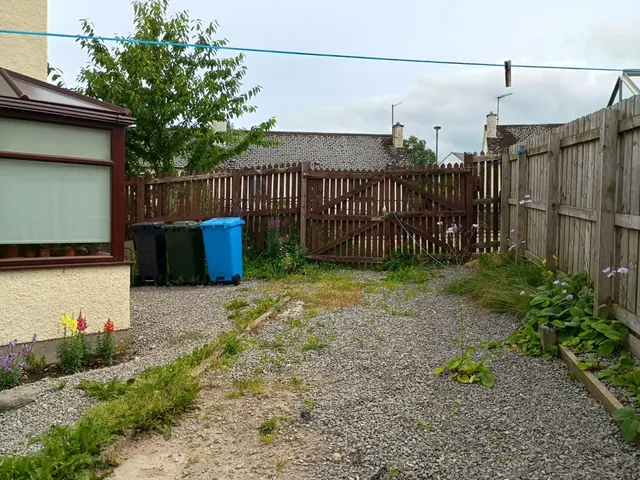 Original garden
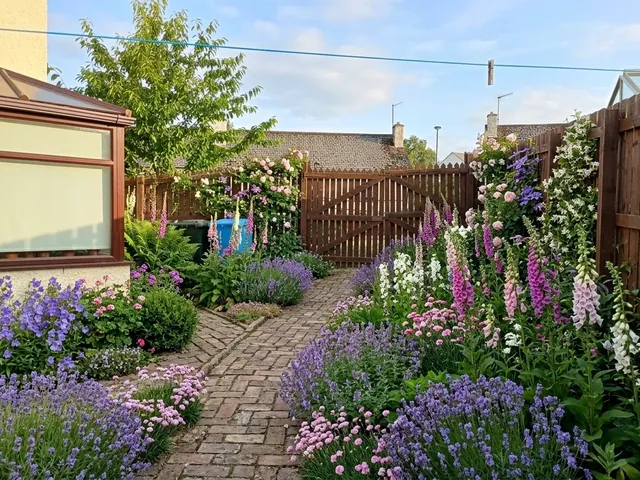 Cottage design
Over 500 garden designs made.
Try a layout before you spend on plants or a designer
If the hedge takes too much of a small lawn, or the colours feel too loud beside your house, try a second layout while it’s still easy to change. Once you’ve found a layout you like, the planting list with Pro or Max tells you what to buy, so you can go to the garden centre with a plan. A garden designer can visit, measure and oversee the build. When you want that help, bring the look you found here.
Start with 3 free designs
Your first 3 designs are free, with no card needed, so you can try three of these gardens’ looks before you spend anything: the White Garden’s white and silver, Great Dixter’s clashing borders and Hill Top’s path of flowers. For more ideas, our cottage garden design page shows real gardens redesigned in the Cottage style, our design my garden page shows how it works, and each garden above has its own guide.
What you get with Garden Design App
Start free. When you’re ready for a plan you can plant from, choose Pro or Max. One payment, no subscription.
- Free £0
- Your first 3 designs
- Lower quality images with a watermark
- Pro £29
- 20 designs over 14 days
- 5 free designs on top
- 2 designs at once, side by side
- Max £49
- 50 designs over 30 days
- 10 free designs on top
- 4 designs at once, side by side
Turn the design you love into a garden you can plant
Every Pro or Max design comes with a Garden Transformation Pack: the plants, layout, materials and features, with a full care guide.
- Know what to buy. Get plants picked to thrive where you live, in your light and soil. Every plant is named, with the pot size to buy and how tall it grows. For a measured border, you also get how many of each plant to buy.
- Plan the whole garden. Get a layout and the features in your design, plus materials from gravel to fencing with whole garden designs.
- Know what to do through the year. Use the care guide to look after your plants and the flowering calendar to see what comes into bloom next.
- See the detail and ask for changes. Get higher quality images without a watermark, and change any design in your own words.
Your first 3 designs are free, with no card needed.
Questions about old English gardens
What does an old English garden look like?
Most of the famous ones pair a firm frame of hedges, walls or paths with generous planting inside it: white flowers in low box hedges at Sissinghurst, packed borders inside yew at Great Dixter, flowers, fruit and vegetables either side of a path at Hill Top.
How can I make my garden look like an old English garden?
Give it the two things every garden on this page is built on: a firm frame of a low hedge, a path or a clear edge to the beds, and generous planting inside it, in a narrow band of colour with something in flower every season. To try the look before you buy plants, add a photo of your garden to Garden Design App, choose Cottage and the colour choice nearest the garden you love, such as White & silver for the White Garden, and ask for its touches in your own words. Your garden is redesigned in just one minute, and your first 3 designs are free.
What flowers are in a traditional English garden?
The gardens here are known for roses, foxgloves and campanulas (Mottisfont), hollyhocks and dahlias (Charleston), phlox (Wollerton Old Hall), tulips (the Jewel Garden) and snowdrops and hellebores (Higher Cherubeer). Our season by season table shows where each grows.
What is an English garden?
In everyday use it means a planted, flower filled garden like those on this page: a clear frame, generous borders and something in flower for much of the year. The name is also used for the grand landscape parks of lawns, lakes and temples, which this page does not cover.
Who are the most famous British gardeners behind these gardens?
Gertrude Jekyll, Vita Sackville-West, William Robinson, Christopher Lloyd, Margery Fish, Rosemary Verey and Beth Chatto, alongside gardeners working today such as Arne Maynard, Sarah Raven, Monty Don and Carol Klein.
Can I recreate a famous garden in a small garden?
Yes, if you borrow one idea rather than the whole place: one room, one colour band or one border. Add a photo of your garden to Garden Design App, choose the Cottage style and see it redesigned in just one minute before you buy a plant.
Can I visit these gardens?
Several are open to visitors, Hill Top among them; check each garden’s own website before you travel. Istvan Dudas’s garden is private.
About the author
Sources
- Our guide: Sissinghurst White Garden
- Our guide: Mottisfont rose garden
- Our guide: Cottesbrooke Hall
- Our guide: Sissinghurst Cottage Garden
- Our guide: Perch Hill
- Fine Gardening, Istvan Dudas’s garden (Garden Photo of the Day)
- Our guide: a blue and orange cottage garden
- Our guide: Charleston
- Our guide: the Jewel Garden at Longmeadow
- Our guide: Gertrude Jekyll’s colour border
- Our guide: Great Dixter
- Our guide: Wollerton Old Hall
- Our guide: Allt-y-bela
- Our guide: Hill Top
- Our guide: East Lambrook Manor
- Our guide: Barnsley House
- Our guide: Gravetye Manor
- Our guide: Beth Chatto Woodland Garden
- Our guide: Glebe Cottage
- Our guide: Higher Cherubeer winter garden
- Garden Design App homepage