
How we can help
How can you transform your garden to look like Vita’s Sunset Garden?
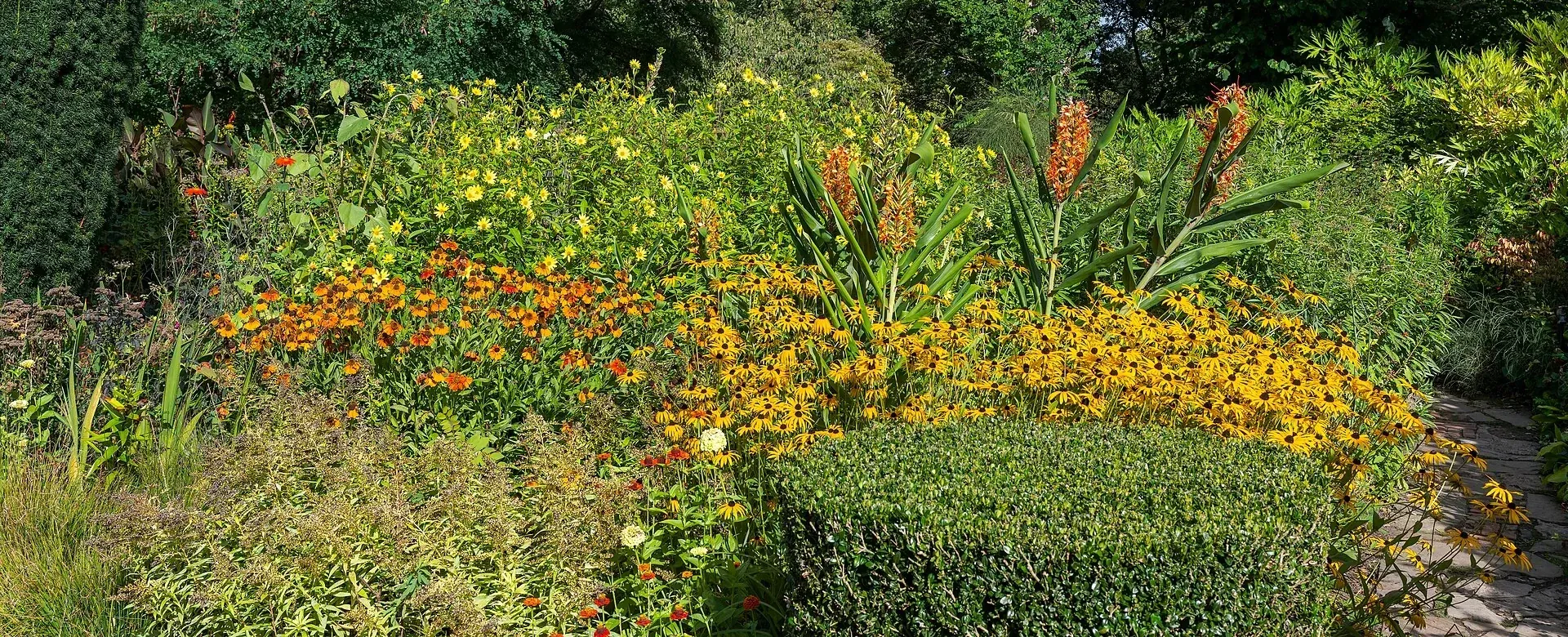
Vita and Harold took almost three years just to clear the ground at Sissinghurst. With Garden Design App, you add a photo of your garden, choose the Cottage style with Hot & bright colours, and ask for the Sissinghurst touches you love: low clipped box edging, orange wallflowers along the path, and crocosmia, dahlias and red hot pokers in front of dark upright evergreens. In just one minute you see your garden redesigned in red, orange and yellow, with your house, trees and fences kept.
- See the look before you spend. Orange is a bold choice, and hot colours can glow or fight against your own brick and fences. Try the sunset bed by the patio, then along the path, and keep the design you love.
- Plants that will grow for you. With Pro or Max, every plant is named and picked to thrive where you live, in your light and soil, ready to buy, with a flowering calendar that shows the colour handing over from spring wallflowers to autumn sedums.
- Save over £1,900. The average UK garden design costs £1,950, and a designer can take weeks to months to come back with a first design. Garden Design App gives you one in just one minute.
Your first 3 designs are free, with no card needed.
See a real Cottage garden redesignWhat the Sissinghurst Cottage Garden is, and who made it
Sissinghurst Castle Garden sits in the Weald of Kent. It was never really a castle: the name was taken up in the 18th century, when the great Tudor house there was used as a camp for French prisoners of war, and by the 20th century the place had fallen to a farmstead. The poet and writer Vita Sackville-West bought it in 1930 with her husband, the author and diplomat Harold Nicolson. What they found, in her words, was weed, rough grass, broken fencing and chicken runs. Clearing the ground took almost three years, and by 1939 the garden was largely made. Garden history
The work was split cleanly. Harold planned the design: long straight walks opening onto enclosed ‘garden rooms’, each walled by clipped hedges or old brick, each with its own colour or theme. Vita did the planting. The garden first opened to paying visitors in 1938, and after Vita died in 1962 it passed to the National Trust in 1967. It is listed Grade I and counted among the most famous gardens in England, best known for its old roses and its White Garden. Garden history
The Cottage Garden, also called the Sunset Garden, lies outside the front door of the South Cottage, where the couple had their bedrooms and Harold his writing room. Sissinghurst’s head gardener, Troy Scott Smith, describes it as the innermost of what Harold called the garden’s “succession of privacies”, and writes that the pair thought of it as “our own little garden”. Gardenista · Garden history · Gardens Illustrated · Country Life
It has four beds with simple paths between them. It faces west, it holds no white flowers, and it is filled with saturated red, orange and yellow, a colour scheme both of them claimed as their own idea. Vita summed it up as “a muddle of flowers but all of them in the range of colours you might find in a sunset”. Gardenista describes it as a place to sit at the end of the day and watch the sun go down, while the Sissinghurst White Garden was somewhere to eat at night. Garden history · Country Life · Gardenista
The garden is open to visitors; for times and tickets, see the National Trust’s Sissinghurst page. For more gardens worth borrowing from, our famous gardens guide gathers them in one place.
Why Vita’s sunset colours work
A hot colour garden can easily look like a jumble. Sissinghurst’s Cottage Garden does not, and the reasons are ideas any homeowner can use when planning a red and orange border of their own.
Keep to one family of colours
Troy Scott Smith writes that “Vita carefully restricted her planting to variations of orange, red and yellow”. Within that rule there is a wide range, from primrose and apricot to scarlet and rust, but nothing outside it. Leaving out white, pink and blue is what lets the orange and yellow flowers read as one warm glow rather than a mixed bag. Gardens Illustrated
Add a dark base note
Scott Smith calls foliage the base note of the whole scheme. In the Cottage Garden the purple leaves of Canna ‘Wyoming’ echo the wine coloured roses, and tall dark Irish yews stand behind the beds. A red and orange garden needs that shadow to glow against. Gardens Illustrated · Gardenista
Strict frame, loose filling
Harold drew straight lines; Vita filled them. Wikipedia sums up her approach as “profusion, even extravagance and exuberance, within confines of the utmost linear severity”. Scott Smith notes that Harold’s structure shows itself again each autumn as the flowers die back. The frame is what makes the muddle look deliberate. Garden history · Gardens Illustrated
Cram it
Vita’s advice in her Observer column was “Cram, cram, cram, every chink and cranny”. At Sissinghurst the spring wallflowers are packed in (Scott Smith says 12 to a square yard is not too many), and the low cushions of flower spill over the paths. It is the overall effect that counts, not each plant. Garden history · Country Life · Gardens Illustrated
Plant for the evening sun
The Cottage Garden faces west, so the low sun lights the hot colours just as the day ends. Put your sunset bed where you will see it at that hour: by the patio, beside a bench, or in view of the kitchen window. Gardenista
Accents and an airy thread
Scott Smith writes that the accents come from red hot pokers, the tall Iris spuria and Verbascum ‘Polarsommer’, while the light, airy yellow Patrinia scabiosifolia knits the planting together, its flowers punctuating the air “like a swarm of hovering flies”. In our look, fennel takes on that airy job. Gardens Illustrated

Hot border plants through the year
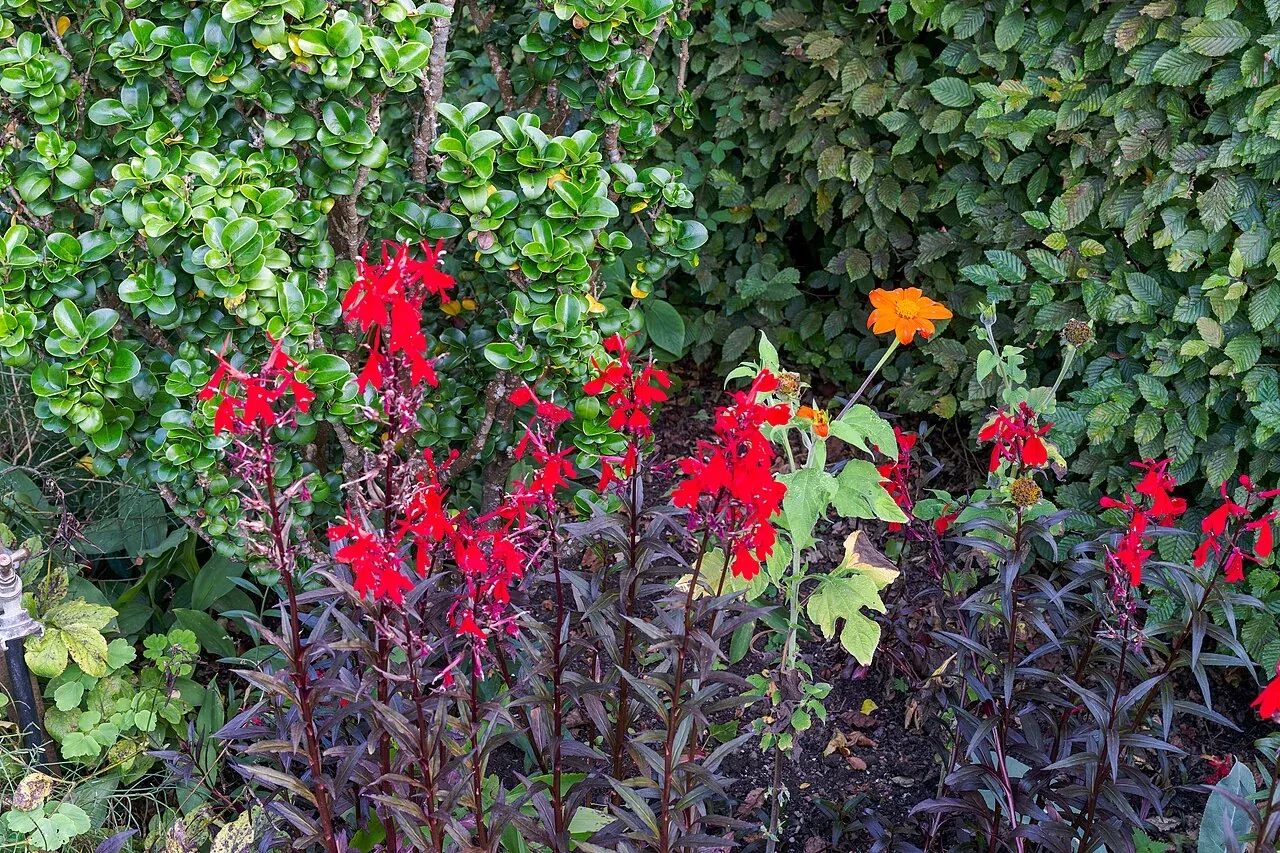
First, the plants that Gardens Illustrated, Country Life and Gardenista say grow at Sissinghurst. Then a few of the plants in our sunset cottage look inspired by the Sissinghurst Cottage Garden, season by season. Our look is our own selection: where a Sissinghurst plant is not on our list, we use one in the same colour and role.
Sissinghurst Cottage Garden plants from published accounts
- Wallflowers ‘Blood Red’ and ‘Fire King’
- The old single colours, sown in June, planted out in mid October and packed in. Country Life
- Crocosmia ‘Lucifer’ and dahlias
- The vermilion crocosmia with dahlias, Harold’s favourite flower, in high summer. Gardens Illustrated
- Canna ‘Wyoming’
- Purple leaves that echo the wine coloured roses: the dark base note. Gardens Illustrated
- Red hot pokers and achilleas
- Summer accents and flat heads, with the silver Verbascum ‘Polarsommer’; Vita liked the pokers and Harold hated them. Gardens Illustrated
- Helenium ‘Moerheim Beauty’ and daylilies
- Rusty daisies and orange daylilies, with tall Irish yews behind the beds. Gardenista
- Sedums and Euonymus alatus
- The low smoulder and the burning torch of October, written of the garden as a whole. Gardens Illustrated
In spring, Scott Smith also describes spires of lupins, opening peonies, irises and columbines in the Cottage Garden, with bulbs from Persia and Turkey threaded through. Country Life
Plants for a hot border at home
Each season below starts with what grows at Sissinghurst, then the plants in our sunset cottage look. Start with a plant or two for each season, repeat them through the bed, and keep strictly to red, orange and yellow.
| Season | What to plant |
|---|---|
| Spring | Wallflowers packed in under tulips In the Cottage Garden, wallflowers underpin the display. The gardeners sow them in June and plant them out in mid October; Scott Smith grows the old single colours ‘Blood Red’ and ‘Fire King’. By April there are spires of lupins, opening peonies, irises and columbines, with bulbs from Persia and Turkey threaded through. In our look the orange wallflower ‘Fire King’ (Erysimum cheiri ‘Fire King’) carries the orange tulip ‘Ballerina’, with the scarlet oriental poppy ‘Beauty of Livermere’, the red lupin ‘The Page’ and the coral peony ‘Coral Charm’. Grows at Sissinghurst: wallflowers ‘Fire King’ and ‘Blood Red’, lupins, peonies, irises, columbines, and bulbs from Persia and Turkey. |
| Summer | A tidal wave of colour Scott Smith describes a “tidal wave of colour”: the vermilion Crocosmia ‘Lucifer’ with dahlias (Harold’s favourite flower), Canna ‘Wyoming’, red hot pokers, flat headed achilleas, the silver leaved Verbascum bombyciferum ‘Polarsommer’, the rusty Helenium ‘Moerheim Beauty’ and orange daylilies. All of these are in our look too, joined by the orange dahlia ‘David Howard’, the red poker ‘Nancy’s Red’, the terracotta yarrow Achillea ‘Terracotta’ and the purple black Phormium ‘Black Adder’. Harold disliked the pokers; in a 1937 letter he told Vita that “except for those beastly red hot pokers which you have a weakness for, there is not an ugly flower in the whole place”. Grows at Sissinghurst: Crocosmia ‘Lucifer’, dahlias, Canna ‘Wyoming’, red hot pokers, achilleas, Verbascum ‘Polarsommer’, Helenium ‘Moerheim Beauty’ and daylilies. |
| Autumn | A low smoulder and a burning torch Writing of the whole garden in October, Scott Smith describes the low smoulder of sedums “in hues of faded Venetian red” and “the burning torch of Euonymus alatus”. Sissinghurst now sometimes leaves its dahlias in the ground, planted a little deeper. In our look the dark leaved sedum ‘Purple Emperor’ (Hylotelephium telephium ‘Purple Emperor’), the winged spindle Euonymus alatus ‘Compactus’, Helenium ‘Butterpat’ and the orange berried Pyracantha ‘Orange Glow’ carry the colour on. Grows at Sissinghurst: sedums, Euonymus alatus and dahlias. |
| Winter | Clipped lines and copper witch hazels At Sissinghurst the clipped hedges, mostly yew, hold the garden’s lines once the flowers have gone. Our look keeps sunset colour going with the copper witch hazel ‘Jelena’ (Hamamelis × intermedia ‘Jelena’) and the red ‘Diane’, yellow aconites and an apricot hellebore, inside low box edging and upright columns of Japanese holly in place of yew. Grows at Sissinghurst: clipped yew hedges, with Irish yews behind the Cottage Garden. |
How to plant a hot border in an ordinary garden
If you came looking for hot border plants, the summer row of the table is a ready list. But the plants for a hot border are only half of it: the look comes from the frame, the restraint and the packing. Start with one bed you can see from the house in the evening, and try the edging and a few hot colours there before buying for the rest of the garden.
What to do first
Choose the bed you can see from where you sit in the evening, then build the frame before the flowers: a low clipped edge along the path, a few dark upright evergreens behind, and a dark leaved plant or two as the base note. Then plan the colours, keeping strictly to red, orange and yellow. Mid October is when Sissinghurst plants out its wallflowers, so autumn is a good moment to start.
In a small garden
One bed is enough; Sissinghurst’s own Cottage Garden is an intimate, enclosed room. Repeat a handful of plants rather than adding one of everything, and use the walls. When she arrived, Vita remarked that they were going to have “heaps of wall space for climbing things”. In our look the orange trumpet climber Campsis radicans ‘Flamenco’, the copper honeysuckle Lonicera × tellmanniana and the scarlet flowering quince ‘Knap Hill Scarlet’ cover a fence in the same colours. For red border plants that stay low at the front, our list has Geum ‘Koi’ and the wine red Gaillardia ‘Burgunder’.
In part shade
The Cottage Garden faces west and has the evening sun. If only part of your garden gets sun, keep the hot flowers there and let the shadier side carry the dark evergreen frame. When you redesign your garden in the app, choose the light the bed really gets, such as Part sun (3–6 hrs), and with Pro or Max every plant is picked to suit your light and soil.
On a tight budget
Borrow Sissinghurst’s thrifty habits: wallflowers raised in rows and packed in, dahlias sometimes left in the ground over winter, and hazel sticks for staking, which the gardeners cut from their own coppice. In our look, nasturtiums scramble through the gaps. Keeping a hot border planting scheme to a few plants, repeated, also keeps the shopping list short.
Our hot colour border page shows hot borders redesigned on real gardens, and our cottage garden plants page covers the wider cottage palette if you want softer colours elsewhere.
Garden Design App
How can we help you transform your garden to look like the Sissinghurst Cottage Garden?
Planning a hot colour garden is hard to do in your head. Orange is a bold choice: a scarlet poker can glow against a dark hedge or fight with red brick, and a bed with no frame turns from a sunset into a jumble. Mistakes cost money, and a whole season to find out. Garden Design App takes the guesswork away. It redesigns your own garden in a sunset cottage look inspired by the Sissinghurst Cottage Garden, one bed or the whole garden, so you see the result before you buy a single plant.
Think of a warm evening at the end of summer: the low sun coming in from the west and lighting up vermilion crocosmia, orange dahlias and red hot pokers, with rusty heleniums and flat yellow achilleas packed in behind a low clipped edge, and dark upright evergreens behind them making every colour glow. In spring the same bed is a carpet of scented orange wallflowers with tulips rising through, and in autumn the sedums and a red leaved spindle take over. It is a bed to sit beside at the end of the day and watch the sun go down, as the Cottage Garden outside the South Cottage was. Ask for exactly that, and the app draws it into your garden, around the house, trees and fences you already have.
What you can ask for
Type any of these into the “Anything else?” box, in your own words:
- Low clipped box edging along the path, with orange wallflowers packed in behind it
- Dark upright evergreens at the back of the bed, like the Irish yews at Sissinghurst
- Crocosmia, orange dahlias and red hot pokers for late summer
- Dark purple leaves among the flowers, such as a canna or a dark phormium
- Red, orange and yellow flowers only, with no white, pink or blue
- An orange trumpet climber or a copper honeysuckle on the sunny fence
How to design a sunset cottage garden in five steps
- Start a free garden design. Press “Start my free garden design” and add a photo of the part of the garden you want to transform. Your house, trees and fences stay where they are.
- Choose Cottage for the style, then pick Hot & bright for the colours, the nearest of the app’s colour choices to Vita’s reds, oranges and yellows.
-
Ask for the Sissinghurst touches you love in the “Anything else?” box.
“Make a sunset bed I can see from the patio in the evening, in red, orange and yellow only. Edge it with low clipped box along the path, put dark upright evergreens behind, and fill it with crocosmia, dahlias and red hot pokers.”
- See your garden transformed in just one minute. Look at the hot colours against the house, trees and fences the app keeps, and judge them against your own brick and light before you spend anything. Try it with the frame and without it, or with hot colours in one bed only, and keep the one you love.
- Turn it into a garden you can plant. With Pro or Max (£29 or £49, paid once), every plant in your design is named, picked for your light and soil and ready to buy, with the pot size and how tall it grows. A care guide and flowering calendar keep the colour going from the wallflowers in spring to the sedums in autumn.
Why try it with Garden Design App first?
No guesswork
You don’t need to know the name of a single plant. You see the hot colours against your own fence, lawn and patio before you spend anything on them, and if the orange fights with your brickwork, you try a version with deeper reds and more dark leaves.
Plants that will thrive
Pro and Max pick every plant to thrive where you live, in your light and soil, and name each one ready to buy. Measured borders also tell you how many of each to buy, which matters when the look depends on cramming the plants in.
Your garden stays familiar
Your house, trees and fences stay where they are, so the design fits the garden you already have, whether that’s one sunset bed or the whole plot.
A design in just one minute
A garden designer can take weeks to months to come back with a first design, and the average UK garden design costs £1,950. Save over £1,900, and start today with 3 free designs.
A real garden, before and after
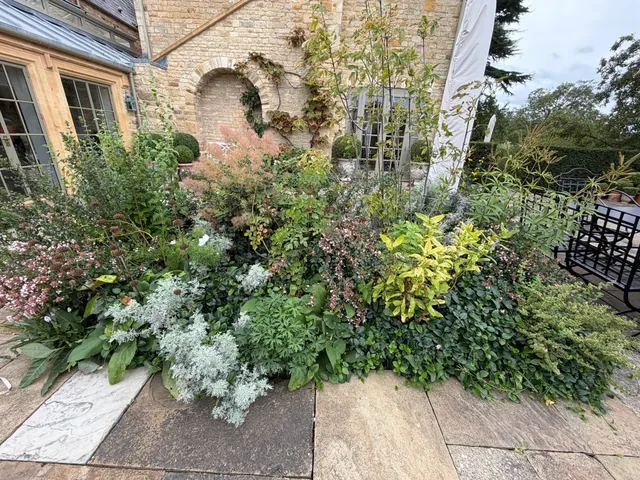 Original garden
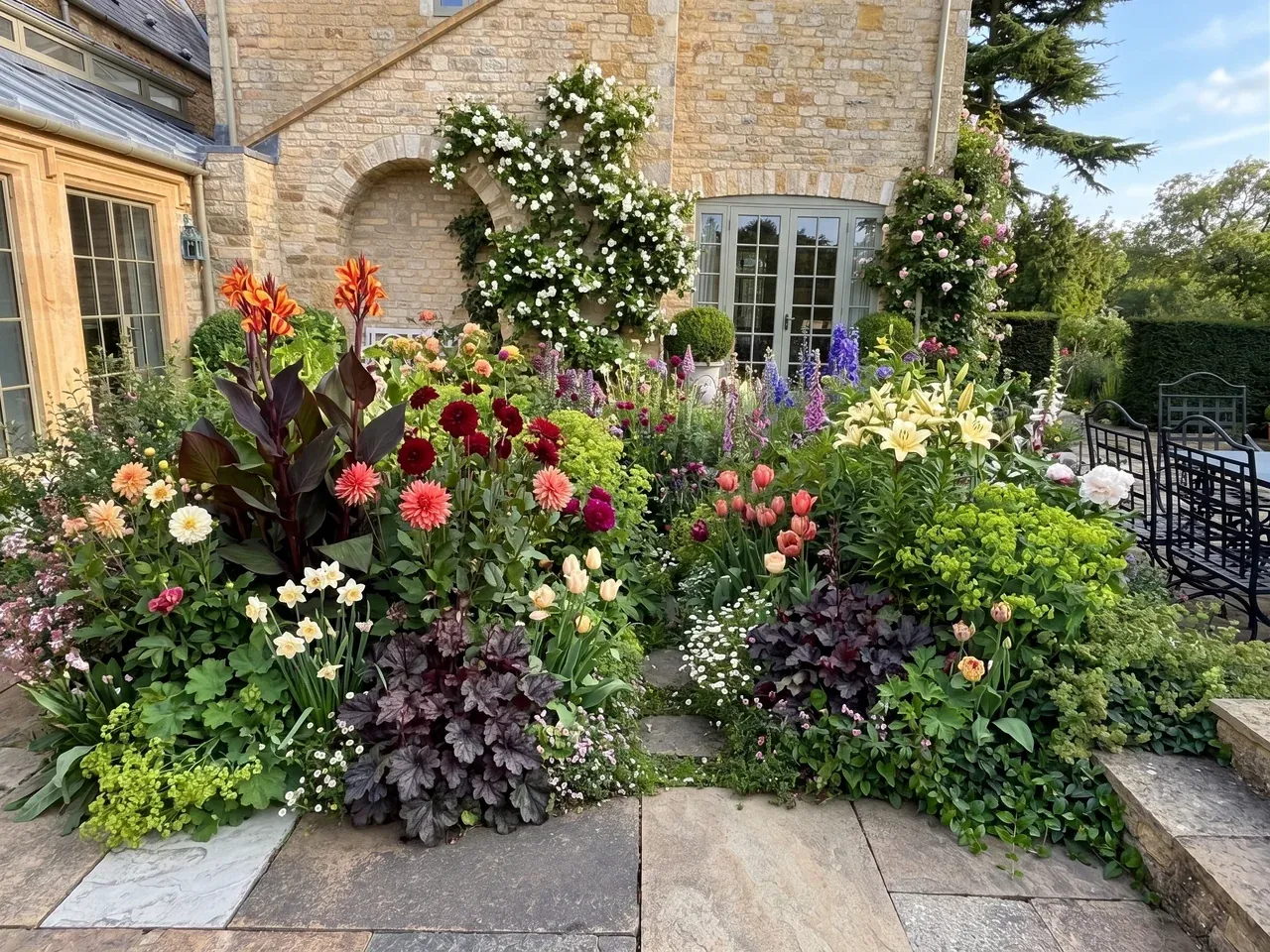 Cottage design
Over 500 garden designs made.
Try a layout before you spend on plants or a designer
If the orange feels too loud beside your house, or the dark evergreens crowd a small bed, try a second layout while it’s still easy to change. Once you’ve found a layout you like, the planting list with Pro or Max tells you what to buy, so you can go to the garden centre with a plan. A garden designer can visit, measure and oversee the build. When you want that help, bring the look you found here.
Start with 3 free designs
Your first 3 designs are free, with no card needed, so you can try the sunset look three times before you spend anything: with the frame, without it, and with hot colours in one bed only. For more ideas, our cottage garden design page shows real gardens redesigned in the Cottage style, our design my garden page shows how it works, our Sissinghurst White Garden guide covers the cool white room next door, and our famous gardens guide has more great gardens to borrow from.
What you get with Garden Design App
Start free. When you’re ready for a plan you can plant from, choose Pro or Max. One payment, no subscription.
- Free £0
- Your first 3 designs
- Lower quality images with a watermark
- Pro £29
- 20 designs over 14 days
- 5 free designs on top
- 2 designs at once, side by side
- Max £49
- 50 designs over 30 days
- 10 free designs on top
- 4 designs at once, side by side
Turn the design you love into a garden you can plant
Every Pro or Max design comes with a Garden Transformation Pack: the plants, layout, materials and features, with a full care guide.
- Know what to buy. Get plants picked to thrive where you live, in your light and soil. Every plant is named, with the pot size to buy and how tall it grows. For a measured border, you also get how many of each plant to buy.
- Plan the whole garden. Get a layout and the features in your design, plus materials from gravel to fencing with whole garden designs.
- Know what to do through the year. Use the care guide to look after your plants and the flowering calendar to see what comes into bloom next.
- See the detail and ask for changes. Get higher quality images without a watermark, and change any design in your own words.
Your first 3 designs are free, with no card needed.
Questions about the Sissinghurst Cottage Garden
What colours are in the Sissinghurst Cottage Garden?
Only red, orange and yellow, in many shades, with no white flowers at all. Vita described them as the colours of a sunset, which is why it is also called the Sunset Garden. Dark foliage, such as the purple leaves of Canna ‘Wyoming’, sits underneath as a base note. Gardens Illustrated · Gardenista
How can I make my garden look like the Sissinghurst Cottage Garden?
Give it the three things the Cottage Garden is built on: a firm frame of low clipped edging and dark evergreens, flowers kept strictly to red, orange and yellow, and dark leaves underneath as a base note. To try the look before you buy plants, add a photo of your garden to Garden Design App, choose Cottage with Hot & bright, and ask for box edging and orange wallflowers along the path in your own words. Your garden is redesigned in just one minute, and your first 3 designs are free.
What are good hot border plants?
For summer, the plants that make Sissinghurst’s Cottage Garden: Crocosmia ‘Lucifer’, dahlias, red hot pokers, achilleas, Helenium ‘Moerheim Beauty’ and orange daylilies, with wallflowers in spring. Back them with dark foliage and keep to red, orange and yellow. Our season by season table adds plants for every month of the year.
Is the Sissinghurst Cottage Garden a real cottage garden?
In spirit more than in fact. Vita admired William Robinson, who did much to popularise the cottage garden, and the planting is crammed and informal. But the garden writer Tony Lord, quoted on Wikipedia, said it is as much a traditional cottage garden as Marie Antoinette was a milkmaid. Garden history
Can you have a hot colour garden in a small space?
Yes. One bed is enough; Sissinghurst’s own Cottage Garden is a small, enclosed room of four beds. Repeat a handful of plants rather than one of everything, put a climber in the same colours on the wall or fence, and keep to red, orange and yellow. To check it fits before you plant, try it in Garden Design App with Cottage and Hot & bright; your first 3 designs are free.
Who was Vita Sackville West’s husband?
Harold Nicolson, a diplomat, author and diarist, whom she married in 1913. At Sissinghurst he was largely responsible for the design and layout of the garden, while she did the planting. He loved dahlias and hated the red hot pokers she grew in the Cottage Garden. Garden history
When did Vita Sackville-West die?
On 2 June 1962, at Sissinghurst, in a bedroom of the Priest’s House. Her son Nigel then negotiated the handover of the castle and garden to the National Trust, which took them over in 1967. Harold died at the South Cottage in 1968. Garden history
About the author
Sources
- Wikipedia, Sissinghurst Castle Garden
- Gardenista, Garden Visit: Vita’s Sunset Garden
- Gardens Illustrated, High summer at Sissinghurst by Troy Scott Smith
- Country Life, April jobs for the English cottage garden by Troy Scott Smith
- Gardens Illustrated, Appreciating Sissinghurst Castle Garden in autumn by Troy Scott Smith
- Garden Design App homepage