
How we can help
How can you transform your garden to look like Barnsley House?
It is hard to picture box edged beds, a clipped knot and arches of beans on your own plot, and it took Rosemary and David Verey from the 1950s into the 1970s to make theirs. With Garden Design App, you add a photo of your garden, choose the Cottage style with Yellow & purple colours, and ask for the Barnsley touches you love: box edged beds of runner beans and cottage flowers, a clipped knot by the house, an apple trained on the fence. In just one minute you see your garden redesigned in a potager look inspired by Barnsley House, with your house, trees and fences kept.
- See the look before you spend. The paths, edging and beds of a potager are the permanent, costly part. Try four beds, then six, or the knot by the back door instead of out on the lawn, and keep the design you love.
- Plants that will grow for you. With Pro or Max, every plant is named and picked to thrive where you live, in your light and soil, ready to buy, with a care guide to grow it well.
- Save over £1,900. The average UK garden design costs £1,950, and a designer can take weeks to months to come back with a first design. Garden Design App gives you one in just one minute.
Your first 3 designs are free, with no card needed.
See a real Cottage garden redesignWhat is Barnsley House, and who made its garden?
Barnsley House is a stone house of the late 1600s in the Cotswold village of Barnsley, a few miles north east of Cirencester. For well over a century it was the village rectory. Cecil and Linda Verey bought it in 1939, and in 1952 it passed to their son David, an architectural historian, and his wife Rosemary. Parks and Gardens UK
Together they made the Barnsley House garden through the 1950s and 1960s, keeping the walls, summerhouse and trees of earlier owners, and the work ran on into the early 1970s. Parks and Gardens UK
Rosemary Verey became a plantswoman, writer, broadcaster and garden designer, and in the 1980s and 1990s the garden became one of the most famous in the world. Country Life explains why it touched so many people: its potager and woven knot were on a scale ordinary gardeners could relate to. She died in May 2001, the house came up for sale the following year, and it is now a hotel that has looked after her garden closely. The garden is open to hotel guests, with occasional public open days; the hotel’s own website has the details. Parks and Gardens UK · Country Life
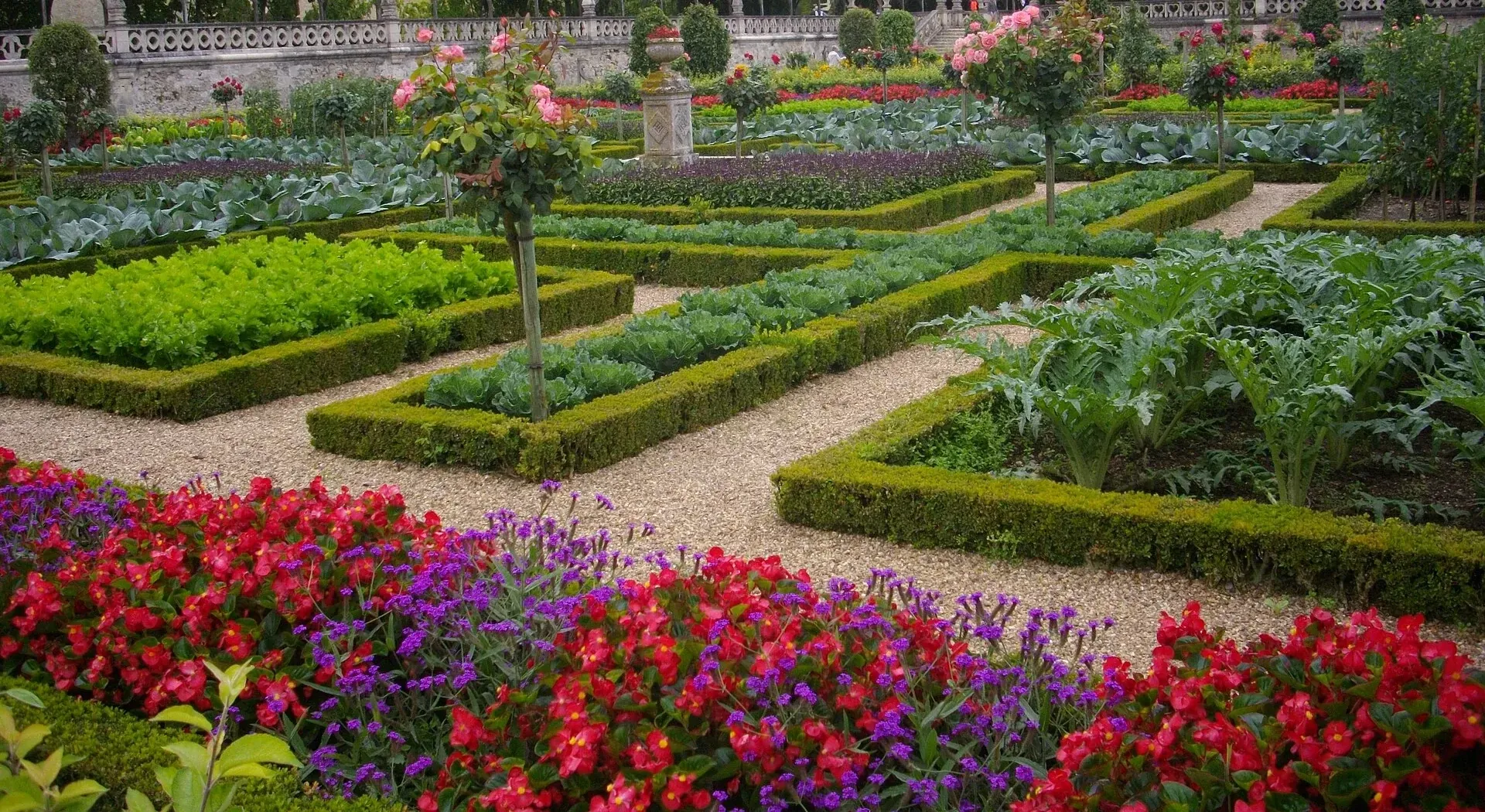
Three features made the Rosemary Verey garden famous. The knot garden beside the south terrace is low clipped box woven over and under itself, plain and variegated, threaded with teucrium, its pattern taken from an early book by Gervase Markham. The potager, laid out in the early 1970s, is an almost square ornamental kitchen garden where brick paths divide formal vegetable beds into a decorative pattern. And the Laburnum Walk, planted in 1964 with laburnums given as a silver wedding present by her brother, is a tunnel of yellow flowers over purple alliums, modelled on one she had seen at Bodnant. Parks and Gardens UK · Gardens Illustrated
She based the potager on a design in William Lawson’s The Country Housewife’s Garden, a book from the early 1600s, after a visit to Villandry. Gardens Illustrated, which credits her with introducing and popularising the potager, describes tunnels hung with courgettes and pumpkins, fruit trees trained in goblets and fans, and box edged beds of chard and salad crops. For more of the gardens behind our looks, see our guide to famous gardens. Gardens Illustrated · Country Life
Why the Barnsley House look works: six ideas to borrow
Country Life says Barnsley’s potager and knot were on a scale ordinary gardeners could relate to. These are the ideas worth taking home when planning a potager garden of your own, and each of them works in an ordinary garden. Country Life
A firm frame, loose planting
Rosemary Verey described her style as combining a formal structure with luxuriant planting. Inside the clipped frame, old roses and perennials overflow, joined today by dahlias and annuals such as clarkias, tobacco plants, poppies and zinnias. Clipped edges give you permission to be generous: the beds can spill over and the garden still looks cared for. Country Life · Gardens Illustrated
Designed for winter
In her essay in The Englishwoman’s Garden she wrote: “The garden must be designed to look inviting even in winter, when evergreens and shapes assume importance. Sweet smelling winter flowering shrubs should be near the house.” A knot or a box edged bed looks as good in January as in June. Gardens Illustrated
Beds you can reach across
Lawson’s advice, which she quoted, was never to make beds more than five feet (about 1.5 metres) wide, so nobody treads on the soil to weed them. “We have found this very good counsel,” she wrote. Narrow beds are also what make a potager read as a pattern rather than a vegetable plot. Country Life
Vegetables and flowers together
Growing vegetables and flowers together is the whole point. Gardens Illustrated describes a potager as a mixture of vegetables, fruit and flowers laid out in a formal design. Beans, chard and salad sit beside flowers, so the beds look good while they crop and still look tidy when a row has been picked. Gardens Illustrated
Long views and a surprise
“Use must be made of the longest distances to create vistas, to lead the eye on and on,” she wrote, and “An element of surprise is essential.” At Barnsley the Laburnum Walk lines up with the lime walk to give a view through to the temple by the pool. At home, line a path up on a seat, a pot or an arch at the far end. Gardens Illustrated
Borrow what works
She borrowed freely, as the Bodnant tunnel shows: the Laburnum Walk was modelled on one at Bodnant, the potager on Lawson’s book after a visit to Villandry, the knot on a pattern from Gervase Markham. We can borrow from Barnsley in turn. Gardens Illustrated
The plants through the year in our Barnsley House look
First, the plants our sources name at Barnsley itself. Then the plants in our Barnsley House look, season by season. Our look follows Barnsley’s colours with plants from our own list, so the plants in the table are our choices, not a record of the garden.
Barnsley House plant list from published accounts
- Box and teucrium in the knot
- Low clipped box, plain and variegated, woven over and under itself and threaded with teucrium. Gardens Illustrated · Parks and Gardens UK
- Laburnums over purple alliums
- The Laburnum Walk, planted in 1964. The laburnums were replanted when the old trees failed, and now stand over the red Tulipa ‘Apeldoorn’. Gardens Illustrated
- A pale yellow peony and red tulips
- Paeonia mlokosewitschii with the red tulip ‘Lasting Love’ over forget me nots, among shrubs and hostas. Gardens Illustrated
- Old roses, dahlias and annuals
- Old roses and perennials, joined by dahlias and annuals such as clarkias, tobacco plants, poppies and zinnias. Gardens Illustrated
- Potager crops and trained fruit
- Tunnels hung with courgettes and pumpkins, fruit trees trained in goblets and fans, and box edged beds of chard and salad crops. Gardens Illustrated
- Clipped yews with rock roses
- Along the main path. Parks and Gardens UK
Plants for a Barnsley House look at home
Choose plants that hand over from season to season inside a frame that stays all year. Start with the evergreen edging, then a plant or two for each season, and let the crops change every year.
| Season | What to plant |
|---|---|
| Spring | Pale yellow and red over blue Peony ‘Bartzella’ (Paeonia Itoh Group ‘Bartzella’), the red tulip ‘Little Beauty’, grape hyacinth (Muscari armeniacum ‘Valerie Finnis’) in the forget me not role, and an apple ‘Discovery’ (Malus domestica ‘Discovery’) trained as a fan. Grows at Barnsley in our sources: a pale yellow peony, and red tulips over forget me nots. Gardens Illustrated |
| Summer | Roses, alliums and bean tunnels The climbing rose Constance Spry, allium ‘Purple Sensation’ (Allium hollandicum ‘Purple Sensation’) and tunnels of sweet peas and runner beans (Phaseolus coccineus ‘Achievement’) over nasturtiums (Tropaeolum majus), pot marigolds (Calendula officinalis) and borage (Borago officinalis). Grows at Barnsley in our sources: old roses, perennials, and annuals such as poppies and zinnias. Gardens Illustrated |
| Autumn | Purple and gold Dahlias ‘Thomas A. Edison’ and ‘Honka’, the aster ‘King George’ (Aster amellus ‘King George’) and the yellow fruit of crab apple ‘Golden Hornet’ (Malus × zumi ‘Golden Hornet’). Grows at Barnsley in our sources: dahlias. Gardens Illustrated |
| Winter | The frame carries it Winter belongs to the frame: dwarf box (Buxus sempervirens ‘Suffruticosa’) woven with santolina (Santolina rosmarinifolia ‘Primrose Gem’), a clipped holly (Ilex aquifolium ‘J.C. van Tol’) at the centre, and scented witch hazel (Hamamelis mollis) and sweet box (Sarcococca hookeriana var. humilis) by the door. Grows at Barnsley in our sources: the box knot with teucrium, and clipped yews. Gardens Illustrated · Parks and Gardens UK |
Our list has no laburnum, so our look offers a purple wisteria tunnel instead: our adaptation, not Barnsley’s. Our Barnsley House theme
How to plan a potager garden inspired by Barnsley House
You do not need Barnsley’s old walls. The three ideas behind its potager, a clipped frame, narrow beds and crops among flowers, scale down to a single bed. Start with one bed you can see from the house, and try the edging and a few plants there before buying for the rest of the garden.
What to do first
When planning a potager garden, start with the frame, not the flowers. Mark out your potager garden layout on the ground: a simple pattern of small beds with paths between, each narrow enough to reach into from both sides, as Lawson advised. Put something evergreen and clipped at the centre or the corners. Edge the beds with a low evergreen; in our look that is dwarf box, santolina or a low lavender hedge (Lavandula angustifolia ‘Hidcote’). Once the frame is in, what grows inside it can change every year.
In a small garden
Barnsley’s potager is small in scale, which is why so many visitors felt they could copy it. A raised bed potager suits a small plot: one or two raised beds edged with low evergreens, an arch for sweet peas and beans, and an apple trained flat on a sunny fence. Knot garden design works in miniature too: two clipped strands, such as box and santolina, woven in a square by the back door. Our formal garden design page shows more box edged and knot layouts.
In part shade
Barnsley’s spring planting sits in a lush mix of shrubs and hostas, so a shady corner can still belong. In our look the shadier beds take Hosta ‘Royal Standard’, the hellebore ‘Winter Moonbeam’ (Helleborus × ericsmithii ‘Winter Moonbeam’) and sweet box, with the vegetables and herbs in the sunniest beds. Gardens Illustrated
On a tight budget
Barnsley’s summer abundance leans on annuals, and many of the potager flowers in our look grow from a packet of seed: nasturtiums, pot marigolds, borage, sweet peas and runner beans. Edge with herbs you will cook with, such as thyme (Thymus vulgaris). Spend first on the evergreen edging, because that is what makes it read as a potager rather than a vegetable patch.
If what you want is a cottage garden with vegetables, this is the tidiest way to have one. Our cottage garden design page covers the looser cottage style, and our guide to famous gardens gathers more gardens to borrow from.
Garden Design App
How can we help you transform your garden to look like Barnsley House?
Planning a potager garden is hard to do in your head. A potager garden design is mostly paths, edging and beds, the permanent and costly part, and it is hard to judge from a sketch whether four beds or six suit your plot, or where a knot should sit. Get it wrong and you pay twice: once for the edging, and again to move it, with a season lost while you find out. Garden Design App takes the guesswork away. It redesigns your own garden in a potager look inspired by Barnsley House, one bed or the whole garden, so you see the result before you buy a single plant.
Think of a July evening by the back door: low hedges drawing a neat pattern of small beds, runner beans and sweet peas climbing an arch, nasturtiums and pot marigolds tumbling at their feet, an old rose spilling over the box and an apple trained flat on the sunny fence. You brush the thyme at the path edge as you pick a handful of beans for supper. Then think of January, when the crops are gone and the clipped box and a holly at the centre still draw the pattern, with witch hazel scenting the door, just as Rosemary Verey wanted. Ask for exactly that, and the app draws it into your garden, around the house, trees and fences you already have.
What you can ask for
Type any of these into the “Anything else?” box, in your own words:
- Box edged beds of runner beans, chard and cottage flowers, with paths between
- A small knot of box and santolina woven in a square by the back door
- An arch of sweet peas and runner beans over nasturtiums and pot marigolds
- An apple trained flat as a fan on the sunny fence
- A clipped holly at the centre and box cones at the corners, so winter still has shape
- A purple wisteria tunnel over the path, with purple alliums through the beds
How to design a potager garden in five steps
- Start a free garden design. Press “Start my free garden design” and add a photo of the part of the garden you want to transform. Your house, trees and fences stay where they are.
- Choose Cottage for the style, then pick Yellow & purple for the colours, the yellow over purple of the Laburnum Walk, carried on in our look by purple asters and gold crab apples in autumn. For a fuller potager mix of orange nasturtiums and blue borage, pick All colours instead.
-
Ask for the Barnsley touches you love in the “Anything else?” box.
“Lay out box edged beds of runner beans and cottage flowers with paths between, put a clipped knot by the house and an arch of sweet peas, and train an apple on the fence.”
- See your garden transformed in just one minute. Look at the beds and paths against the house, trees and fences the app keeps. Try several potager garden ideas one after another, a raised bed version, a whole garden of box edged beds, a single knot by the door, and keep the one that suits how you live.
- Turn it into a garden you can plant. With Pro or Max (£29 or £49, paid once), every plant in your design is named, picked for your light and soil and ready to buy, with the pot size and how tall it grows. Whole garden designs also list the materials, from gravel to fencing, and a care guide and flowering calendar help you grow it well, so you build the frame once and get it right.
Why try it with Garden Design App first?
No guesswork
You don’t need to know the name of a single plant. You see the beds and paths against your own fence, lawn and patio before you spend anything on them, and if six beds feel cramped, you try four.
Plants that will thrive
Pro and Max pick every plant to thrive where you live, in your light and soil, and name each one ready to buy. Measured borders also tell you how many of each to buy, which matters when every bed has an edge of box or lavender.
Your garden stays familiar
Your house, trees and fences stay where they are, so the design fits the garden you already have, whether that’s one raised bed or the whole plot.
A design in just one minute
A garden designer can take weeks to months to come back with a first design, and the average UK garden design costs £1,950. Save over £1,900, and start today with 3 free designs.
A real garden, before and after
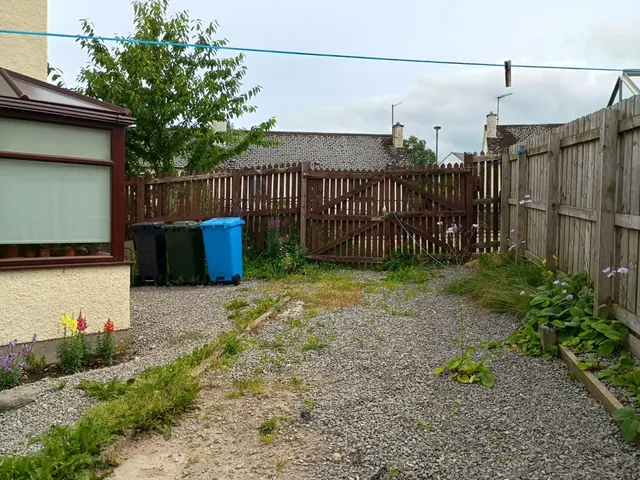 Original garden
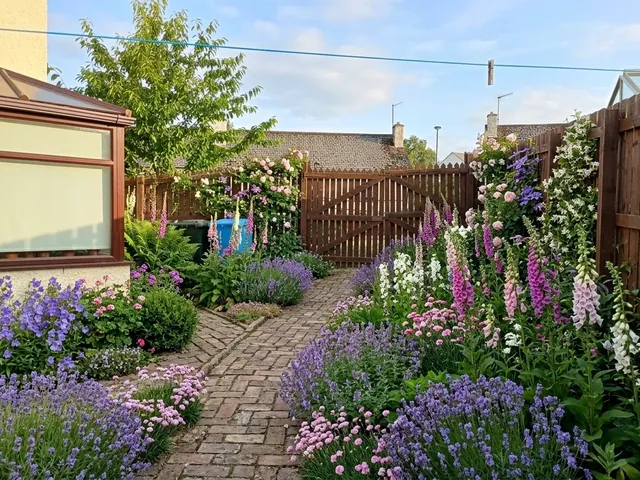 Cottage design
Over 500 garden designs made.
Try a layout before you spend on plants or a designer
If the beds crowd the patio or the knot sits where you would rather have a seat, try a second layout while it’s still easy to change. Once you’ve found a layout you like, the planting list with Pro or Max tells you what to buy, so you can go to the garden centre with a plan. A garden designer can visit, measure and oversee the build. When you want that help, bring the look you found here.
Start with 3 free designs
Your first 3 designs are free, with no card needed, so you can try the Barnsley House look three times before you spend anything: a raised bed version, a whole garden of box edged beds and a single knot by the door. For more ideas, our cottage garden design page shows real gardens redesigned in the Cottage style, our formal garden design page shows more box edged and knot layouts, our design my garden page shows how it works, and our famous gardens guide has more great gardens to borrow from.
What you get with Garden Design App
Start free. When you’re ready for a plan you can plant from, choose Pro or Max. One payment, no subscription.
- Free £0
- Your first 3 designs
- Lower quality images with a watermark
- Pro £29
- 20 designs over 14 days
- 5 free designs on top
- 2 designs at once, side by side
- Max £49
- 50 designs over 30 days
- 10 free designs on top
- 4 designs at once, side by side
Turn the design you love into a garden you can plant
Every Pro or Max design comes with a Garden Transformation Pack: the plants, layout, materials and features, with a full care guide.
- Know what to buy. Get plants picked to thrive where you live, in your light and soil. Every plant is named, with the pot size to buy and how tall it grows. For a measured border, you also get how many of each plant to buy.
- Plan the whole garden. Get a layout and the features in your design, plus materials from gravel to fencing with whole garden designs.
- Know what to do through the year. Use the care guide to look after your plants and the flowering calendar to see what comes into bloom next.
- See the detail and ask for changes. Get higher quality images without a watermark, and change any design in your own words.
Your first 3 designs are free, with no card needed.
Questions about the Barnsley House potager garden
What is the potager meaning in gardening?
A potager is a kitchen garden laid out to be looked at as well as picked: in Gardens Illustrated’s words, a mixture of vegetables, fruit and flowers laid out in a formal design. No English word quite matches it, so gardeners still use the French one. Gardens Illustrated
How can I make my garden look like Barnsley House?
Give it the three things Barnsley’s potager is built on: a clipped evergreen frame, beds narrow enough to reach across, and crops and cottage flowers growing together. To try the look before you buy plants, add a photo of your garden to Garden Design App, choose Cottage with Yellow & purple, and ask for box edged beds, a clipped knot or an arch of sweet peas in your own words. Your garden is redesigned in just one minute, and your first 3 designs are free.
What is a potager style garden?
A garden of small, formal beds, often edged with clipped evergreens and divided by paths, where crops, herbs and flowers grow side by side. At Barnsley House that meant tunnels hung with courgettes and pumpkins, trained fruit trees and box edged beds of chard and salad crops. Gardens Illustrated
What is a French potager garden?
Potager is the French word for this kind of formal mix of crops and flowers. Rosemary Verey’s potager at Barnsley was inspired by a visit to Villandry, though its design came from an English book, William Lawson’s The Country Housewife’s Garden. Gardens Illustrated
How wide should potager beds be?
Lawson’s advice, which Rosemary Verey followed at Barnsley, was no more than five feet (about 1.5 metres), so the beds can be weeded without treading on the soil. Country Life
Who was Rosemary Verey?
A plantswoman, writer, broadcaster and garden designer who made the garden at Barnsley House in Gloucestershire with her husband David from the 1950s. Her first book, The Englishwoman’s Garden (1980), was a huge success. She died in May 2001. Parks and Gardens UK · Gardens Illustrated
Can you visit the Barnsley House garden?
Yes, on some days. Barnsley House is now a hotel, and its garden is open to hotel guests, with occasional public open days; times change, so check the hotel’s own website before you go.
About the author
Sources
- Gardens Illustrated, Barnsley House Garden: celebrating Rosemary Verey by Anna Pavord
- Country Life, Barnsley House garden
- Parks and Gardens UK, Barnsley House
- Garden Design App, Barnsley House theme, our own planting list for this look
- Garden Design App homepage