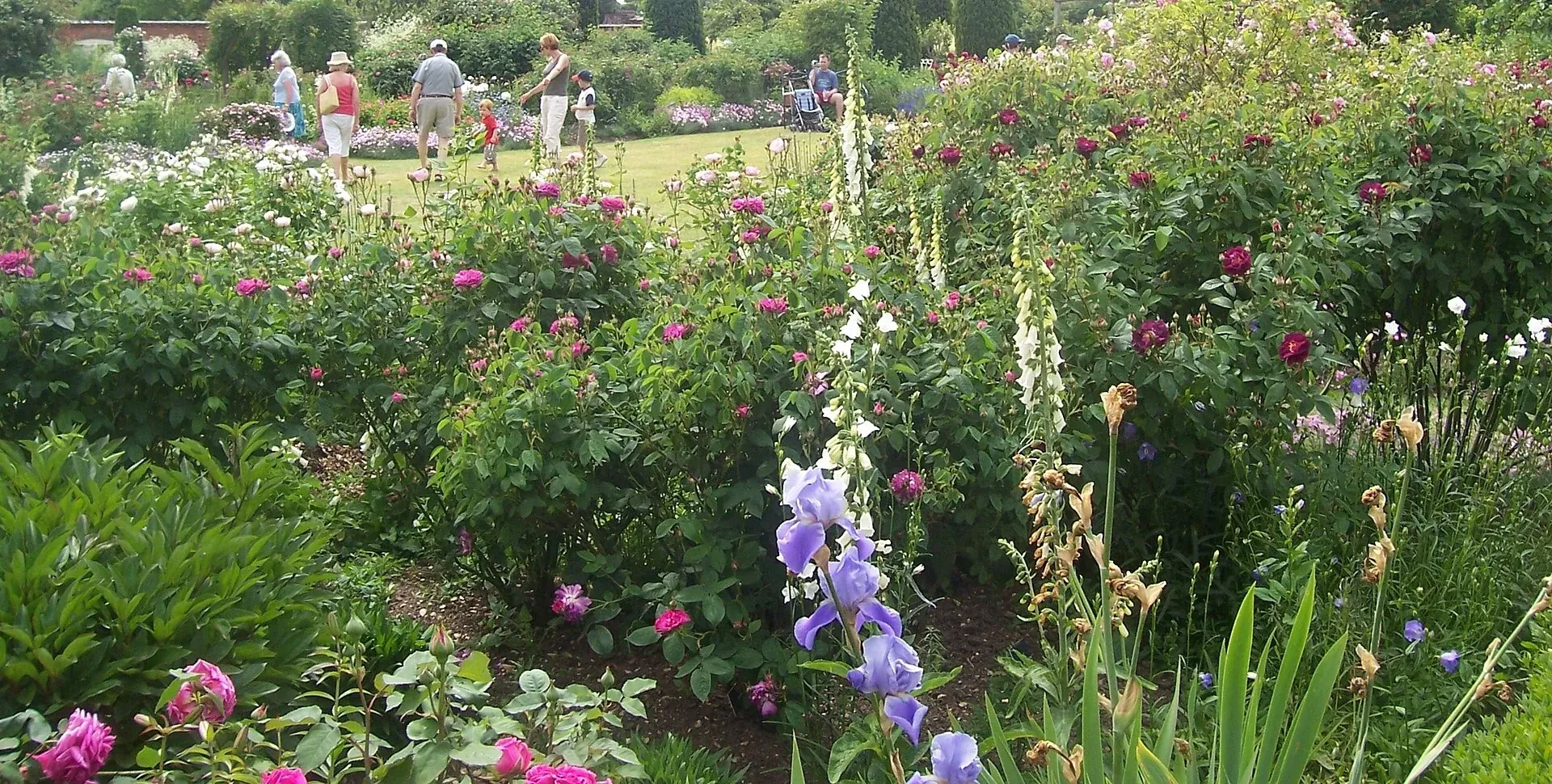

How we can help
How can you transform your garden to look like the Mottisfont rose garden?
It is hard to picture old roses, blue bellflowers and silver leaves in the garden you look at every day. With Garden Design App, you add a photo of your garden, choose the Cottage style with Cool & soft colours, and ask for the Mottisfont touches you love: soft pink climbing roses on the fence, blue campanulas and catmint along the path, white foxgloves through the border. In just one minute you see your garden redesigned in a cool cottage rose garden look inspired by Mottisfont, with your house, trees and fences kept.
- See the look before you spend. Roses are a long term choice: a climber put on the wrong fence, or a pink that fights the brick, is hard to undo. Try the climber on the back fence, then on the house wall, and keep the design you love.
- Plants that will grow for you. With Pro or Max, every plant is named and picked to thrive where you live, in your light and soil, ready to buy, with a care guide to grow it well.
- Save over £1,900. The average UK garden design costs £1,950, and a designer can take weeks to months to come back with a first design. Garden Design App gives you one in just one minute.
Your first 3 designs are free, with no card needed.
See a real Cottage garden redesignWhat is Mottisfont, and who made its rose garden?
Mottisfont sits on the flat floor of the River Test valley in Hampshire. It began as a priory of Austin Canons, founded in 1201 by William Briwere. When the priory was dissolved in 1536 the land went to Lord Sandys, who turned the buildings into a second home, and around 1706 Richard Mill altered the house to the shape it has today and appears to have been the first to call it Mottisfont Abbey. So Mottisfont house, as you see it now, is an 18th century home made from the buildings of a 13th century priory. Parks and Gardens UK
In 1934 Gilbert Russell and his wife Maud bought the estate and brought in the garden designers Norah Lindsay and Geoffrey Jellicoe. Maud Russell gave Mottisfont to the National Trust in 1957 and lived on there until 1972. Parks and Gardens UK
The Mottisfont gardens as a whole take in formal gardens, pleasure grounds, a landscape park and walled gardens, and today the Mottisfont National Trust estate is open to visitors; for opening times, see the National Trust’s Mottisfont page. Parks and Gardens UK
The roses live in the old walled kitchen garden, a run of three walled compartments that was already in place by 1839; its walls are now listed at Grade II. In 1972 Graham Stuart Thomas, the National Trust’s gardens adviser from 1955 to 1974, designed and planted the central, almost square compartment: low box hedges edge the paths that quarter it, old and species roses are mixed with herbaceous plants, and broad borders line the central walk. He later called it his masterpiece, and The Teddington Gardener describes it as the most complete example of his work that survives. Parks and Gardens UK · Country Life · The Teddington Gardener
The Mottisfont Abbey rose garden holds a National Collection of old fashioned shrub roses, gathered as pre 1900 varieties in the 1970s. Country Life counts more than 1,000 rose plants of 400 varieties, some of which might otherwise have been lost. Among the Mottisfont roses it singles out are Rosa gallica var. officinalis, a pale crimson, deeply scented rose brought from Persia by the Crusaders, the damask ‘Quatre Saisons’, grown by the Romans, and the pale pink bourbon ‘Souvenir de la Malmaison’. Many of these old fashioned roses flower only once a year, and Country Life notes that this rarity makes them all the more prized. Parks and Gardens UK · Country Life
The northern section of the walled garden, with its wide paths, was planted in a deliberately cool palette, as a counterpoint to the central rose garden. That cool corner of the Mottisfont rose garden is the part our look is built on. For more of the gardens behind our looks, see our guide to famous gardens. The Teddington Gardener
Why the Mottisfont garden works: six ideas to borrow
Graham Stuart Thomas later called this rose garden his masterpiece. These are the ideas worth taking home when planning a rose garden of your own, and each of them works in an ordinary garden. Country Life
Never roses alone
Roses and perennials share the beds. Thomas’s idea, new at the time, was to combine roses with a mix of perennials to give a display that lasts the whole season. At Mottisfont the long borders brim with plants that give colour, shape and scent before the roses open and after their petals fall. The Teddington Gardener
Partners that flatter the roses
A local visitor writing for Learning with Experts calls blue geraniums and the sky blue Campanula persicifolia natural partners for the warm pink and crimson of the old roses. Country Life lists geraniums, peonies, pinks, lilies, phlox and nepeta in the beds. Nepeta and roses work for the same reason as the geraniums: a soft blue haze at their feet sets off the pinks. Learning with Experts · Country Life
A firm frame for soft planting
Under all the froth there is a strict plan: a garden quartered by paths, beds edged in box, and a round pool and fountain ringed by eight clipped Irish yews. The clipped shapes and straight lines stop a garden this full from looking messy. Parks and Gardens UK · The Teddington Gardener
Height and repetition
The walls drip with climbing roses, arches of scented ramblers cross the path, and the long borders are punctuated by spires of white foxgloves. The foxgloves come again and again, which is what makes the borders read as one planting rather than a collection. Learning with Experts
A colour plan you can feel
Putting the cool section next to the warmer central garden lets each make the other look stronger. Blush pink, sky blue and white calm a space; our blue and purple border page shows more ways to use cool colours. The Teddington Gardener
A seat in the scent
At the end of the long walk of rose covered arches sits a white seat backed by Rosa ‘Constance Spry’, an English rose that flowers only once but makes up for it with its scent, which Learning with Experts likens to myrrh and old rose. At home, put a bench where the scent gathers: at the end of a path or under an arch. Learning with Experts
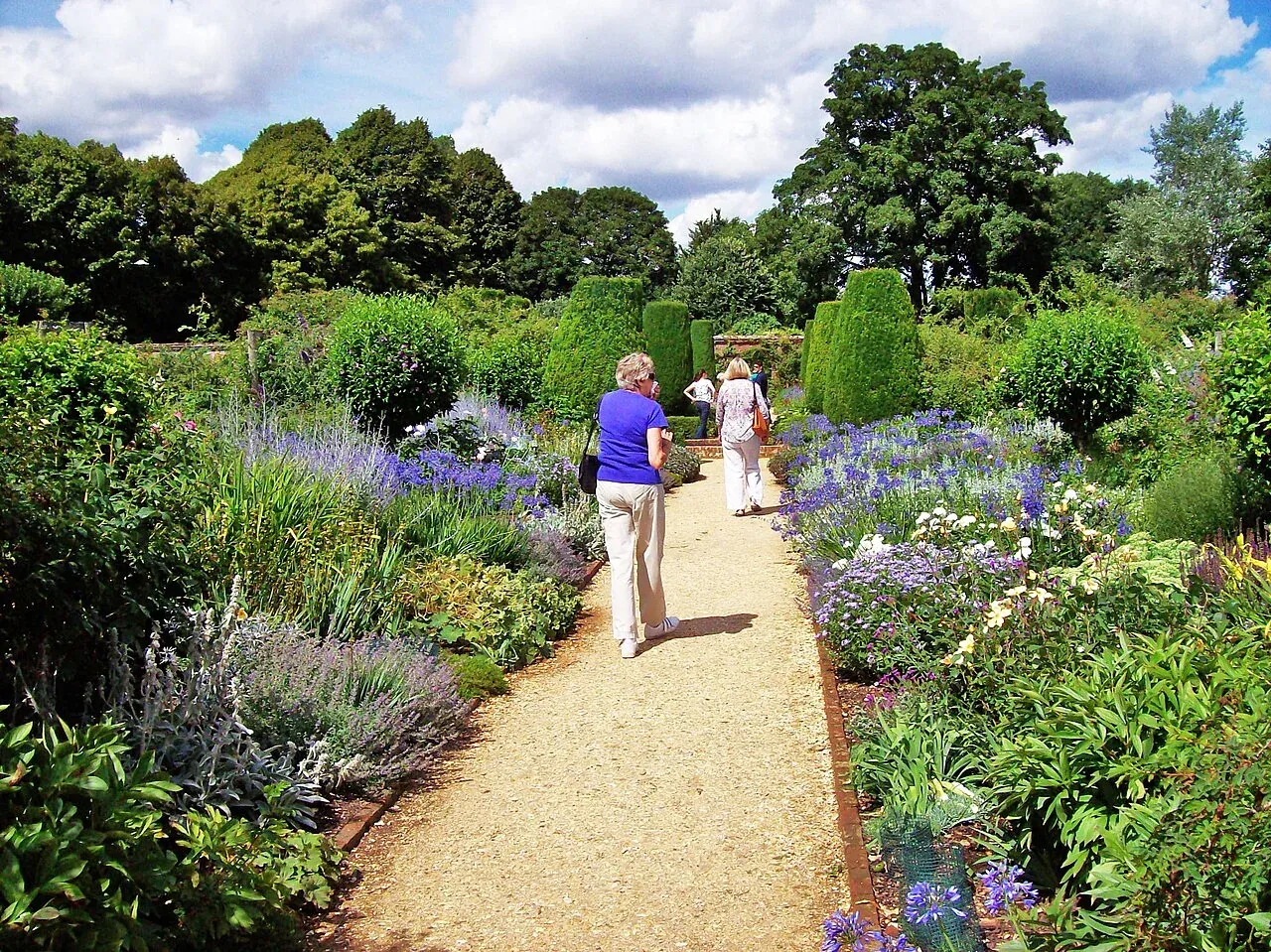

The plants through the year in our Mottisfont look
First, the old roses and partners that published accounts name at Mottisfont itself. Then the plants in our Mottisfont look, season by season. Our cottage theme takes the cool section’s palette and fills all four seasons. Where a write up names a plant growing at Mottisfont, the table says so; every named variety is our own choice for the look.
Mottisfont rose garden plant list from published accounts
- Old fashioned shrub roses
- A National Collection of pre 1900 varieties. Country Life singles out Rosa gallica var. officinalis, the damask ‘Quatre Saisons’ and the pale pink bourbon ‘Souvenir de la Malmaison’. Parks and Gardens UK · Country Life
- Climbers, ramblers and Rosa ‘Constance Spry’
- Climbing roses cover the old walls, scented ramblers garland the arches, old apple trees hold up ramblers and sprawling shrub roses such as the single Rosa complicata, and ‘Constance Spry’ backs a white seat at the end of the arches. Learning with Experts
- Blue geraniums, Campanula persicifolia and white foxgloves
- The natural partners for the old roses, with crambe and more foxgloves in the broad beds along the central path, and peonies that are one of the great sights of the summer garden. Learning with Experts · The Teddington Gardener
- Geraniums, peonies, pinks, lilies, phlox and nepeta
- Country Life lists these, with agapanthus, in the herbaceous beds. Country Life
- Box edging and eight clipped Irish yews
- Low box hedges edge the paths, and the yews ring the round pool and fountain. Parks and Gardens UK · The Teddington Gardener
In the newer second walled garden, Learning with Experts describes box giving way to lavender, repeat flowering English roses joining the old ones, and a central gazebo of the ramblers ‘Bleu Magenta’ and ‘Debutante’, surrounded by neat shrubs of Rosa ‘Comte de Chambord’. Learning with Experts
Plants for a Mottisfont look at home
Choose plants that take over from each other, so the bed has something to show before the roses open and after they fade. Start with a rose and a few partners, and repeat them down the border.
| Season | What to plant |
|---|---|
| Spring | Blue bulbs, then peonies Spring opens in February with the pale blue dwarf Iris ‘Alida’ and a carpet of scillas, the pink starred chionodoxa ‘Pink Giant’ and scented ‘Delft Blue’ hyacinths at the path edge. By May the tall white tulip ‘Maureen’ and blue camassias rise through the perennials, with lavender blue lilac at the back, sky blue lupins and the white double peony ‘Festiva Maxima’ (Paeonia lactiflora). Peonies are one of Mottisfont’s great sights in early summer. Named at Mottisfont in our sources: peonies. Learning with Experts |
| Summer | The roses and their partners Summer belongs to the roses. In our look the pale pearl pink climber ‘New Dawn’ and the blush white ‘Madame Alfred Carrière’ cover walls and arches, with the sky blue Clematis ‘Perle d’Azur’ threaded through. Around soft pink shrub roses go Campanula persicifolia, the blue Geranium ‘Brookside’, the catmint ‘Six Hills Giant’ (Nepeta × faassenii), white foxgloves (Digitalis purpurea f. albiflora), the white cloud of Crambe cordifolia, delphiniums, scented phlox and the white trumpets of the regal lily, Lilium regale. Silver Artemisia ‘Powis Castle’ and white pinks cool the edges. Named at Mottisfont in our sources: old roses, Campanula persicifolia, blue geraniums, nepeta, white foxgloves, crambe, lilies, phlox and pinks. Learning with Experts · Country Life · The Teddington Gardener |
| Autumn | Anemones, asters and late bulbs Autumn hands over to the white Japanese anemone ‘Honorine Jobert’, the pale lilac aster ‘Little Carlow’, blue monkshood, pink and white nerines and white colchicums, while the sage ‘Pink Blush’ and the little daisy Erigeron karvinskianus flower on until the frosts. Named at Mottisfont in our sources: none named in our sources for autumn. |
| Winter | Box, silver and scent Winter keeps the shape: double snowdrops under the bare roses, the creamy hellebore ‘Winter Moonbeam’, scented sweet box (Sarcococca confusa) and Viburnum ‘Dawn’, with box edging, a silver edged holly, lamb’s ears and the white stems of a Himalayan birch. Named at Mottisfont in our sources: box edging and clipped Irish yews. Parks and Gardens UK · Country Life |
How to make a rose garden like Mottisfont at home
You do not need a walled acre. The ideas that make Mottisfont work, roses mixed with perennials, a firm edge and a calm colour plan, scale down to a single border. Here is how to make a rose garden in this style, step by step. Start with one bed you can see from the house or walk past often, and try the edge and a few partners there before buying for the rest of the garden.
What to do first
Before planting a rose garden, decide where the frame goes. Give the main bed a clear edge (low box, as in the old walled garden, or lavender, as in its newer second walled garden) and a path you can walk along. Then give the climbing roses your sunniest wall or fence, the way Mottisfont’s old walls are covered in them.
In a small garden
Most small rose garden ideas come down to fewer kinds, repeated more often. One climbing rose such as ‘New Dawn’ on the fence with a clematis through it, one or two shrub roses in the border, then the same three partners repeated around them: campanula, catmint and white foxgloves. Edge the front with white pinks and silver lamb’s ears, and tuck spring bulbs underneath so the bed has something to show in April.
In part shade
Put the roses in the brightest spot you have and let the shadier end carry the cool colours with plants from our look that usually cope with less sun: hellebores, sweet box, the silver leaved Brunnera ‘Looking Glass’, white foxgloves and Japanese anemones.
On a tight budget
Buy fewer kinds and more of each, because repetition is what makes a cottage rose garden look planned. Small plants of campanula, catmint and geraniums fill out as they grow, foxgloves and erigeron seed themselves about, and one good climber gives a bare fence more presence than a row of small shrubs. For more partners in the same spirit, our cottage garden plants page lists the ones that suit a British garden.
Keep the colours cool
With rose border ideas like these, colour matters as much as the plants. Stick to blush and pale pink, sky blue, lavender, white and silver; leave hot oranges and strong reds out. Our cottage garden design page shows the wider style these rose garden ideas belong to.
Plan beyond June
Many old roses flower only once a year, so plan the bed for the rest of it, as Thomas did with his perennials. Tuck snowdrops, scillas and white tulips under the roses for spring, and let Japanese anemones and asters take over in autumn, so the border still has colour, shape and scent after the petals fall. The Teddington Gardener
Garden Design App
How can we help you transform your garden to look like the Mottisfont rose garden?
Planning a rose garden is hard to do in your head. Roses are a long term choice: a climber put on the wrong fence, or a colour that fights the brick, is hard to undo, and many old roses flower only once a year, so a wrong guess costs money and a whole summer to find out. Garden Design App takes the guesswork away. It redesigns your own garden in a cool cottage rose garden look inspired by Mottisfont, one border or the whole garden, so you can preview the planting before deciding what to buy, and see the result before you buy a single rose.
Think of a June evening: pale pink roses over an arch where the path begins, a blush white climber covering the fence with a sky blue clematis threaded through it, blue bellflowers and a soft haze of catmint at the roses’ feet, white foxglove spires coming again and again down the border, and silver leaves cooling a clipped edge. The scent of the roses meets you on the walk back from the gate, and the whole bed looks calm and planned, with nothing hot or harsh to break the spell. Ask for exactly that, and the app draws it into your garden, around the house, trees and fences you already have.
What you can ask for
Type any of these into the “Anything else?” box, in your own words:
- Soft pink climbing roses on the fence, with a sky blue clematis through them
- An arch of scented rambling roses over the path, with a bench at the end
- Blue campanulas and catmint along the path, at the feet of the roses
- White foxglove spires repeated all down the border
- A low clipped box edge round the rose bed, or lavender instead
- Silver leaves and white pinks along the front of the border
How to design a Mottisfont rose garden in five steps
- Start a free garden design. Press “Start my free garden design” and add a photo of the part of the garden you want to transform. Your house, trees and fences stay where they are.
- Choose Cottage for the style, then pick Cool & soft for the colours, the blush pinks, sky blues and whites of Mottisfont’s cool corner. If you want it paler and cooler still, pick White & silver instead.
-
Ask for the Mottisfont touches you love in the “Anything else?” box.
“Put soft pink climbing roses on the fence, blue campanulas and catmint along the path, and white foxgloves repeated through the border. Edge the bed with low clipped box and put silver leaves along the front.”
- See your garden transformed in just one minute. Look at the roses against the house, trees and fences the app keeps. Use your designs to compare options: more roses on the walls, a box edge or a lavender one, a cooler or warmer palette, and keep the one you love.
- Turn it into a garden you can plant. When you are ready to design a rose garden for real, Pro or Max (£29 or £49, paid once) name every plant in your design, picked to thrive in your light and soil, ready to buy, with the pot size and how tall it grows, a care guide to grow it well and a flowering calendar. You walk into the nursery knowing what you want and where each plant goes.
Why try it with Garden Design App first?
No guesswork
You don’t need to know the name of a single rose. You see the planting against your own fence, lawn and patio before you spend anything on it, and if the climber hides a window or the pink fights the brick, you try it somewhere else.
Plants that will thrive
Pro and Max pick every plant to thrive where you live, in your light and soil, and name each one ready to buy, roses and partners alike. Measured borders also tell you how many of each to buy, so the partners can repeat down the border the way Mottisfont’s foxgloves do.
Your garden stays familiar
Your house, trees and fences stay where they are, so the design fits the garden you already have, whether that’s one border or the whole plot.
A design in just one minute
A garden designer can take weeks to months to come back with a first design, and the average UK garden design costs £1,950. Save over £1,900, and start today with 3 free designs.
A real garden, before and after
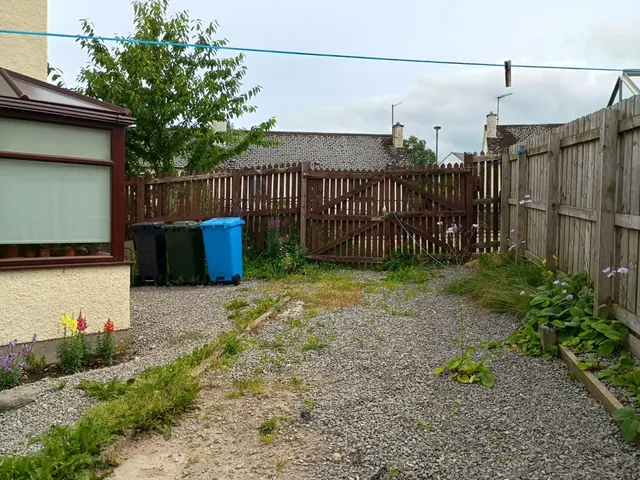 Original garden
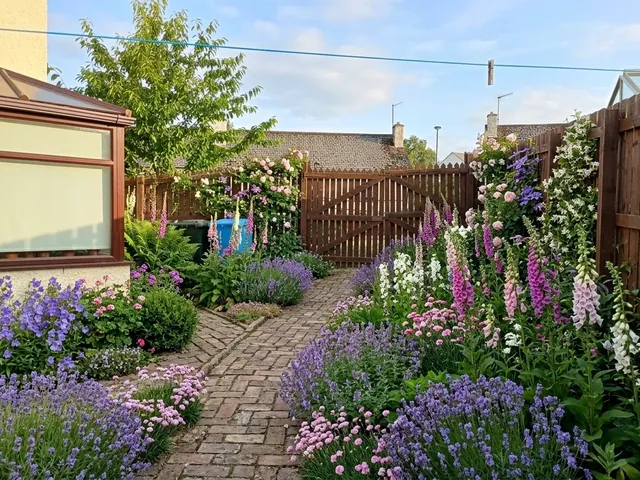 Cottage design
Over 500 garden designs made.
Try a layout before you spend on plants or a designer
If the arch blocks the view down the path or the climber hides a window, try a second layout while it’s still easy to change. Once you’ve found a layout you like, the planting list with Pro or Max tells you what to buy, so you can go to the garden centre with a plan. A garden designer can visit, measure and oversee the build. When you want that help, bring the look you found here.
Start with 3 free designs
Your first 3 designs are free, with no card needed, so you can try the Mottisfont look three times before you spend anything: a box edge, a lavender edge and a paler White & silver version. For more ideas, our cottage garden design page shows real gardens redesigned in the Cottage style, our design my garden page shows how it works, our blue and purple border page has more cool colour ideas, and our famous gardens guide has more great gardens to borrow from.
What you get with Garden Design App
Start free. When you’re ready for a plan you can plant from, choose Pro or Max. One payment, no subscription.
- Free £0
- Your first 3 designs
- Lower quality images with a watermark
- Pro £29
- 20 designs over 14 days
- 5 free designs on top
- 2 designs at once, side by side
- Max £49
- 50 designs over 30 days
- 10 free designs on top
- 4 designs at once, side by side
Turn the design you love into a garden you can plant
Every Pro or Max design comes with a Garden Transformation Pack: the plants, layout, materials and features, with a full care guide.
- Know what to buy. Get plants picked to thrive where you live, in your light and soil. Every plant is named, with the pot size to buy and how tall it grows. For a measured border, you also get how many of each plant to buy.
- Plan the whole garden. Get a layout and the features in your design, plus materials from gravel to fencing with whole garden designs.
- Know what to do through the year. Use the care guide to look after your plants and the flowering calendar to see what comes into bloom next.
- See the detail and ask for changes. Get higher quality images without a watermark, and change any design in your own words.
Your first 3 designs are free, with no card needed.
Questions about the Mottisfont rose garden
What is special about the rose garden at Mottisfont?
It holds a National Collection of old fashioned shrub roses, more than 1,000 rose plants of 400 varieties according to Country Life, some of which might otherwise have been lost. Graham Stuart Thomas laid it out in 1972 in the old walled kitchen garden and later called it his masterpiece. Unlike rose gardens planted with roses alone, its roses share their beds with perennials, so it stays full through the season. Country Life · Parks and Gardens UK
How can I make my garden look like Mottisfont?
Give it the three things the Mottisfont rose garden is built on: roses mixed with perennials, a firm clipped edge and a cool colour plan of blush pink, sky blue, white and silver. To try the look before you buy plants, add a photo of your garden to Garden Design App, choose Cottage with Cool & soft, and ask for soft pink climbing roses on the fence with blue campanulas and catmint along the path, in your own words. Your garden is redesigned in just one minute, and your first 3 designs are free.
How do I create a rose garden?
Start with the frame: a clear edge, such as low box or lavender, and a path. Put climbing roses on your sunniest wall or fence and a few shrub roses in the border, then plant perennials around them so the bed looks good before and after the roses flower. Repeat a few partners, such as campanula, catmint and white foxgloves, and keep to one colour plan. To see it first, add a photo of your garden to Garden Design App, choose the Cottage style, and see it redesigned in just one minute; your first 3 designs are free.
Who designed the rose garden at Mottisfont Abbey?
Graham Stuart Thomas, the plantsman and rosarian who was gardens adviser to the National Trust. He designed and planted the central walled garden in 1972, mixing old roses with herbaceous plants. Earlier, in the 1930s, the Russells had brought in Norah Lindsay and Geoffrey Jellicoe to make major changes to the garden. Parks and Gardens UK · The Teddington Gardener
When do the roses flower at Mottisfont?
Our sources describe June as the rose season, when the old roses fill the walled gardens with scent and colour. Many of the old roses flower only once a year, so the season is short; the perennials planted with them carry the garden before and after. Check the National Trust for current opening times. The Teddington Gardener · Country Life
Where is Mottisfont?
In Hampshire, on the flat floor of the River Test valley. The house stands among formal gardens, pleasure grounds, a landscape park and the walled gardens where the roses grow. Parks and Gardens UK
Who owns Mottisfont?
The National Trust. Maud Russell, who bought the estate with her husband Gilbert in 1934, gave Mottisfont to the National Trust in 1957 and lived on there until 1972. Parks and Gardens UK
What are old fashioned roses?
At Mottisfont they are the pre 1900 shrub roses gathered in the 1970s for the National Collection. Many flower only once a year, and Country Life notes that this rarity makes them all the more prized. For a longer show at home, our look adds the blush white ‘Madame Alfred Carrière’, an old climber with scent that flowers again. Parks and Gardens UK · Country Life