
How we can help
How can you transform your garden to look like Great Dixter?
Christopher Lloyd spent about 80 years gardening at Great Dixter. With Garden Design App, you add a photo of your garden, choose the Cottage style with Hot & bright colours, and ask for the Great Dixter touches you love: red poppies through lime green spurges, clipped box for winter and a strip of long grass with bulbs. In just one minute you see your garden redesigned in a bold, layered look inspired by Great Dixter, with your house, trees and fences kept.
- See the look before you spend. Bold, clashing borders are hard to picture before you buy a single bulb. Try scarlet against lime by the patio, then a calmer mix, and keep the design you love.
- Plants that will grow for you. With Pro or Max, every plant is named and picked to thrive where you live, in your light and soil, ready to buy, with a flowering calendar that shows what comes next.
- Save over £1,900. The average UK garden design costs £1,950, and a designer can take weeks to months to come back with a first design. Garden Design App gives you one in just one minute.
Your first 3 designs are free, with no card needed.
See a real Cottage garden redesignWhat is Great Dixter, and who made it?
Great Dixter is a house and garden at Northiam in East Sussex, high on the Sussex Weald. A short Great Dixter history: in 1909 a businessman, Nathaniel Lloyd, bought a mid 15th century house called Dixter. Between 1910 and 1912 the architect Edwin Lutyens joined it to a 16th century house moved from Benenden in Kent and added new work of his own, and the larger house was renamed Great Dixter. Garden history
Nathaniel Lloyd and Lutyens began the garden, planting the network of yew and box hedges that still encloses it. House and garden are both Grade I listed. Garden history · Gardenista
It was Nathaniel’s son Christopher who made it famous. Christopher Lloyd was born at Great Dixter and gardened there for about 80 years. He became a well known garden writer and television personality, and wrote a weekly column for Country Life for nearly half a century. The Great Dixter garden is in the Arts and Crafts style, with topiary, a long border, an orchard and wild flower meadows, and the Christopher Lloyd garden became known for bold experiments with shape, colour and plant combinations. His mother, Daisy, took a radical approach to gardening too, and the two of them experimented with meadow flowers. Garden history · Country Life · Gardenista
Fergus Garrett worked closely with Lloyd as head gardener until Lloyd’s death in 2006, and has carried the garden on since, with ideas of his own. Lloyd set up the Great Dixter Charitable Trust in 2003 so the place would outlive him, and teaching new gardeners is at the heart of its work. Before he died he wrote that he did not want the garden to become a museum, and it has kept changing: Country Life reports that the bedding schemes are never repeated. For visiting the Great Dixter gardens, the garden’s own website has current opening times. Garden history · Country Life
Why Great Dixter works: six ideas to borrow
Country Life calls a visit to Great Dixter the most exciting and instructive horticultural experience in the British Isles. These are the ideas worth taking home when planning a Great Dixter border of your own, and each of them works in an ordinary garden. Country Life
Colour that clashes on purpose
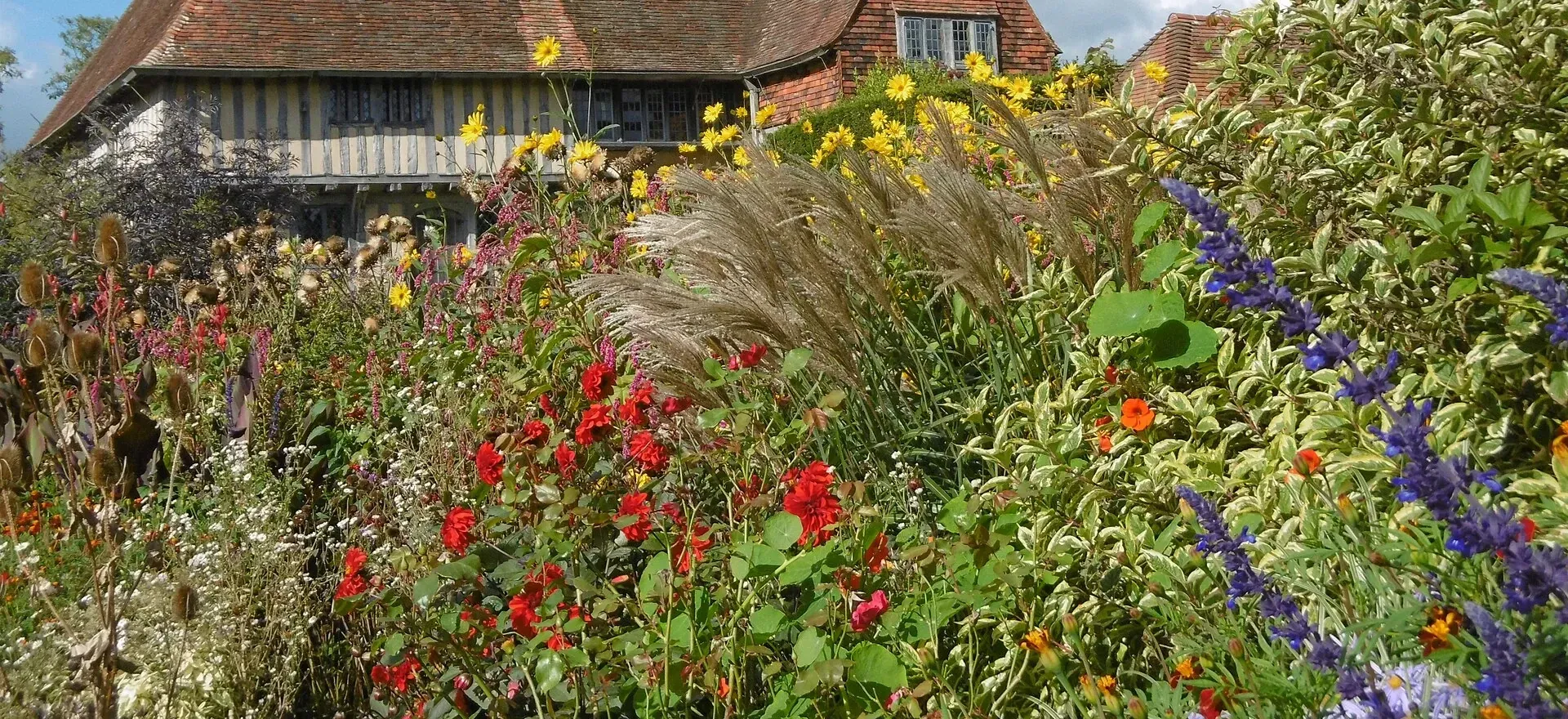
Vibrant summer colour is what Lloyd’s planting style is known for. Garrett describes sowing ladybird poppies in autumn and planting them through the borders “to make seams of red through all the open spaces”, while Euphorbia wulfenii makes “dramatic points of lime green throughout the garden”. Red against lime is a clash, and it is meant to be. Gardenista · Garrett’s plants
Repetition holds the clash together
Garrett calls it threading: running one plant through a whole border, such as cow parsley in May and larkspur later. Country Life says it lightens the look of a bed and makes it seem more natural. In a Kent garden inspired by Great Dixter, the red of a rose is picked up by poppies and later by Dahlia ‘Bishop of Llandaff’. Country Life · A Kent garden
A tapestry with no bare earth
On the Great Dixter Long Border, Lloyd wanted no bare soil showing from late May, and the effect of a closely woven tapestry. He was happy to bring tall plants to the front if they were open enough to see past, and he let self sowers such as verbascums help the border look exuberant rather than contrived. Lloyd on the Long Border
Shapes as well as colours
Garrett values Miscanthus sinensis ‘Malepartus’ because it makes a good shape contrast to all the domes in a mixed border. In the Long Border, Country Life shows it with the bronze seed heads of globe artichokes and purple Verbena bonariensis: a plume, a thistle and a haze of small flowers among the rounded shapes. Garrett’s plants · Country Life
Good bones for the quiet months
The yew and box are why Gardenista calls winter a great time to see the garden. Seed heads are left standing for height and structure and as food for birds and insects, and berries, fruit and hips add red when the flowers have gone. Gardenista
Edges that say it is on purpose
Even the edges are planned: the Long Border meets the orchard meadow along a flagstone path wide enough for plants to spill over, with a strip of mown grass beside it, so the long grass reads as intended. Lloyd wrote that the mown paths through the orchard show the roughness of the July scene is no accident. Lloyd on the Long Border
Succession planting: the plants through the year
Succession planting, or successional planting, means arranging a bed so that as one group of plants fades, the next is coming into flower. Lloyd aimed the Long Border’s main show at mid June to mid August, with interest from April to October. Lloyd on the Long Border
First, the plants that published accounts name at Great Dixter itself. Then the plants in our Great Dixter look, season by season. Where Dixter’s own plant is not on our list, we use a close stand in and say so.
Great Dixter plant list from published accounts
- Ladybird poppy and Euphorbia wulfenii
- Garrett sows the poppy in autumn for seams of red, and the evergreen spurge gives points of lime green. Garrett’s plants
- Miscanthus ‘Malepartus’ and globe artichokes
- Both shown in the Long Border, the artichokes as Cynara cardunculus Scolymus Group. Country Life
- Mexican fleabane, cannas and persicaria
- The fleabane grows on Lutyens’ circular steps, cannas in the Peacock Garden, and Persicaria amplexicaulis ‘Rosea’ beside giant fennel. Country Life
- Yew, box and cotoneasters
- The bones of the winter garden, with seed heads left standing and red berries and hips. Gardenista
Garrett also recommends the scented jonquil ‘Baby Boomer’ grown among perennials in the border, threads larkspur through the borders and loves the wintersweet in winter. Lloyd let self sowers such as verbascums and Verbena bonariensis help fill the Long Border. Garrett’s plants · Lloyd on the Long Border
Plants for a Great Dixter look at home
Our cottage theme inspired by Great Dixter follows the same hand over through all four seasons. Each season below shows the plants in our Great Dixter look, then what our sources say grows at Great Dixter itself. Start with a plant or two for each season, and repeat them down the border.
| Season | What to plant |
|---|---|
| Spring | Bulbs, then orange against lime In our Great Dixter look the year starts in long grass with Crocus ‘Advance’, wild daffodils (Narcissus pseudonarcissus), snake’s head fritillaries and cowslips. In the borders, orange tulips such as ‘Ballerina’ and ‘Fire King’ wallflowers flare against the lime of Euphorbia characias subsp. wulfenii. Garrett recommends a scented jonquil, ‘Baby Boomer’, grown among perennials in the border; our stand in is the multi headed Narcissus ‘Geranium’. Seen at Great Dixter: meadows and orchard grass. |
| Summer | Seams of red and purple This is the peak. The ladybird poppy is not on our list, so the red seams come from the Oriental poppy ‘Beauty of Livermere’, then Dahlia ‘Bishop of Llandaff’ picks up the red later. Purple comes from Thalictrum ‘Black Stockings’ and Allium giganteum, with crimson Knautia macedonica, cornflowers and silver cardoons (Cynara cardunculus). Country Life shows globe artichokes (Cynara cardunculus Scolymus Group) in the Long Border, where our look uses cardoons as the stand in, and Mexican fleabane (Erigeron karvinskianus) on Lutyens’ circular steps, which is in our look too. Seen at Great Dixter: ladybird poppy seams of red, Mexican fleabane on the steps and globe artichokes. |
| Autumn | Grasses, late reds and an exotic note Miscanthus sinensis ‘Malepartus’, which Country Life shows in the Long Border, takes over with crimson Persicaria amplexicaulis ‘Firetail’, the cerise aster ‘Andenken an Alma Pötschke’ and Salvia ‘Cerro Potosí’ flowering into November. Canna indica gives a late exotic note (Country Life shows cannas in Dixter’s Peacock Garden), and the crab apple ‘Red Sentinel’ holds red fruit into winter. Seen at Great Dixter: Miscanthus ‘Malepartus’ in the Long Border, cannas and persicaria. |
| Winter | Box, berries and scent Clipped box cones, holly ‘J.C. van Tol’ with red berries and Pyracantha ‘Orange Glow’ (our stand in for Dixter’s cotoneasters) carry the garden, with the scented witch hazel ‘Pallida’ standing in for the wintersweet Garrett loves, and Viburnum ‘Dawn’ with pink scented flowers on bare stems from November to March. Seed heads are left standing, as they are at Dixter. Seen at Great Dixter: yew and box, cotoneasters, seed heads left standing, and berries and hips. |

How to get the Great Dixter look in an ordinary garden
Great Dixter is a big garden, but its habits scale down to a normal plot. Start with one border you can see from the house or walk past often, and try the bones and a few repeated plants there before buying for the rest of the garden.
Start with the bones
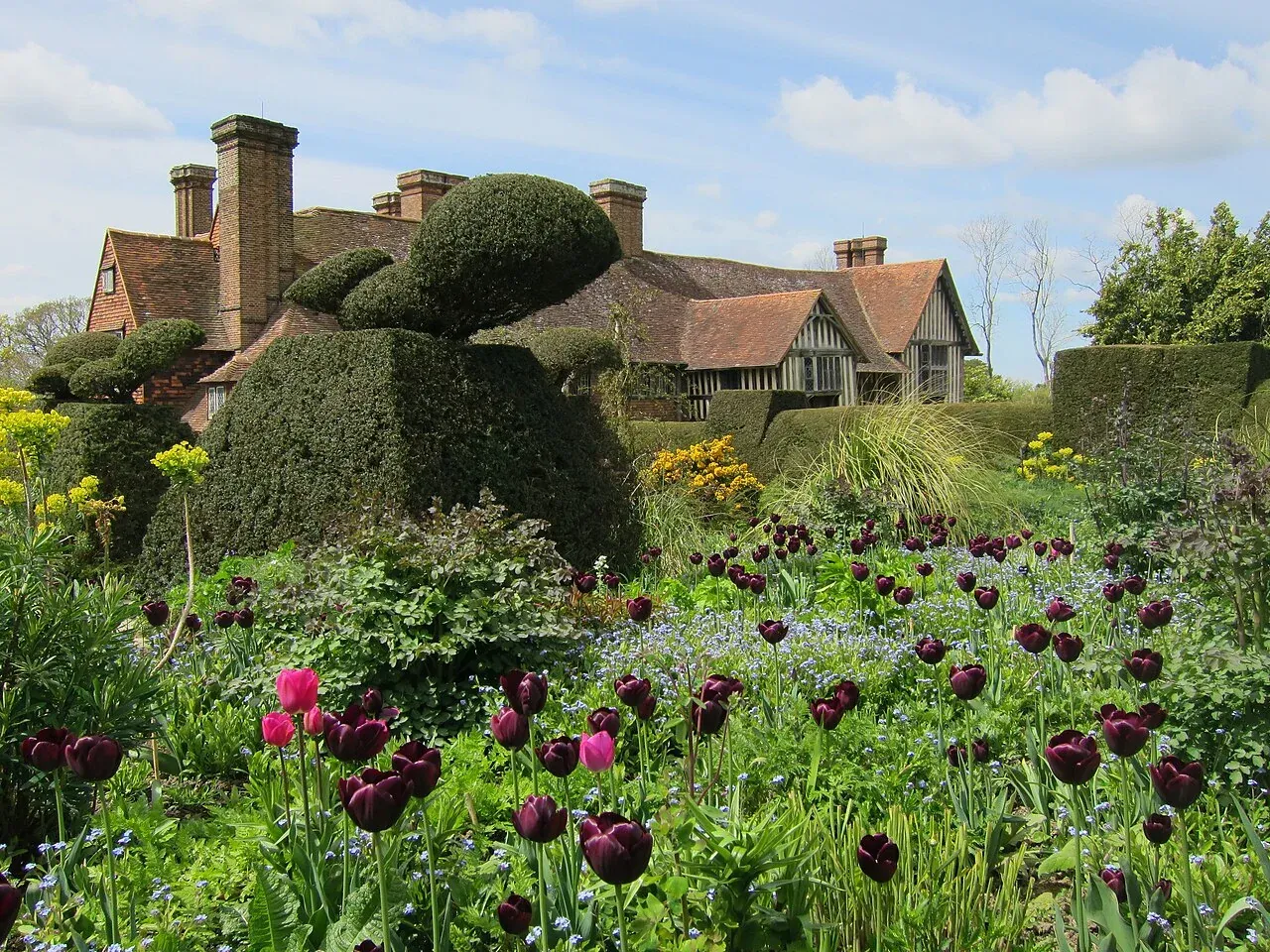
Before any flowers, decide what holds the garden together in January: a clipped box shape or two by the door, an evergreen at a corner, a path with a clean edge. If the bones are good, the quiet months still look deliberate.
Repeat three plants
In a small garden, choose three plants to repeat: a lime green Euphorbia wulfenii, a red (a poppy in early summer, Dahlia ‘Bishop of Llandaff’ later) and a grass such as Miscanthus ‘Malepartus’ for shape. Plant each of them more than once down the bed, so the eye follows them, then fill between. Follow Lloyd and let one tall, see through plant stand near the front; in our look that is Sanguisorba ‘Cangshan Cranberry’.
Make a mini Great Dixter meadow
Leave one strip of lawn long and plant it with crocus, wild daffodils and cowslips, then mow a path through it and a neat edge beside it, as Dixter does, so it is plainly on purpose.
Put the hot clash in the sun
Garrett lists full sun for Euphorbia wulfenii, Miscanthus ‘Malepartus’ and the ladybird poppy, so give them the brightest bed. For part shade, his list includes plants for full sun to part shade, such as Geranium ‘Ann Folkard’ and the jonquil ‘Baby Boomer’; our shade garden design page has more for the darker corners.
On a tight budget, sow
Garrett sows his ladybird poppies and larkspur in autumn and plants them out, and Lloyd relied on self sowers to fill the border. Seed is the cheapest way to start threading, and leaving seed heads standing over winter saves a job as well as feeding the birds. For more plants in the same spirit, our cottage garden plants page lists the ones that suit a British garden, and our garden border planner helps lay out a mixed border plant by plant.
Add one exotic corner
Country Life says Dixter is the place to learn to grow tropical exotics, and Garrett says the garden will continue with its “swashbuckling dahlias, cannas and bedding plants”. At home, one bold leaf is enough: Canna indica in a big pot by the patio for late summer, or the evergreen Fatsia japonica, whose hand shaped leaves and November flower globes give our look an exotic note all year.
Garden Design App
How can we help you transform your garden to look like Great Dixter?
Planning a Great Dixter border is hard to do in your head. Lloyd wanted his border to look exuberant and uncontrived, and that takes planning: scarlet beside magenta can sing or look muddled, and a border that peaks in June can have nothing left to say by September. Mistakes cost money, and a whole season to find out. Garden Design App takes the guesswork away. It redesigns your own garden in a bold, layered cottage look inspired by Great Dixter, one border or the whole garden, so you see the result before you buy a single bulb.
Think of an early summer morning: scarlet poppies flaring against the lime green of the spurges, purple allium drumsticks standing above them, silver cardoon leaves catching the light and tall grasses moving at the back. Beside the border runs a strip of long grass with a mown path through it, where crocus and cowslips came up in spring. By late summer the red of Dahlia ‘Bishop of Llandaff’ picks up where the poppies left off, Miscanthus plumes take over in autumn, and in winter clipped box and red berries keep it all looking deliberate. Ask for exactly that, and the app draws it into your garden, around the house, trees and fences you already have.
What you can ask for
Type any of these into the “Anything else?” box, in your own words:
- Red poppies threaded through lime green spurges, all down the border
- Clipped box cones by the door, so winter still looks deliberate
- A strip of long grass with crocus, wild daffodils and cowslips, and a mown path through it
- A wide stone path with plants spilling onto it, and a strip of mown grass beside it
- Tall see through plants near the front, such as purple alliums or burnet
- Big leaved cannas in a corner by the patio, for a late exotic note
How to design a Great Dixter border in five steps
- Start a free garden design. Press “Start my free garden design” and add a photo of the part of the garden you want to transform. Your house, trees and fences stay where they are.
- Choose Cottage for the style, then pick Hot & bright for the colours. Lloyd himself said Great Dixter was based on the cottage garden, which is why Cottage is the place to start.
-
Ask for the Great Dixter touches you love in the “Anything else?” box.
“Thread red poppies through lime green spurges all along the border, put clipped box cones by the door for winter, and leave a strip of long grass with bulbs and a mown path through it.”
- See your garden transformed in just one minute. Look at the clash against the house, trees and fences the app keeps, and know whether it suits them before you spend a penny on plants. Try a bolder version, then a calmer one, and keep the one you love.
- Turn it into a garden you can plant. With Pro or Max (£29 or £49, paid once), every plant in your design is named, picked for your light and soil and ready to buy, with the pot size and how tall it grows. A care guide and flowering calendar keep the succession going, season after season.
Why try it with Garden Design App first?
No guesswork
You don’t need to know the name of a single plant. You see the clash against your own fence, lawn and patio before you spend anything on it, and if the reds fight with your brickwork, you try a calmer mix.
Plants that will thrive
Pro and Max pick every plant to thrive where you live, in your light and soil, and name each one ready to buy. That takes the guesswork out of the hardest part, the hand over from season to season, and measured borders also tell you how many of each to buy.
Your garden stays familiar
Your house, trees and fences stay where they are, so the design fits the garden you already have, whether that’s one border or the whole plot.
A design in just one minute
A garden designer can take weeks to months to come back with a first design, and the average UK garden design costs £1,950. Save over £1,900, and start today with 3 free designs.
A real garden, before and after
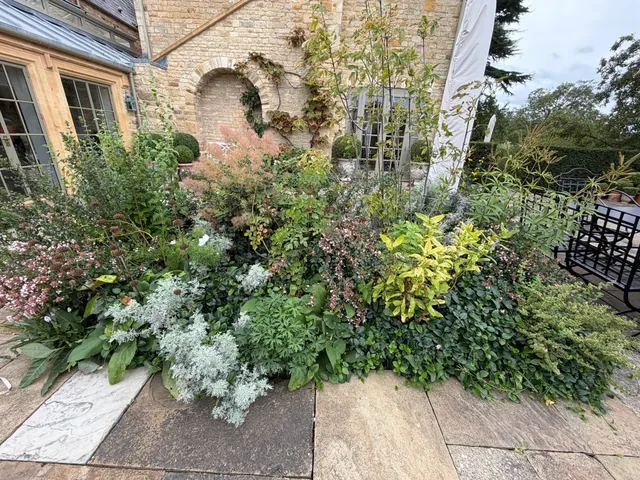 Original garden
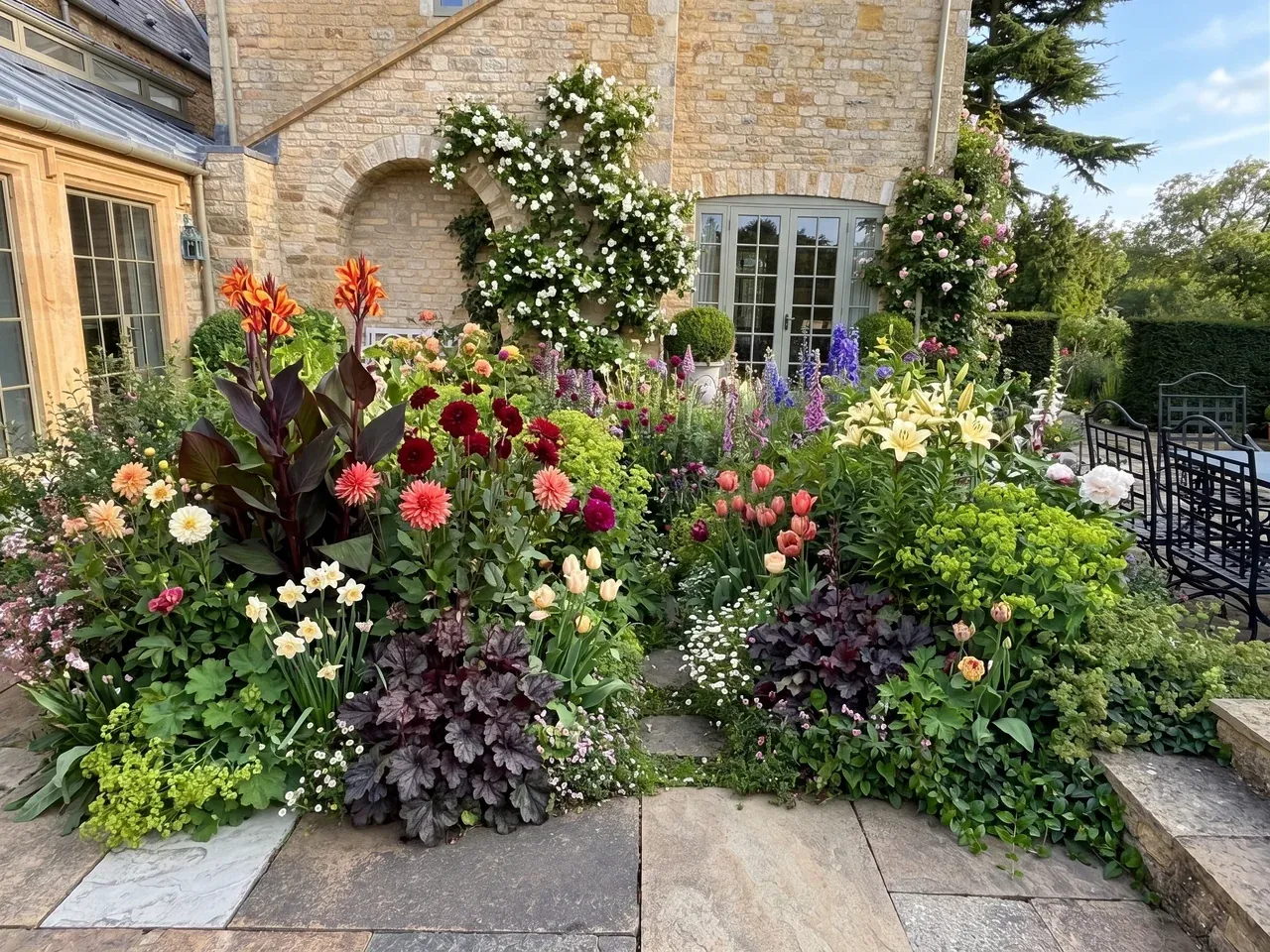 Cottage design
Over 500 garden designs made.
Try a layout before you spend on plants or a designer
If the clash feels too loud beside your house, or the long grass takes too much of a small lawn, try a second layout while it’s still easy to change. Once you’ve found a layout you like, the planting list with Pro or Max tells you what to buy, so you can go to the garden centre with a plan. A garden designer can visit, measure and oversee the build. When you want that help, bring the look you found here.
Start with 3 free designs
Your first 3 designs are free, with no card needed, so you can try the Great Dixter look three times before you spend anything: a bolder version, a calmer one and one with a strip of long grass. For more ideas, our cottage garden design page shows real gardens redesigned in the Cottage style, our design my garden page shows how it works, and our famous gardens guide has more great gardens to borrow from.
What you get with Garden Design App
Start free. When you’re ready for a plan you can plant from, choose Pro or Max. One payment, no subscription.
- Free £0
- Your first 3 designs
- Lower quality images with a watermark
- Pro £29
- 20 designs over 14 days
- 5 free designs on top
- 2 designs at once, side by side
- Max £49
- 50 designs over 30 days
- 10 free designs on top
- 4 designs at once, side by side
Turn the design you love into a garden you can plant
Every Pro or Max design comes with a Garden Transformation Pack: the plants, layout, materials and features, with a full care guide.
- Know what to buy. Get plants picked to thrive where you live, in your light and soil. Every plant is named, with the pot size to buy and how tall it grows. For a measured border, you also get how many of each plant to buy.
- Plan the whole garden. Get a layout and the features in your design, plus materials from gravel to fencing with whole garden designs.
- Know what to do through the year. Use the care guide to look after your plants and the flowering calendar to see what comes into bloom next.
- See the detail and ask for changes. Get higher quality images without a watermark, and change any design in your own words.
Your first 3 designs are free, with no card needed.
Questions about the Great Dixter garden
Why is Great Dixter famous?
Christopher Lloyd’s garden is famous for its planting: Lloyd made it known through his writing, broadcasting and bold experiments with colour, shape and combinations, and Fergus Garrett has kept that experimenting going. Country Life calls a visit the most exciting and instructive horticultural experience in the British Isles. Garden history · Country Life
How can I make my garden look like Great Dixter?
Give it the three things Dixter is built on: good bones of clipped evergreens, a few bold plants threaded right through the border so one wave of flowers takes over from the last, and a strip of long grass with bulbs. To try the look before you buy plants, add a photo of your garden to Garden Design App, choose Cottage with Hot & bright, and ask for red poppies through lime green spurges or clipped box for winter in your own words. Your garden is redesigned in just one minute, and your first 3 designs are free.
Who owns Great Dixter now?
Christopher Lloyd set up the Great Dixter Charitable Trust in 2003 so that the house and garden would be preserved after his death. Fergus Garrett, who worked with Lloyd as head gardener, is the trust’s chief executive. Garden history · Garrett’s plants
Is Great Dixter open all year?
Opening times change through the year, so check the garden’s own website, greatdixter.co.uk, before you go.
Where is Great Dixter located?
At Northiam, near Rye, in East Sussex, on high ground on the Sussex Weald. Gardenista
When is the best time to visit Great Dixter?
For the borders at their fullest, Lloyd aimed the Long Border’s main show at mid June to mid August, with interest from April to October. For the structure of yew, box and seed heads, Gardenista argues for the colder months, when the garden’s bare bones show. Check the garden’s website for the months it is open. Lloyd on the Long Border · Gardenista
What grows in the Great Dixter Long Border?
Country Life shows the bronze seed heads of globe artichokes, the maroon single Dahlia ‘Dove Grove’, purple Verbena bonariensis, Miscanthus sinensis ‘Malepartus’ and a silver willow together in the Long Border, and Lloyd let self sowers such as verbascums fill the gaps. Our season by season table lists plants for a Great Dixter look at home. Country Life · Lloyd on the Long Border
Who was Christopher Lloyd the gardener?
Not the actor. Christopher Lloyd was born at Great Dixter, gardened there for about 80 years, wrote for Country Life for nearly half a century and made the garden famous. He died in 2006. Gardenista · Country Life
About the author
Sources
- Great Dixter, The Long Border, in Christopher Lloyd’s words
- Country Life, The gardens at Great Dixter: how Christopher Lloyd’s labour of love lives on
- Wikipedia, Great Dixter
- Gardens Illustrated, Plant borders like Great Dixter with Fergus Garrett’s favourite plants by Fergus Garrett
- Gardens Illustrated, A Kent garden inspired by Great Dixter’s borders
- Gardenista, Garden Visit: Great Dixter’s Warmth in Winter
- Garden Design App homepage