
How we can help
How can you transform your garden to look like Gravetye Manor?
William Robinson began his garden at Gravetye in 1885, and the restoration that started in 2010 is still going on. With Garden Design App, you add a photo of your garden, choose the Cottage style and the Pink-led colours, and ask for the Gravetye touches you love: daffodils and camassias in long grass, a layered border of pink, magenta and purple, and white cosmos floating through it. In just one minute you see your garden redesigned in a layered, wild garden look inspired by Gravetye Manor, with your house, trees and fences kept.
- See the look before you spend. A layered border is hard to picture: which bulbs go under which perennials, and where the long grass ends and the lawn begins. Try the bulbs under the tree, then along the fence, and keep the design you love.
- Plants that will grow for you. With Pro or Max, every plant is named and picked to thrive where you live, in your light and soil, ready to buy, with a flowering calendar that shows each layer taking over from the last.
- Save over £1,900. The average UK garden design costs £1,950, and a designer can take weeks to months to come back with a first design. Garden Design App gives you one in just one minute.
Your first 3 designs are free, with no card needed.
See a real Cottage garden redesignGravetye Manor history: who made the garden?
William Robinson started life in Ireland, in the poverty of the potato famine, and trained as a garden boy at an early age. By the 1860s he was in London, working on the new botanic gardens in Regent’s Park and starting to write. His books include The Wild Garden and The English Flower Garden, and he ran journals such as The Garden and Garden Illustrated. The garden’s own history page remembers him as the Irishman who taught the English how to garden. Garden history
His writing made him wealthy, and in 1884 he bought Gravetye Manor in Sussex. He came to own more than 1,000 acres around it, much of it used for experimental forestry, which the William Robinson Gravetye Charity still manages today. But the heart of the estate is the garden he made from 1885 on the 35 acres around the house. The manor’s own site calls it his masterpiece, and one of the most important historic gardens in England. Garden history
By 2010 the garden had fallen into decline. That year Mr and Mrs Hosking bought the manor, now a country house hotel, and began a major restoration that is still going on. The head gardener, Tom Coward, studied at Kew and is a Great Dixter alumnus; he arrived in 2010 to restore and reimagine the garden. Today the Gravetye Manor gardens take in flower gardens, meadows, mixed borders, lawns and an elliptical walled kitchen garden of about one and a half acres. Garden history · Gardenista · PoB Hotels
Tom Coward says it was here that Robinson put his ideas into practice, and that the layers added by later generations only add to his heritage, making a historic garden that has always looked forward and been progressive. PoB Hotels
What William Robinson meant by the wild garden
William Robinson is best known today for the wild garden: a landscape that celebrates nature instead of controlling it. The garden’s history page also credits him with the modern mixed border, and with making secateurs and the hose pipe everyday tools. Tom Coward sums up what Robinson’s books introduced as the mixed flower border, wild gardens, and ways to use the many new plants arriving at the time. Garden history · PoB Hotels
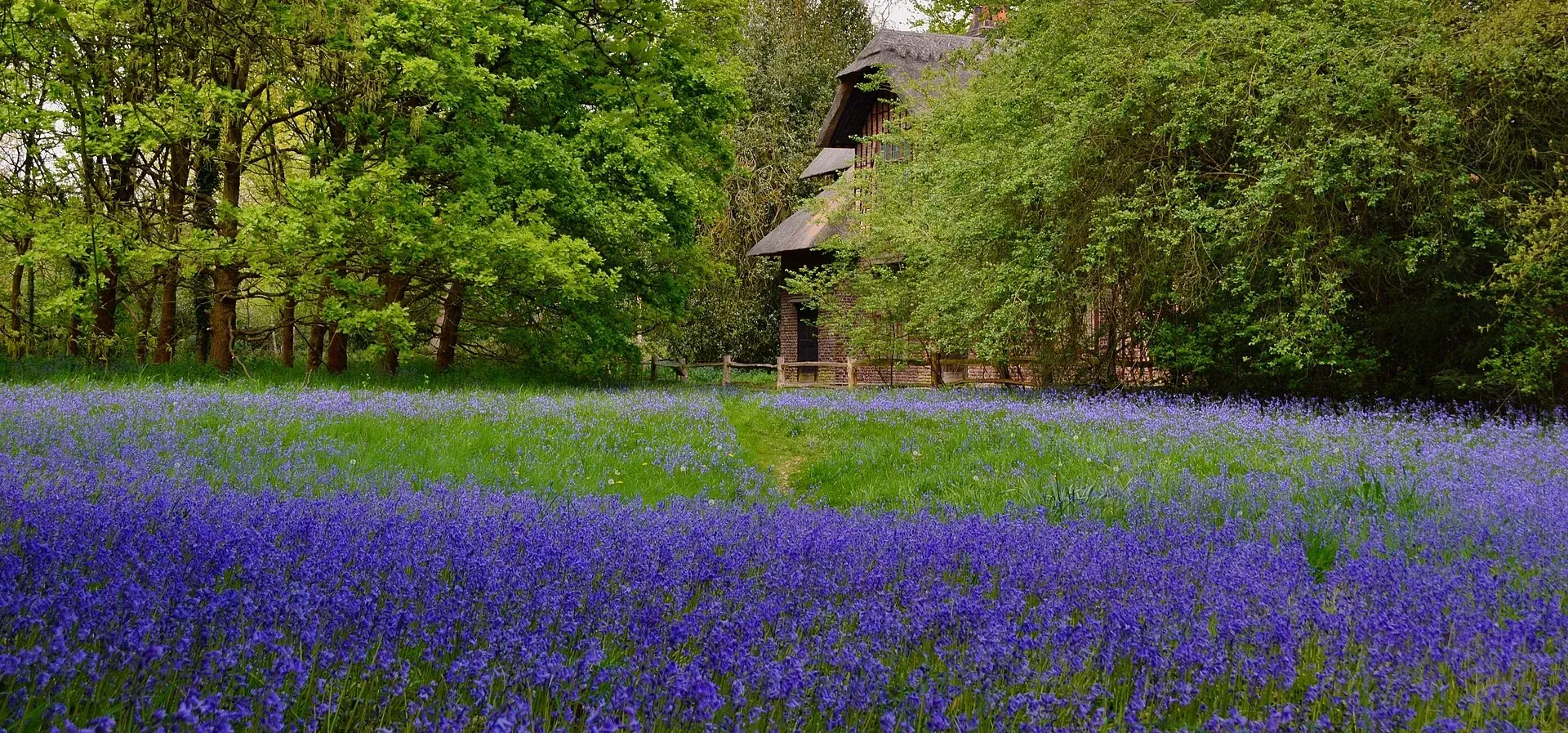
At Gravetye the two ideas sit side by side. Nearest the house the borders are rich, planned and always changing. Further out the planting loosens into wild flower meadows and orchard grass full of bulbs, with bluebell woods beyond. That move from planned borders to looser edges is what gives this William Robinson garden its feel, and it is the part of his wild gardening that any garden can borrow. Gardenista · PoB Hotels
Why it works: six ideas for wild garden design
Gardenista visited on a damp, cool spring day and still found fresh ideas in all directions. These are the ideas worth taking home when you plan a garden in the Gravetye spirit, and each of them works in an ordinary garden. Gardenista
Plant in layers that hand over
Layered planting is how Gravetye keeps a border going for as long as possible. In the Summerhouse Border, Tom Coward explains in Gardens Illustrated, spring bulbs and annuals start the display, then midsummer perennials such as Geranium psilostemon grow up and swallow them. In mid July the tired perennials are cut back and late annuals such as white Cosmos ‘Purity’ go into the gaps with dahlias. “It is a lot of work but worth it,” he writes. Gardens Illustrated
Let bulbs do the painting
In May the orchard turns blue with thousands of camassias under the old fruit trees, just as the apple blossom opens. Gardenista calls it high impact, low maintenance gardening: the bulbs naturalise and their leaves die back in the long grass. In the borders, tulips are dotted through instead of planted in big clumps, which gives a lighter effect. Gardenista
Give the colour a dark backdrop
A yew at the back of one border makes a dark green wall for the flowers to glow against. Its shade is dry, so Gravetye uses Japanese anemones close to its roots, and the arching rose Rosa glauca as an anchor plant, with pink flowers alongside to show off its pink leaf stalks. Gardens Illustrated
Let plants seed, then edit
Self seeders such as verbena add spontaneity, but the gardeners thin the seedlings so only a handful flower, and every winter they review each clump of perennials, dividing where needed so the plants knit together without crowding. Wild does not mean neglected. Gardens Illustrated
Lead the eye, and repeat
Outside the old oak door, a sundial in the lawn pulls the eye out to a pergola of white wisteria. On the steep banks below the restaurant, a white flowered dwarf cherry, Prunus glandulosa ‘Alba Plena’, is used again and again. Gardenista
Let plants soften the stone
Many of Gravetye’s stone features have been in the garden for more than a century, and the gardeners dress them with plants. Gardenista saw Clematis armandii, with its bronze new leaves, wrapped round an elaborate stone finial, and a sprawling rose trained along the top of the old wall that edges the Long Border. Gardenista
Gravetye plants through the year
First, the plants that published accounts name at Gravetye itself. Then the plants in our Gravetye look, the cottage theme we built inspired by the garden, season by season. Where Gravetye’s own plant is not on our list, we use a close stand in and say so.
Gravetye Manor plant list from published accounts
- Geranium psilostemon, Cosmos ‘Purity’ and dahlias
- The layers of the Summerhouse Border: the cranesbill swallows the spring bulbs, then is cut back in mid July for the cosmos and dahlias such as Dahlia ‘Magenta Star’. Gardens Illustrated
- Camassias and tulips
- Thousands of camassias under the orchard’s fruit trees in May, and tulips dotted through the borders. Gardenista
- Rosa glauca and Japanese anemones
- The anchor rose in the border backed by the yew, with Anemone ‘September Charm’ in the dry shade near its roots. Gardens Illustrated
- Eupatorium, crocosmia and helenium
- Eupatorium ‘Riesenschirm’ for clouds of dusky purple, then the orange of Crocosmia ‘Zeal Giant’ and Helenium ‘Riverton Beauty’ in late summer. Gardens Illustrated
- White wisteria and a white dwarf cherry
- The wisteria on the pergola past the sundial is ‘Shiro Noda’, and Prunus glandulosa ‘Alba Plena’ is repeated on the steep banks. Gardenista
Gardens Illustrated also names cardoons, Verbena bonariensis and the upright sedum Hylotelephium ‘Matrona’ in the Long Border, and on the stone wall behind it Gardenista found Erigeron karvinskianus, ferns, forget me nots and wild strawberries. In spring Tom Coward names daffodils, magnolia and rhododendron; in autumn, asters and dahlias among his favourites; and in winter, the first snowdrops as one of the highlights of the year. Gardens Illustrated · Gardenista · PoB Hotels
Plants for a Gravetye look at home
The table sets what our sources say flowers at Gravetye beside the plants in our Gravetye look, the cottage theme we built inspired by the garden. Each season shows our Gravetye inspired look first, then what our sources say flowers at Gravetye itself. Our look is our choice, not a claim about what grows there. Start with a plant or two for each season, and let each layer take over from the last.
| Season | What to plant |
|---|---|
| Winter | Snowdrops in grass, scent against holly Snowdrops (Galanthus nivalis ‘Flore Pleno’) in grass, Iris ‘Katharine Hodgkin’, hellebores, scented Viburnum ‘Dawn’ and witch hazel against holly, with white birch bark. The silver edged holly ‘Argentea Marginata’ is our stand in for Gravetye’s dark yew backdrop. Seen at Gravetye: the first snowdrops. |
| Spring | Bulbs in grass, blossom above Wild daffodils (Narcissus pseudonarcissus) in grass, Magnolia ‘Leonard Messel’, crab apple, blue camassias, tulips, columbines and white sweet rocket. In the damper grass goes Leucojum aestivum ‘Gravetye Giant’, the summer snowflake that carries the garden’s name. Seen at Gravetye: daffodils, magnolia, rhododendron; camassias in the orchard; tulips in the borders. |
| Summer | Magenta, crimson and floating white Magenta cranesbill, crimson Knautia macedonica, foxgloves, pink phlox, Cosmos ‘Purity’, cardoons (Cynara cardunculus) and cornflowers, with a purple clematis, ‘Étoile Violette’, scrambling through the shrubs. Our magenta cranesbill is the bloody cranesbill (Geranium sanguineum), a stand in for Gravetye’s Geranium psilostemon, cut back in July the same way. Seen at Gravetye: wild flower meadows; Cosmos ‘Purity’ planted into gaps in July; cardoons. |
| Autumn | Dahlias, asters and an orange flare Dahlia ‘Magenta Star’, Eupatorium ‘Riesenschirm’, Anemone ‘September Charm’, Hylotelephium ‘Matrona’, a pink New England aster, orange crocosmia and the hips of Rosa moyesii ‘Geranium’, our stand in for Gravetye’s Rosa glauca. Seen at Gravetye: asters and dahlias, Dahlia ‘Magenta Star’, Eupatorium ‘Riesenschirm’, Anemone ‘September Charm’, Verbena bonariensis. |
The colours, and the plant with the garden’s name
The colour runs pink, magenta and dusky purple, with white floating through it. Tom Coward says the white of Cosmos ‘Purity’ has an almost floating feeling, and describes Eupatorium ‘Riesenschirm’ as clouds of dusky purple flowers on dark stems. In late summer Gravetye lights its borders with the orange Crocosmia ‘Zeal Giant’ and Helenium ‘Riverton Beauty’; our look does the same with a tall orange crocosmia and, our own choice, a coral helenium. One plant in our look carries the garden’s name: Leucojum aestivum ‘Gravetye Giant’, a tall summer snowflake with white bells for damp ground. Gardens Illustrated
How to get the Gravetye look in an ordinary garden
Gravetye is a big garden, but Robinson’s ideas scale down to a normal plot. Start with the edges, not the border, then pick one border you can see from the house or walk past often, and plant it in layers before buying for the rest of the garden.
Start with bulbs in grass
Creating a wild garden the Robinson way begins with bulbs in grass: choose a strip of lawn by the fence or under a tree, plant wild daffodils, snowdrops and camassias into it, and let their leaves die back before you mow, as Gravetye does in its orchard. Once settled, they come back each year with little care, which is what makes a low maintenance wild garden possible. Then pick one border to plant in layers.
A small wild garden
You do not need 35 acres. In a small wild garden, keep the layers but shrink them: a narrow amelanchier or a crab apple for height, a dark evergreen such as holly or Portugal laurel behind, and a short border where tulips and alliums give way to cranesbills and phlox, then to cosmos, dahlias and asters. Use the walls too: at Gravetye, the stone wall behind the Long Border has Erigeron karvinskianus, ferns, forget me nots and wild strawberries growing in its cracks.
Choose plants for part shade
Gravetye’s answer to dry shade under its yew is Japanese anemones. Our look adds plants for a wild garden that cope with less sun at a woodland edge: dusky Geranium phaeum, sweet woodruff, purple wood spurge, male fern, foxgloves and primroses. Our shade garden design page has more for the darker corners.
On a tight budget, let plants seed
Foxgloves, honesty, columbines and verbena seed themselves, so a few plants become many, as long as you thin the seedlings. Sow Cosmos ‘Purity’ in April, as Gravetye does, so the plants are the right size for the gaps in July. For more plants in the same loose spirit, our cottage garden plants page lists the ones that suit a British garden.
Use prunings as supports
Gravetye weaves birch and hazel clippings into nest like supports that hold up the biggest perennials. Until the plants grow into them, Gardenista says, the supports bring shape and height to the borders on their own, and they cost nothing. Gardenista
Learn from other gardens
Tom Coward’s own advice to home gardeners is to work out what will give you the most joy for the least work, visit other gardens and talk to other gardeners. For more English wild garden ideas, our cottage garden design page shows the loose, mixed style in many gardens, and our wildlife garden page covers planting for birds and insects. Gravetye is one of the gardens in our famous gardens guide.
Garden Design App
How can we help you transform your garden to look like Gravetye Manor?
A garden like this grows over years, and the costly mistakes come at the start: a border in the wrong place, plants that fight for the same spot, colours that look lovely in a book and flat outside your window. A layered border is hard to plan in your head, too: which bulbs sit under which perennials, what fills the gap when the cranesbills are cut back in July, and where the long grass should stop and the lawn begin. Mistakes cost money, and a whole season to find out. Seeing the finished garden first takes out the guesswork. Garden Design App redesigns your own garden in a layered, wild garden look inspired by Gravetye, one border or the whole garden, so you see the result before you buy a single bulb.
Think of a long warm evening in late summer: pink phlox and magenta dahlias with white cosmos floating through them, clouds of dusky purple Eupatorium at the back against a dark evergreen, and an orange crocosmia flaring near the front. Beside the border runs a strip of long grass under a crab apple, where daffodils and blue camassias came up in spring. In autumn the asters take over as the light softens, and in winter the first snowdrops push up through the grass. Ask for exactly that, and the app draws it into your garden, around the house, trees and fences you already have.
What you can ask for
Type any of these into the “Anything else?” box, in your own words:
- Daffodils and blue camassias in a strip of long grass under a tree
- A layered border of pink, magenta and purple, with white cosmos floating through it
- A dark evergreen hedge behind the border, so the colours glow against it
- A sundial in the lawn that leads the eye to a pergola with white wisteria
- Tall orange crocosmia flaring through the border in late summer
- Snowdrops in the grass for winter, and ferns and wild strawberries in the cracks of a wall
How to design a layered wild garden in five steps
- Start a free garden design. Press “Start my free garden design” and add a photo of the part of the garden you want to transform. Your house, trees and fences stay where they are.
- Choose Cottage for the style, then pick Pink-led for the colours, to lead with Gravetye’s pinks and magentas. Its loose, mixed, self seeding planting sits closest to the Cottage style.
-
Ask for the Gravetye touches you love in the “Anything else?” box.
“Put daffodils and camassias in a strip of long grass under the tree, and a layered border of pink, magenta and purple with white cosmos floating through it. Plant a dark evergreen hedge behind the border.”
- See your garden transformed in just one minute. Look at the border and the long grass against the house, trees and fences the app keeps. Try a wilder version, then a tidier one, and keep the one that suits how you live and the time you have.
- Turn it into a garden you can plant. With Pro or Max (£29 or £49, paid once), every plant in your design is named, picked to thrive in your light and soil and ready to buy, with the pot size and how tall it grows. A care guide and flowering calendar show when each layer takes over, so you know what goes where before you dig.
Why try it with Garden Design App first?
No guesswork
You don’t need to know the name of a single plant. You see the border and the long grass against your own fence, lawn and patio before you spend anything on them, and if the long grass takes too much of a small lawn, you try a narrower strip.
Plants that will thrive
Pro and Max pick every plant to thrive where you live, in your light and soil, and name each one ready to buy. That takes the guesswork out of the hardest part of a layered border, knowing which plant takes over from which, and measured borders also tell you how many of each to buy.
Your garden stays familiar
Your house, trees and fences stay where they are, so the design fits the garden you already have, whether that’s one border or the whole plot.
A design in just one minute
A garden designer can take weeks to months to come back with a first design, and the average UK garden design costs £1,950. Save over £1,900, and start today with 3 free designs.
A real garden, before and after
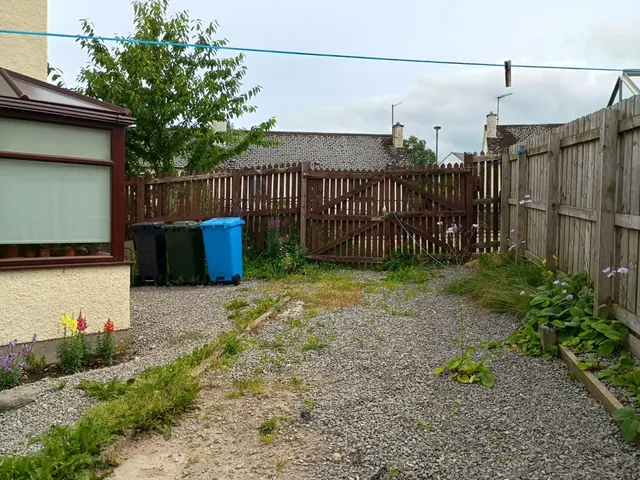 Original garden
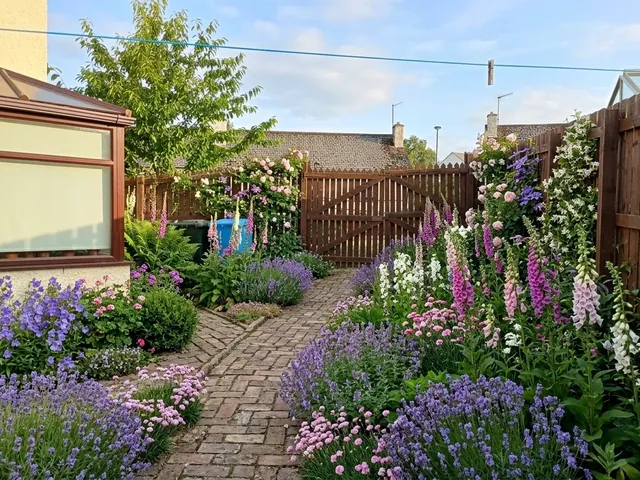 Cottage design
Over 500 garden designs made.
Try a layout before you spend on plants or a designer
If the border feels too full or the long grass takes too much of the lawn, try a second layout while it’s still easy to change. Once you’ve found a layout you like, the planting list with Pro or Max tells you what to buy, so you can go to the garden centre with a plan. A garden designer can visit, measure and oversee the build. When you want that help, bring the look you found here.
Start with 3 free designs
Your first 3 designs are free, with no card needed, so you can try the Gravetye look three times before you spend anything: a wilder version, a tidier one and one with just the bulbs in grass. For more ideas, our cottage garden design page shows real gardens redesigned in the Cottage style, our design my garden page shows how it works, and our famous gardens guide has more great gardens to borrow from.
What you get with Garden Design App
Start free. When you’re ready for a plan you can plant from, choose Pro or Max. One payment, no subscription.
- Free £0
- Your first 3 designs
- Lower quality images with a watermark
- Pro £29
- 20 designs over 14 days
- 5 free designs on top
- 2 designs at once, side by side
- Max £49
- 50 designs over 30 days
- 10 free designs on top
- 4 designs at once, side by side
Turn the design you love into a garden you can plant
Every Pro or Max design comes with a Garden Transformation Pack: the plants, layout, materials and features, with a full care guide.
- Know what to buy. Get plants picked to thrive where you live, in your light and soil. Every plant is named, with the pot size to buy and how tall it grows. For a measured border, you also get how many of each plant to buy.
- Plan the whole garden. Get a layout and the features in your design, plus materials from gravel to fencing with whole garden designs.
- Know what to do through the year. Use the care guide to look after your plants and the flowering calendar to see what comes into bloom next.
- See the detail and ask for changes. Get higher quality images without a watermark, and change any design in your own words.
Your first 3 designs are free, with no card needed.
Questions about Gravetye Manor
Why is Gravetye Manor famous?
It was the home of William Robinson, the Victorian writer of The Wild Garden, who made his garden there from 1885 and is remembered as the Irishman who taught the English how to garden. The manor’s own site calls the garden one of the most important historic gardens in England. Today the manor is a country house hotel, and the garden is being restored. Garden history
How can I make my garden look like Gravetye Manor?
Give it the three things Gravetye is built on: bulbs settled in grass at the edges, one border planted in layers so something is always in flower, and a dark evergreen backdrop for the pink, magenta and purple to glow against. To try the look before you buy plants, add a photo of your garden to Garden Design App, choose Cottage with Pink-led, and ask for daffodils in long grass and a layered border in your own words. Your garden is redesigned in just one minute, and your first 3 designs are free.
Who owns Gravetye Manor now?
Mr and Mrs Hosking bought Gravetye Manor in 2010, according to the garden’s own history page, and it is now a country house hotel. They began a major restoration of William Robinson’s garden that is still going on, led by the head gardener, Tom Coward. Garden history · PoB Hotels
Can you visit Gravetye Manor gardens?
Yes. The garden is open to visitors and the manor runs regular garden tours. Opening times and prices change, so check the Gravetye Manor website before you go.
When is the best time to see the garden?
Every season has something. Tom Coward names daffodils, magnolia and rhododendron in spring, with bluebells in the woods; the flower garden at its peak of colour in high summer, with the wild flower meadows; asters and dahlias in autumn as the light softens; and the first snowdrops in winter, when the views across the wooded landscape are most dramatic. In May the orchard is blue with camassias. PoB Hotels · Gardenista
What is wild gardening?
In William Robinson’s sense, it is gardening that celebrates nature instead of controlling it: bulbs and wild flowers left to settle in grass, meadows and woodland edges, beside planned borders nearer the house. It is not letting a garden go: at Gravetye the self seeders are edited and the perennials reviewed every winter.
What books did William Robinson write?
His best known are The Wild Garden and The English Flower Garden, which Gravetye’s own history page calls the bestselling gardening book ever printed. He also ran gardening journals, including The Garden and Garden Illustrated. Garden history
What is Leucojum Gravetye?
Leucojum aestivum ‘Gravetye Giant’ is a tall form of the summer snowflake, a bulb with white bells that likes damp ground. It carries the garden’s name, and it is one of the spring bulbs in our Gravetye inspired look.
About the author
Sources
- Gravetye Manor, Horticultural History
- Gardenista, Garden Visit: 9 Ideas to Steal from the Bravura Planting at Gravetye Manor in Sussex
- Gardens Illustrated, The borders at Gravetye Manor by Tom Coward
- PoB Hotels, In the Garden with Tom Coward: Moving with the Seasons at Gravetye Manor
- Garden Design App, Robinson’s Layered Border theme, our cottage theme inspired by Gravetye
- Garden Design App homepage