
How we can help
How can you transform your garden to look like Hill Top?
Beatrix Potter filled her borders with seeds and cuttings from friends and neighbours, and Pete Tasker has spent more than 30 years piecing her planting back together. With Garden Design App, you add a photo of your garden, choose the Cottage style with All colours, and ask for the Hill Top touches you love: a path to the door with flowers either side, a pink rose round the porch and sweet peas on twig wigwams. In just one minute you see your garden redesigned in a homely cottage look inspired by Hill Top, with your house, trees and fences kept.
- See the look before you spend. A cottage garden is easy to overfill: a rose in the wrong spot swamps the door, and tall plants by the path can hide the house. Try the rose by the porch, then on the fence, and keep the design you love.
- Plants that will grow for you. With Pro or Max, every plant is named and picked to thrive where you live, in your light and soil, ready to buy, with a flowering calendar that shows what comes next.
- Save over £1,900. The average UK garden design costs £1,950, and a designer can take weeks to months to come back with a first design. Garden Design App gives you one in just one minute.
Your first 3 designs are free, with no card needed.
See a real Cottage garden redesignWhat is the Beatrix Potter house, and who made its garden?
Hill Top is a 17th century stone and slate house in Near Sawrey, near Hawkshead in Cumbria. Beatrix Potter bought it in 1905, with a working farm of 34 acres, as a home away from London, paying for it with the money from her first book, The Tale of Peter Rabbit. Today it belongs to the National Trust and is open as a writer’s house: a Beatrix Potter museum in the truest sense, because the rooms and garden are kept as she would have known them. House history · Great British Life
The Hill Top Beatrix Potter bought in 1905 was smaller than the place visitors see now. She took in more farmland and planted the garden faster than the builders could finish the house, filling the borders with seeds and cuttings from friends and neighbours, sometimes without asking. She wrote: “Stolen plants always grow, I stole some ‘honesty’ yesterday, it was put out to be burnt in a heap of garden refuse! I have something out of nearly every garden in the village”. Artist Studio Museum
Beatrix Potter’s Hill Top Farm went on to fill her books. She loved the view up the garden path so much that she drew it twice, in The Tale of Tom Kitten and The Tale of Pigling Bland, and red carnations still grow by the little gate where Tom Kitten sat. National Trust
She left the house to the National Trust when she died in 1943, and it has been open to the public since 1946. By the time Pete Tasker became the gardener more than 30 years ago, little of her planting was left; the apple tree in the orchard and the wisteria over the shed are thought to be hers. He rebuilt the Hill Top garden from her letters, photographs, diaries and drawings. Times and tickets are on the National Trust’s Hill Top page. House history · National Trust
Is Hill Top the Peter Rabbit garden?
Not quite. Many people come looking for the Peter Rabbit garden, but Mr McGregor’s walled vegetable patch was not Hill Top. Mr McGregor’s vegetable garden was painted at Lingholm on Derwentwater, before Potter bought Hill Top. Hill Top does have its own vegetable garden, in neat rows behind a door in a red brick wall. Artist Studio Museum · House history · National Trust
Why the Hill Top garden works
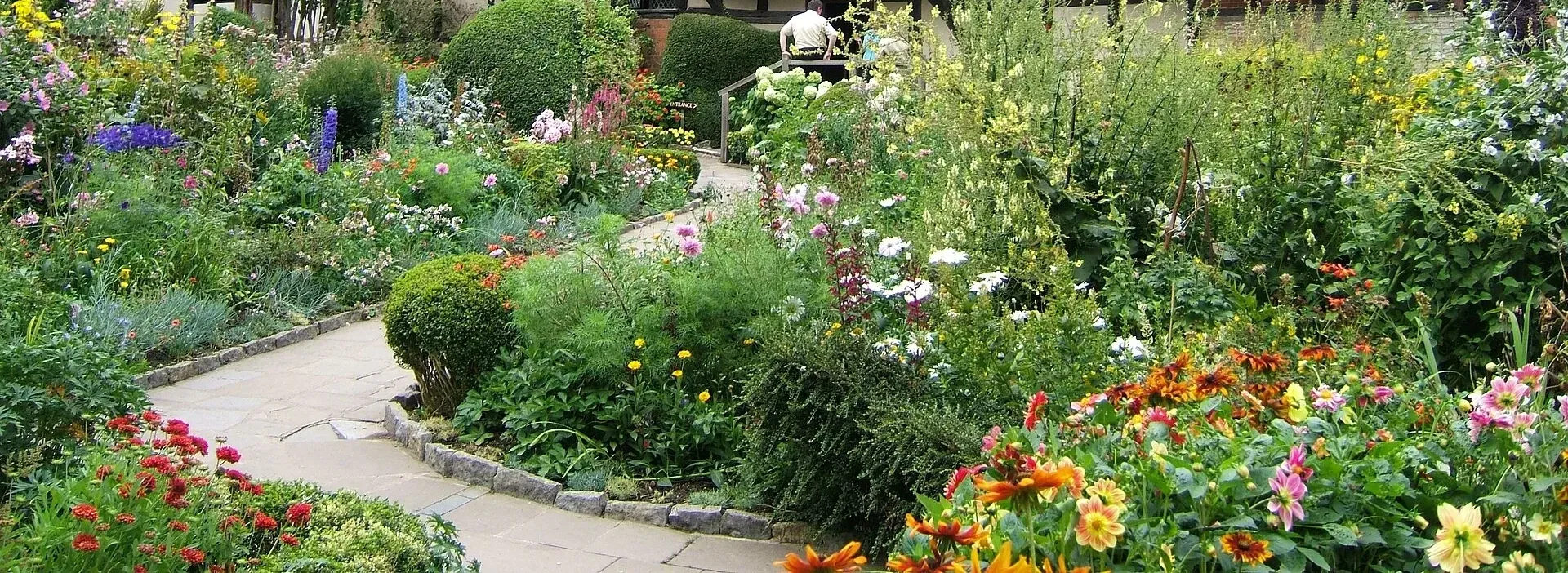
It is one of the smallest gardens in the National Trust’s care, which is exactly why it is worth copying: every idea in it fits a normal plot. These are the ideas worth taking home. Great British Life
A path that leads to the door
The garden is built around one path from the gate to the house, with informal beds either side. That single line gives a busy, mixed planting a spine, so it looks generous rather than messy. One clear path to a door, gate or bench does the same job at home. National Trust
Food and flowers together
This is a working Beatrix Potter farm garden, with fruit trees and vegetables in the flower beds. Beatrix Potter’s farm garden fed her kitchen too: strawberries, gooseberries, cabbages, onions, rhubarb and potatoes, turned into her own jams, pies and cakes. Mixing food and flowers makes beds feel lived in. Artist Studio Museum · Great British Life
The house dressed in plants
Potter wrote that “The cottage is nearly smothered with roses, the rain has weighed them down over the porch and door”. A rose or wisteria on the house wall ties garden and building together, which is what makes a Beatrix Potter cottage garden feel like one place. Artist Studio Museum
Plants that suit the place
Hill Top is a Lake District garden, with lots of rain and a stony, slightly acidic soil, so everything there has to cope with both. Plants from neighbours gave the beds their homely mix of colours with no scheme at all. Choose plants that like your own conditions and let the easy ones seed about. National Trust · Beatrix Potter Society
Hill Top garden plants through the year
The National Trust lists what flowers at Hill Top month by month. First, the plants the garden’s own pages name. Then our Hill Top look, the theme we built on this garden, which follows the same plan season by season; where a plant is not named on the garden’s own pages, it is our choice for the style, not a claim about Hill Top.
Hill Top plant list from published accounts
- June: lilacs, honesty and granny’s bonnets
- With Jemima’s rhubarb patch, early roses and meadow rue. National Trust
- July: foxgloves, lady’s mantle and sweet peas
- With scented shrub roses. National Trust
- August: poppies, Japanese anemones and tiger lilies
- Rich summer colour in the borders. National Trust
- The orchard, the old apple and the wisteria
- Apple, pear and damson trees in the orchard; the old apple tree and the wisteria over the shed are thought to be hers. National Trust · Great British Life
The National Trust also names azaleas, violets, Welsh poppies and aquilegias in the garden, and pumpkins, onions, rhubarb, carrots, cabbage and lettuce in the vegetable patch. National Trust
Plants for a Hill Top look at home
Start with a plant or two for each season, and keep room for fruit, herbs and vegetables among the flowers, as Hill Top does.
| Season | What to plant |
|---|---|
| Spring | Bulbs under the blossom Potter wrote that “Spring is the most beautiful time of year”. In June Hill Top has lilacs, honesty, granny’s bonnets, Jemima’s rhubarb patch, early roses and meadow rue. Our Hill Top look starts earlier, with double snowdrops (Galanthus nivalis ‘Flore Pleno’) and the Lake District’s wild daffodil (Narcissus pseudonarcissus) under apple and pear blossom, then wallflowers, lilacs, honesty (Lunaria annua), granny’s bonnets (Aquilegia vulgaris) and lupins. |
| Summer | Roses, spires and wigwams July at Hill Top is foxgloves, lady’s mantle, sweet peas and scented shrub roses; August brings poppies, Japanese anemones and tiger lilies. In our Hill Top look, foxgloves (Digitalis purpurea) and lady’s mantle (Alchemilla mollis) line the path, old sweet peas such as ‘Matucana’ climb twig wigwams, and the rose ‘New Dawn’ goes round the door. Hollyhocks, delphiniums and tiger lilies (Lilium lancifolium) follow, with runner beans and nasturtiums among the flowers. |
| Autumn | Fruit, anemones and hips The apple, pear and damson trees in the Hill Top orchard are picked in early autumn. In our Hill Top look, white Japanese anemones (Anemone × hybrida ‘Honorine Jobert’) and Michaelmas daisies take over, with rugosa rose hips and the berries of a rowan. |
| Winter | Evergreens and scent The winter is long in the Lake District. Our Hill Top look holds together with berrying holly and low box edging along the path, with scent from Christmas box (Sarcococca confusa) by the door and witch hazel, and hellebores under the fruit trees. |
How to plant a cottage garden inspired by Hill Top
You do not need a farm in the Lake District to grow this style. Our cottage garden design page shows the wider style on real gardens, and our cottage garden plants page goes deeper into what to grow.
Start with the path
Everything else hangs off the path and the door, so start there. Lay a simple path to the back door, then plant one climbing rose or a wisteria on the wall beside it. Fill the beds either side afterwards, a little at a time.
In a small garden
Hill Top itself is small, so the look shrinks well. Keep one path, edge it with strawberries, thyme or catmint, and grow upwards: sweet peas and runner beans on twig wigwams. A single apple tree can stand in for the orchard.
Choose plants for part shade
Lean on the woodland side of the cottage garden: foxgloves, granny’s bonnets, primroses, Japanese anemones and hellebores cope with some shade. Keep roses, sweet peas and vegetables for the sunniest strip.
Grow it on a tight budget
Do what Potter did and ask friends and neighbours for seeds, cuttings and spare plants. In one letter she wrote of taking a large basket and trowel to an old lady’s garden at Windermere: “I got nice things in handfuls without any shame.” Grow plants that seed themselves, such as honesty and foxgloves, and make wigwams from twigs, as Pete Tasker does with branches from the local woods. Beatrix Potter Society · Great British Life
Garden Design App
How can we help you transform your garden to look like Hill Top?
The hardest part of a cottage garden is knowing where everything goes. Hill Top looks haphazard, but the mix only works because one clear path runs through it, and a rose in the wrong spot can swamp the door or hide a window. Mistakes cost money, and a whole season to find out. Garden Design App takes the guesswork away. It redesigns your own garden in a homely cottage look inspired by the Beatrix Potter garden at Hill Top, one border or the whole garden, so you see the result before you spend a penny, and plant with confidence.
Think of a June morning after rain: a path running up to the door between beds of lilac, honesty and granny’s bonnets, a pink rose weighed down over the porch, foxgloves and lady’s mantle spilling onto the stones, and sweet peas on twig wigwams scenting the walk to the gate. By August tiger lilies and Japanese anemones take over, there are apples on the tree and rhubarb among the flowers, and the beds look as if they were filled from every garden in the village. Ask for exactly that, and the app draws it into your garden, around the house, trees and fences you already have.
What you can ask for
Type any of these into the “Anything else?” box, in your own words:
- A path to the door, with flowers in every colour spilling over both sides
- A pink climbing rose round the door, or a wisteria over the shed
- Foxgloves and lady’s mantle along the edge of the path
- Sweet peas and runner beans on twig wigwams among the flowers
- One apple tree, with rhubarb and strawberries tucked into the beds
- Hollyhocks against the house wall, and red carnations by the gate
How to design a Hill Top cottage garden in five steps
- Start a free garden design. Press “Start my free garden design” and add a photo of the part of the garden you want to transform. Your house, trees and fences stay where they are.
- Choose Cottage for the style, then pick All colours for the colours. Hill Top’s beds mix every colour with no scheme at all, so there is no need to narrow it down.
-
Ask for the Hill Top touches you love in the “Anything else?” box.
“Put a path to the door with flowers in every colour either side, a pink climbing rose round the door, and sweet peas and runner beans on twig wigwams among the flowers.”
- See your garden transformed in just one minute. Look at the planting against the house, trees and fences the app keeps. Try a second design with an apple tree in another corner, or more vegetables in the beds, and keep the one you love.
- Turn it into a garden you can plant. With Pro or Max (£29 or £49, paid once), every plant in your design is named, picked for your light and soil and ready to buy, with the pot size and how tall it grows, plus a care guide and flowering calendar. At Hill Top every plant has to cope with Lake District rain and stony soil; Pro and Max pick plants for your own conditions in the same spirit.
Why try it with Garden Design App first?
No guesswork
You don’t need to know the name of a single plant. You see the path, the rose and the flowers against your own fence, lawn and patio before you spend anything on them, and if the rose swamps the door, you try it on the fence instead.
Plants that will thrive
Pro and Max pick every plant to thrive where you live, in your light and soil, and name each one ready to buy. That matters in a mixed cottage bed, where every plant has to hold its own, and measured borders also tell you how many of each to buy.
Your garden stays familiar
Your house, trees and fences stay where they are, so the design fits the garden you already have, whether that’s one border or the whole plot.
A design in just one minute
A garden designer can take weeks to months to come back with a first design, and the average UK garden design costs £1,950. Save over £1,900, and start today with 3 free designs.
A real garden, before and after
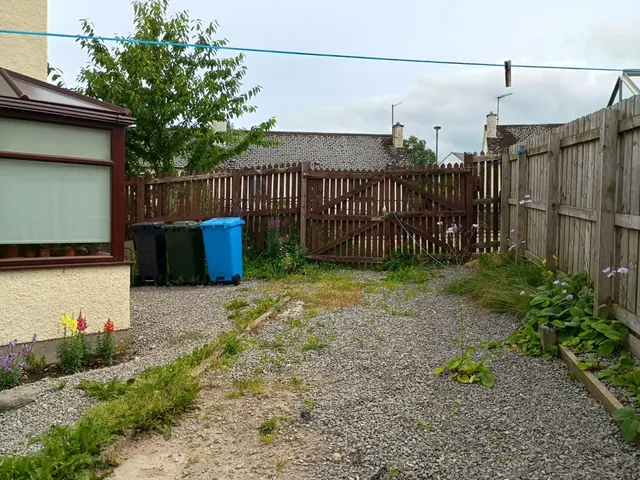 Original garden
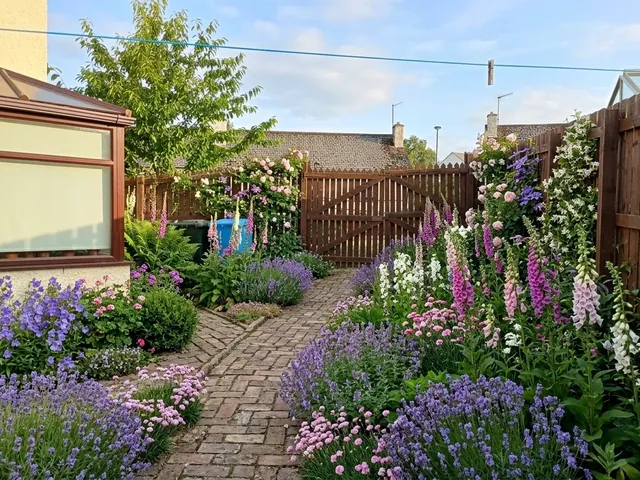 Cottage design
Over 500 garden designs made.
Try a layout before you spend on plants or a designer
If the rose swamps the porch or the beds hide the path, try a second layout while it’s still easy to change. Once you’ve found a layout you like, the planting list with Pro or Max tells you what to buy, so you can go to the garden centre with a plan. A garden designer can visit, measure and oversee the build. When you want that help, bring the look you found here.
Start with 3 free designs
Your first 3 designs are free, with no card needed, so you can try the Hill Top look three times before you spend anything. Our design my garden page shows how it works. For more ideas, our cottage garden design page shows real gardens redesigned in the Cottage style, our cottage garden plants page goes deeper into what to grow, and our famous gardens guide has more great gardens to borrow from.
What you get with Garden Design App
Start free. When you’re ready for a plan you can plant from, choose Pro or Max. One payment, no subscription.
- Free £0
- Your first 3 designs
- Lower quality images with a watermark
- Pro £29
- 20 designs over 14 days
- 5 free designs on top
- 2 designs at once, side by side
- Max £49
- 50 designs over 30 days
- 10 free designs on top
- 4 designs at once, side by side
Turn the design you love into a garden you can plant
Every Pro or Max design comes with a Garden Transformation Pack: the plants, layout, materials and features, with a full care guide.
- Know what to buy. Get plants picked to thrive where you live, in your light and soil. Every plant is named, with the pot size to buy and how tall it grows. For a measured border, you also get how many of each plant to buy.
- Plan the whole garden. Get a layout and the features in your design, plus materials from gravel to fencing with whole garden designs.
- Know what to do through the year. Use the care guide to look after your plants and the flowering calendar to see what comes into bloom next.
- See the detail and ask for changes. Get higher quality images without a watermark, and change any design in your own words.
Your first 3 designs are free, with no card needed.
Questions about the Beatrix Potter house
Where is the Beatrix Potter house?
Hill Top is in Near Sawrey, near Hawkshead in Cumbria, in the Lake District: a 17th century farmhouse with a small cottage garden, an orchard and a vegetable garden. House history · National Trust
How can I make my garden look like Hill Top?
Give it the three things the Hill Top garden is built on: one path to the door, a rose or wisteria on the house, and flowers, fruit and vegetables mixed together in the beds. To try the look before you buy plants, add a photo of your garden to Garden Design App, choose Cottage with All colours, and ask for a path to the door with flowers either side in your own words. Your garden is redesigned in just one minute, and your first 3 designs are free.
Who owns Beatrix Potter’s house?
The National Trust. Beatrix Potter left Hill Top to the Trust when she died in 1943, and it has been open to the public since 1946. House history
Can you tour Beatrix Potter’s house?
Yes. The house and garden are open to visitors. Times and tickets change, so check the National Trust’s own Hill Top page before you go.
Where did Beatrix Potter live?
In London, and from 1905 at Hill Top in the Lake District, which she bought with its farm as her home away from London. She used the house, garden and village in several of her books. House history
Is Hill Top the garden in Peter Rabbit?
No. Mr McGregor’s vegetable garden was painted at Lingholm on Derwentwater, before Potter bought Hill Top. The Hill Top garden appears in The Tale of Tom Kitten and The Tale of Jemima Puddle-Duck. House history · Great British Life
What plants grow in Beatrix Potter’s garden?
The National Trust names lilacs, honesty, granny’s bonnets, rhubarb, early roses and meadow rue in June; foxgloves, lady’s mantle, sweet peas and shrub roses in July; and poppies, Japanese anemones and tiger lilies in August, with apple, pear and damson trees in the orchard. Our season by season table lists plants for a Hill Top look at home. National Trust