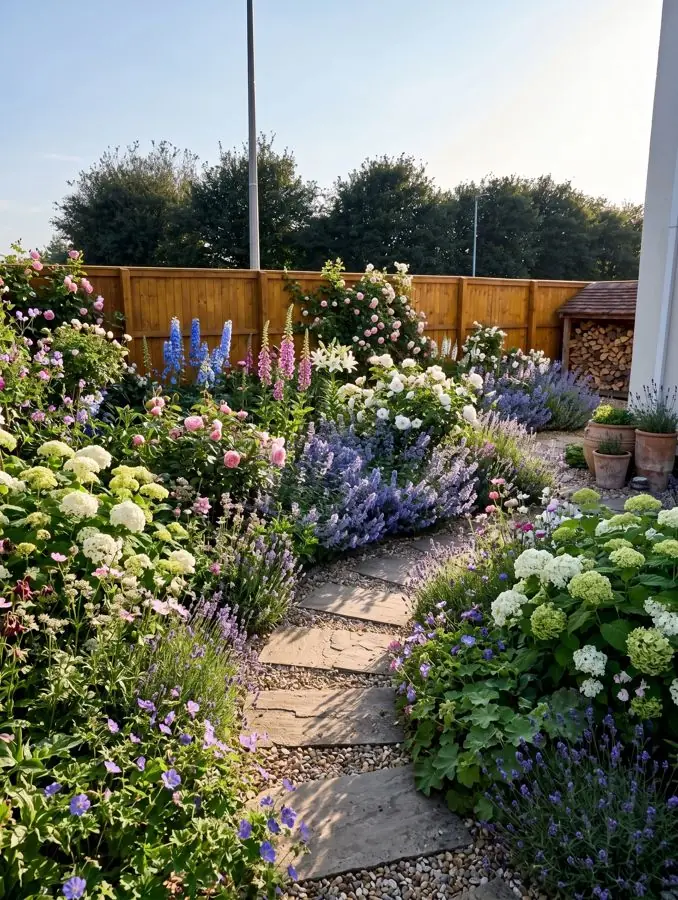
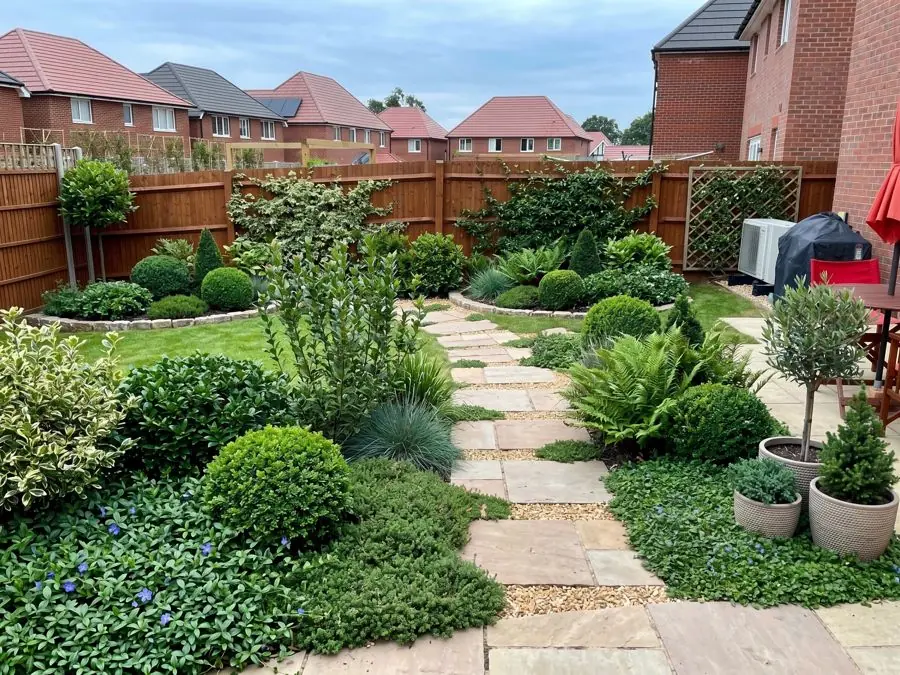
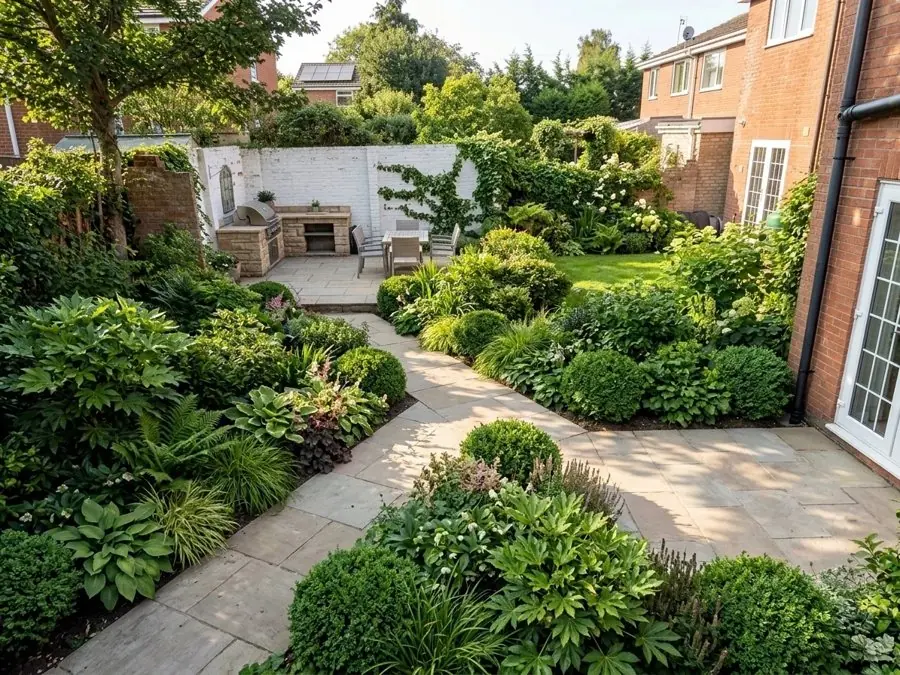
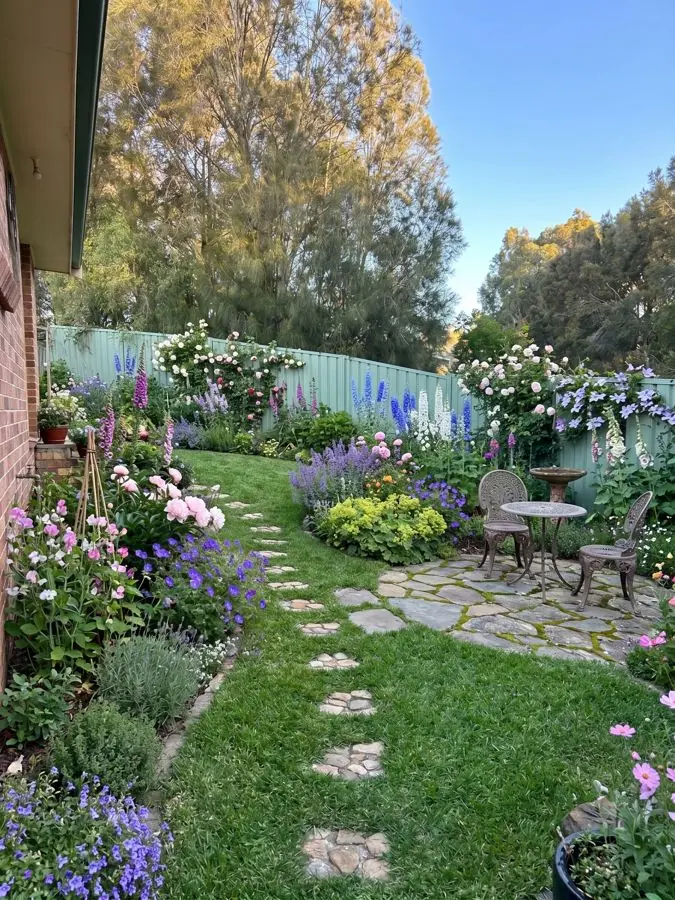
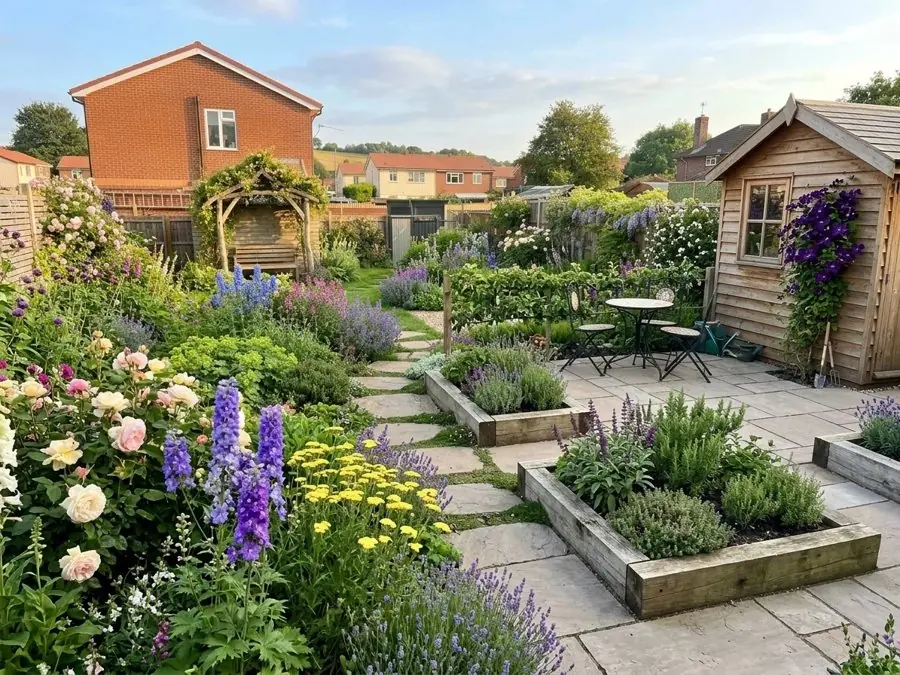
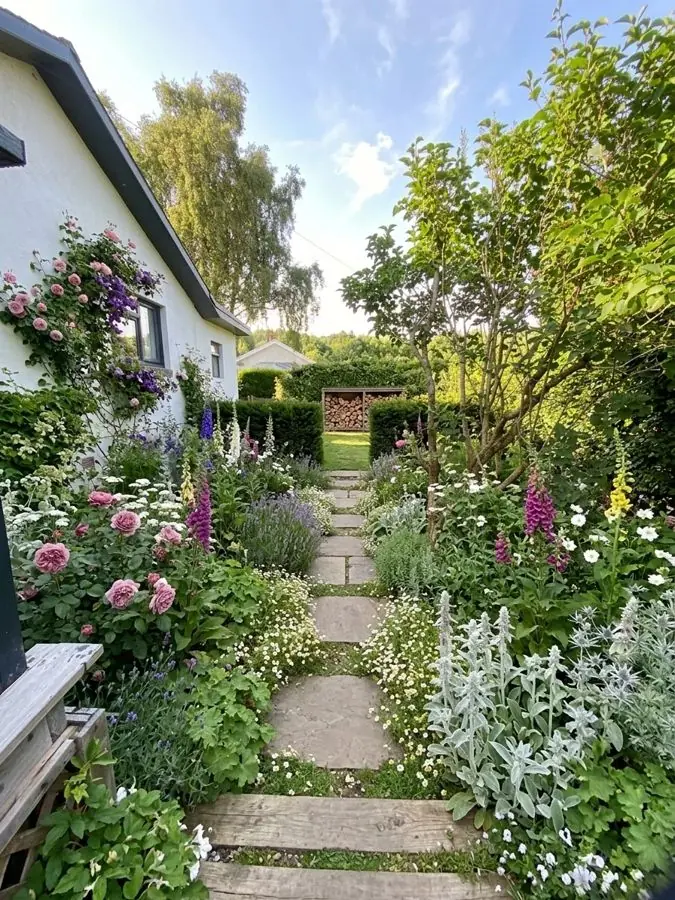
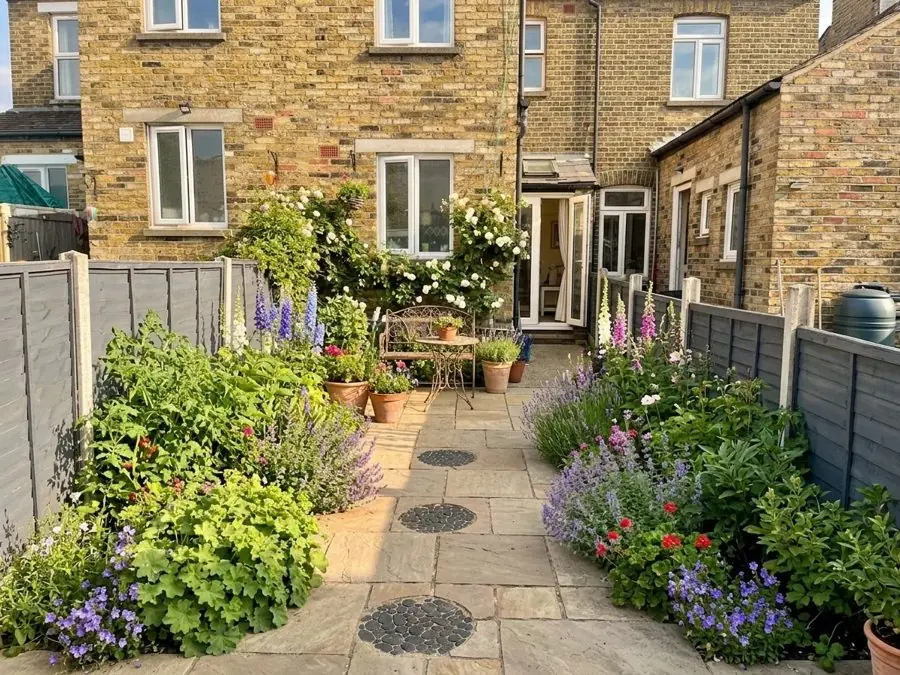
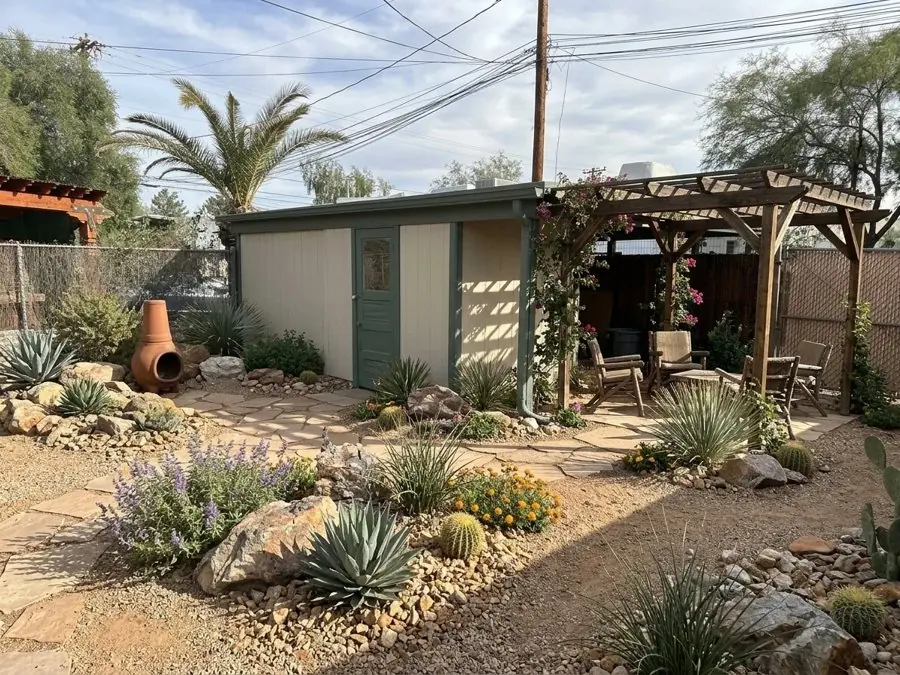
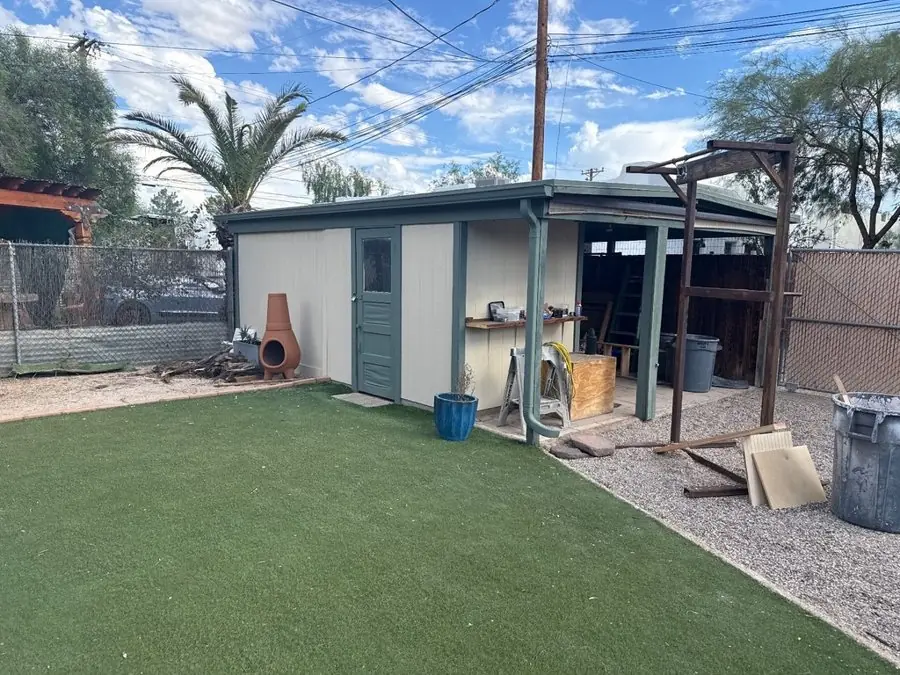
Gravel and agaves in place of artificial grass
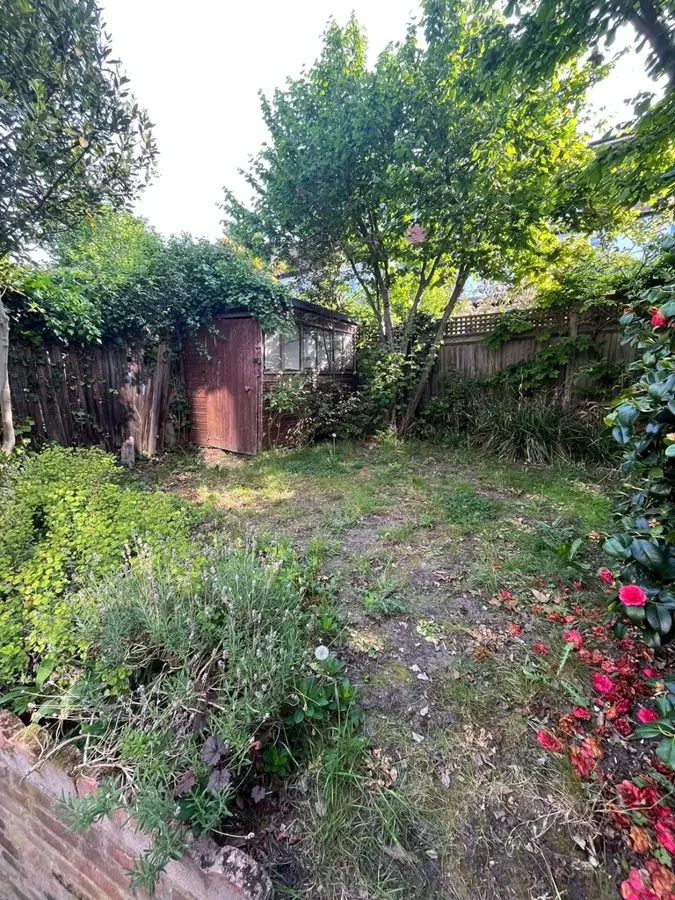
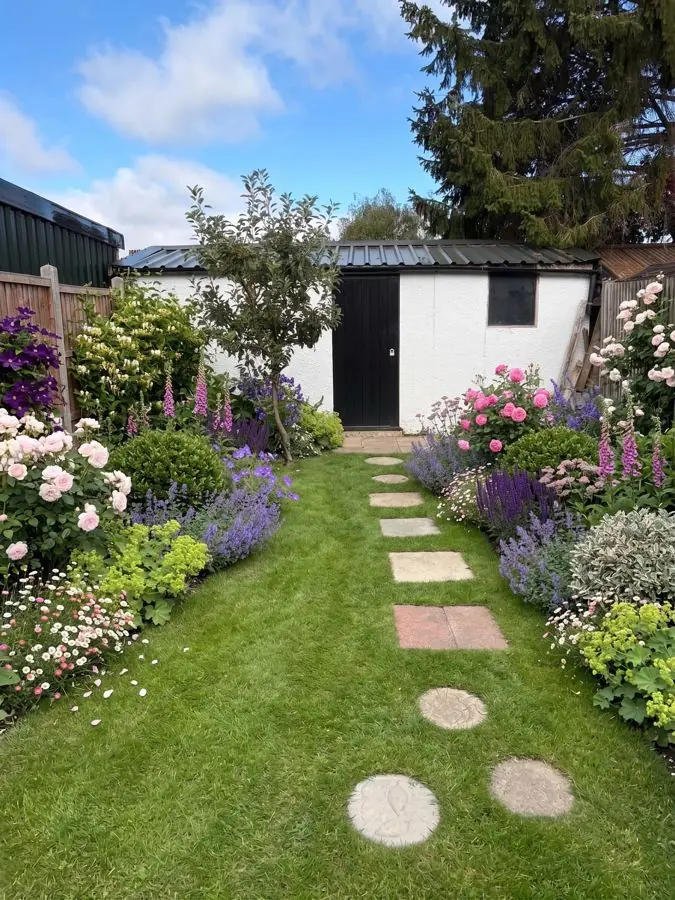
Before: artificial grass in front of a garden shed
Get this yard →First 3 designs free · No card
Thinking about rock, gravel or boulders? Add one photo, ask for them and see your yard redesigned in about a minute.
Add your ZIP code: plants picked for your USDA zone, your summer heat, your light and your soil.
Design my yardOver 500 yard designs made.
Every one is a real yard, redesigned from one photo, and each says what was there before. Tap Before to see the photo. Like one? Tap Get this yard to design your own yard in the same style, with the same plants.
Rock gardens, boulders and stone walls set in gravel and planting, each redesigned from one photo of the real yard. 4 yards
Before: artificial grass in front of a garden shed
Get this yard →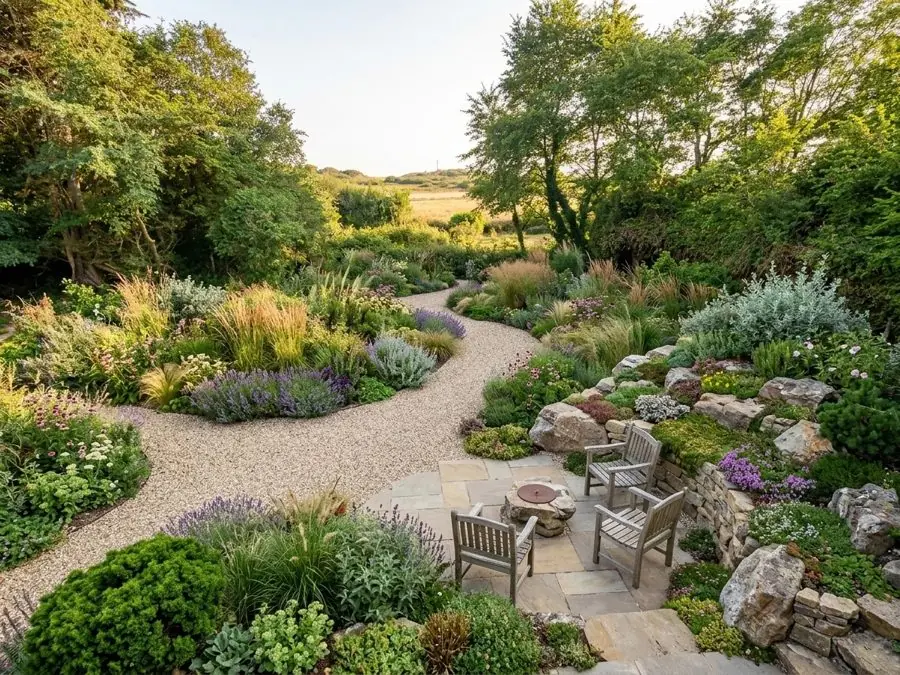
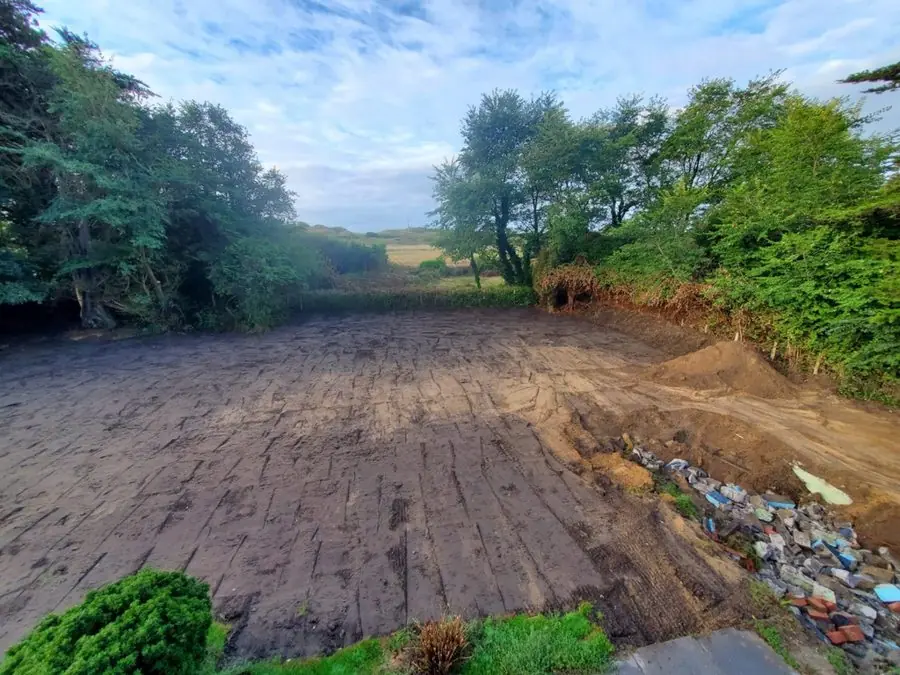
Before: a large patch of bare leveled earth with rubble at the edge
Get this yard →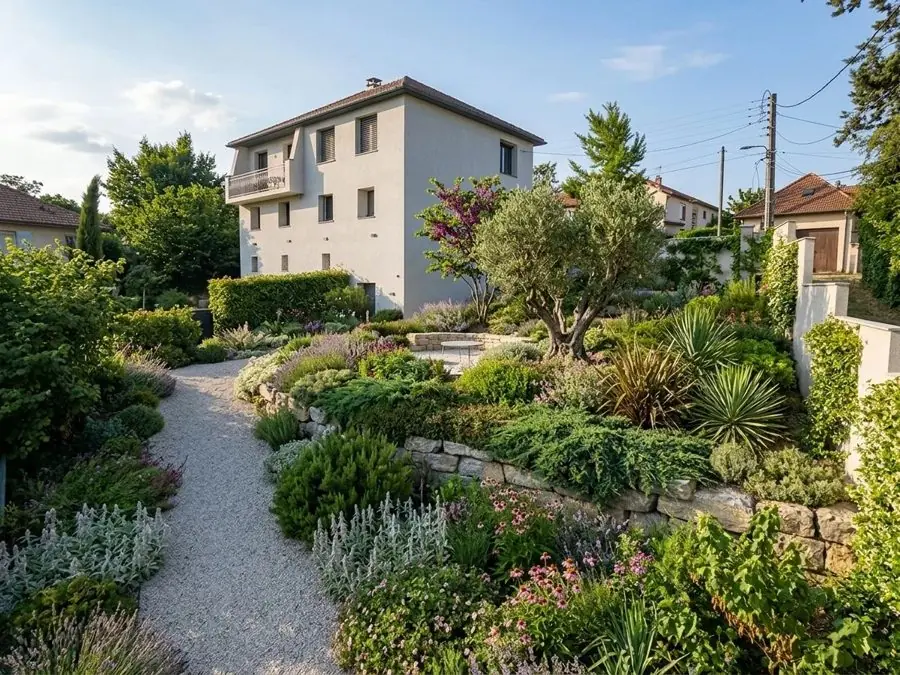
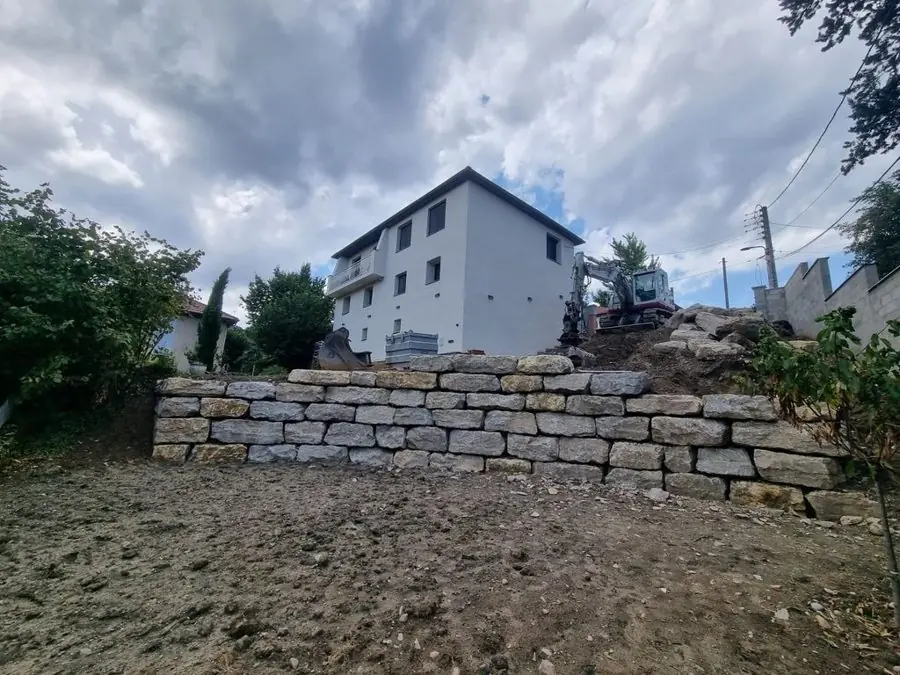
Before: a dry, grassy bank behind a rough stone wall
Get this yard →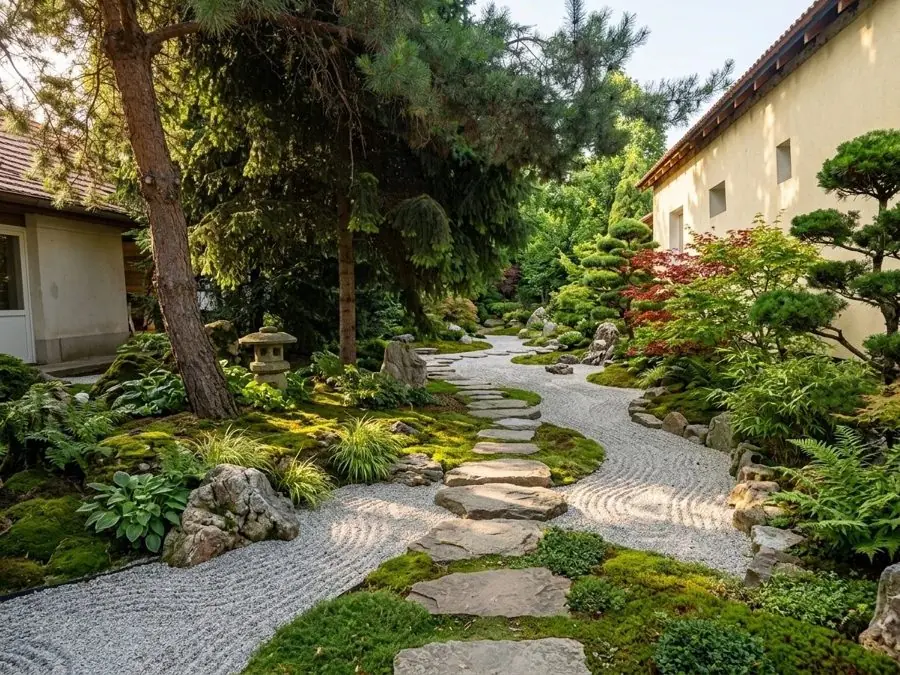
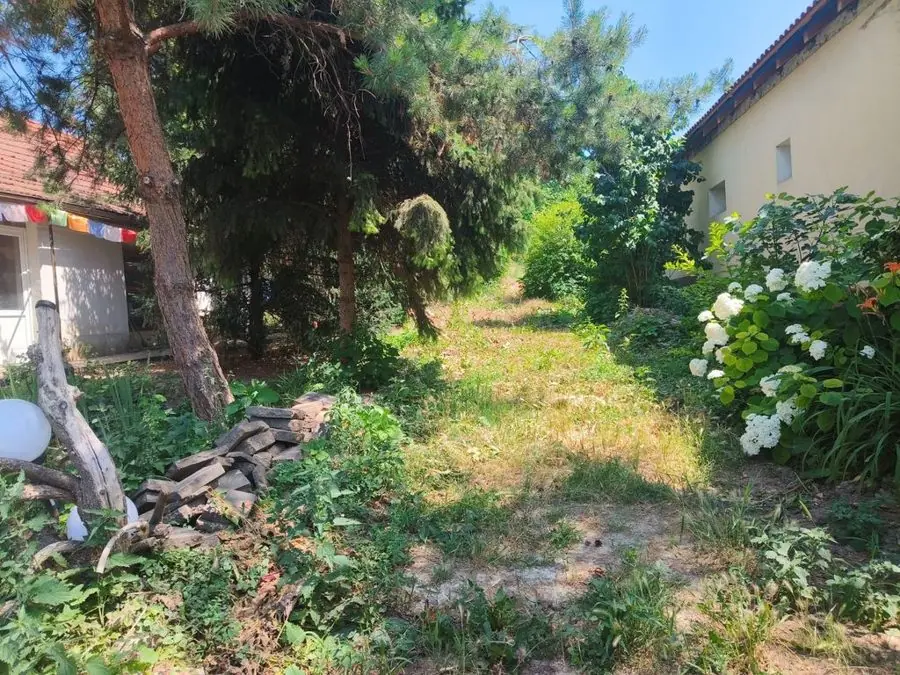
Before: an overgrown strip of grass and weeds under tall pines
Get this yard →Stepping stones, cobbles and slate laid through gravel and pebbles. 5 yards
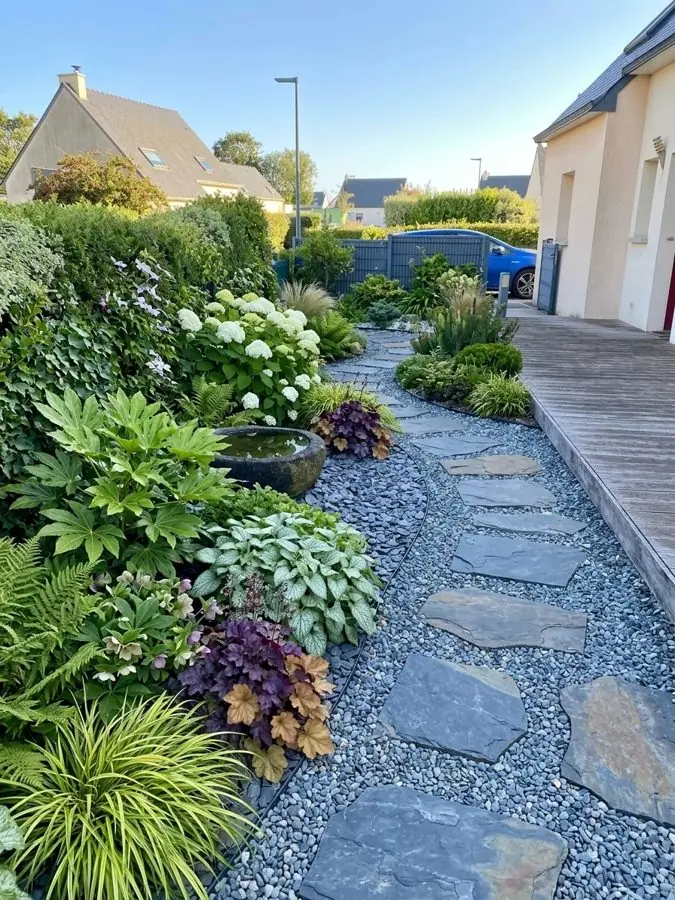
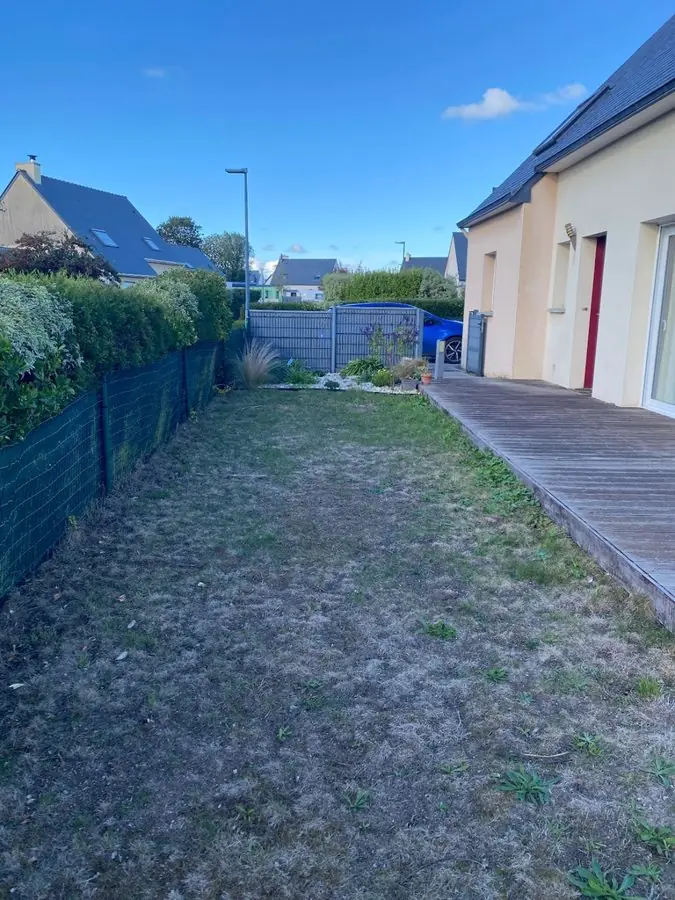
Before: a narrow worn lawn beside a house and a wooden deck
Get this yard →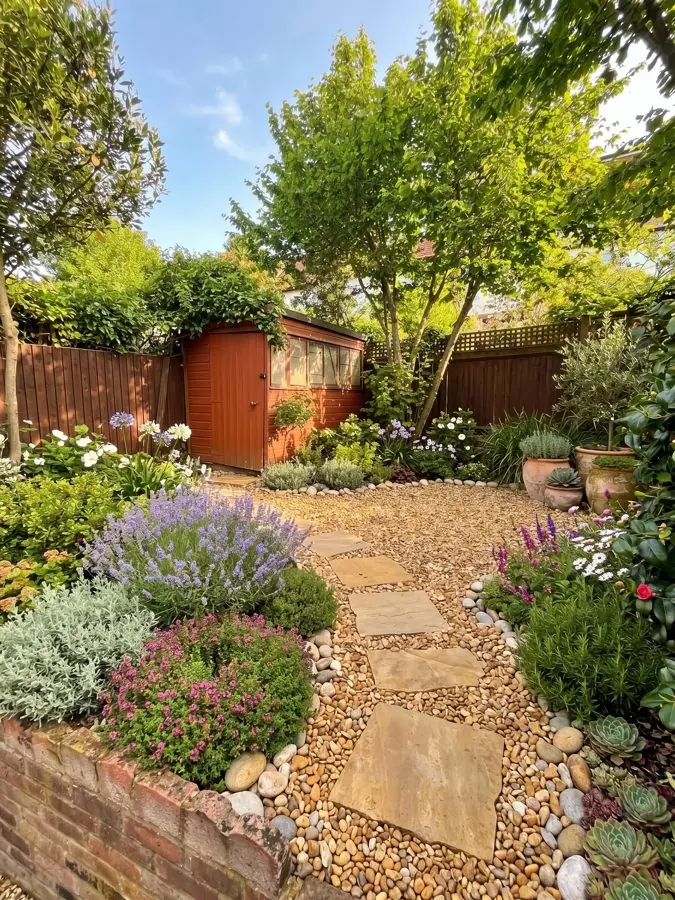
Before: an overgrown patchy lawn leading to a shed under trees
Get this yard →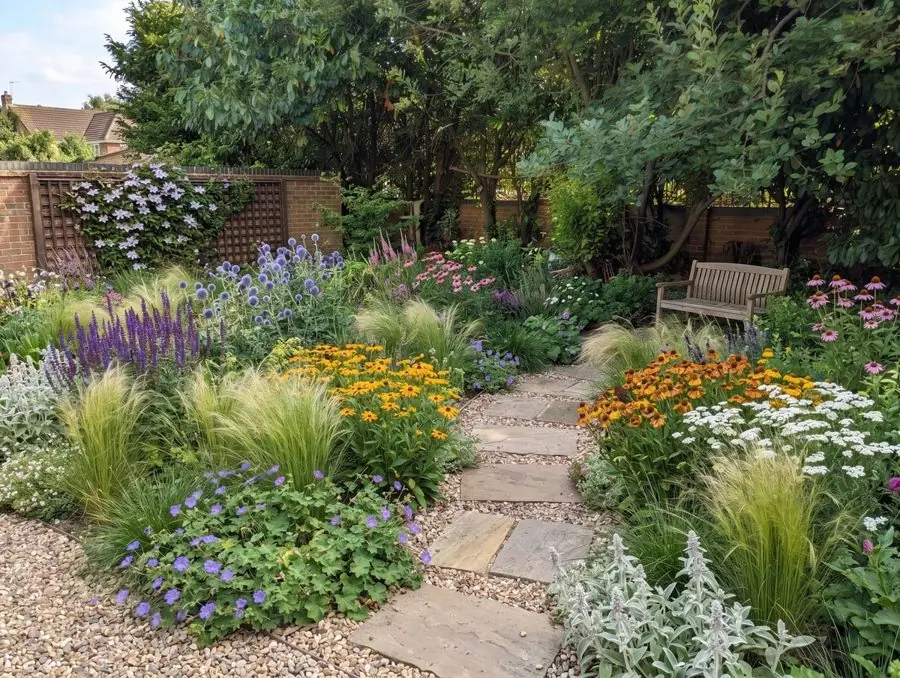
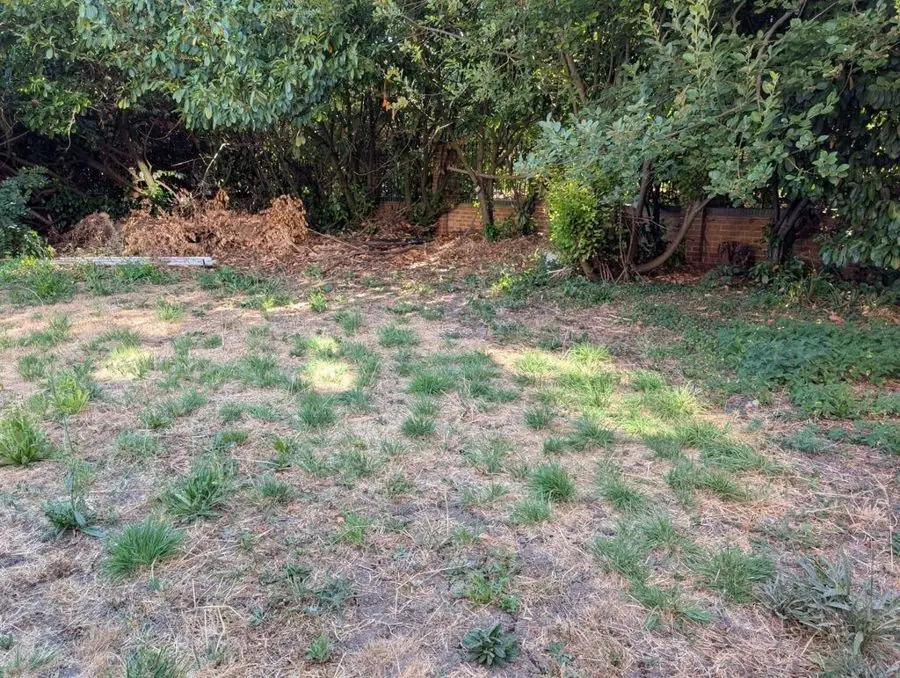
Before: a patchy dry lawn in front of trees and overgrown shrubs
Get this yard →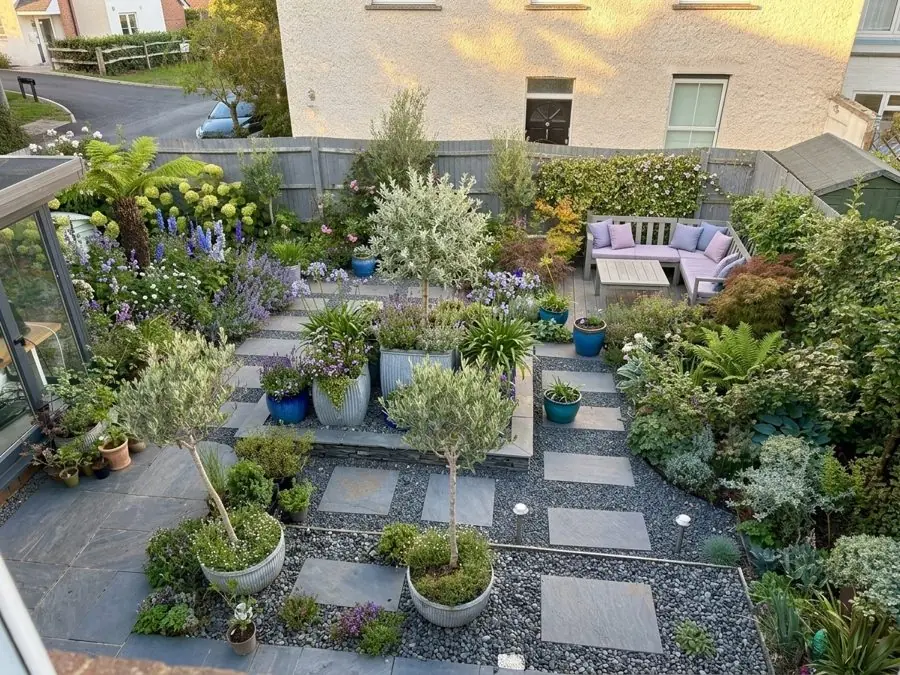
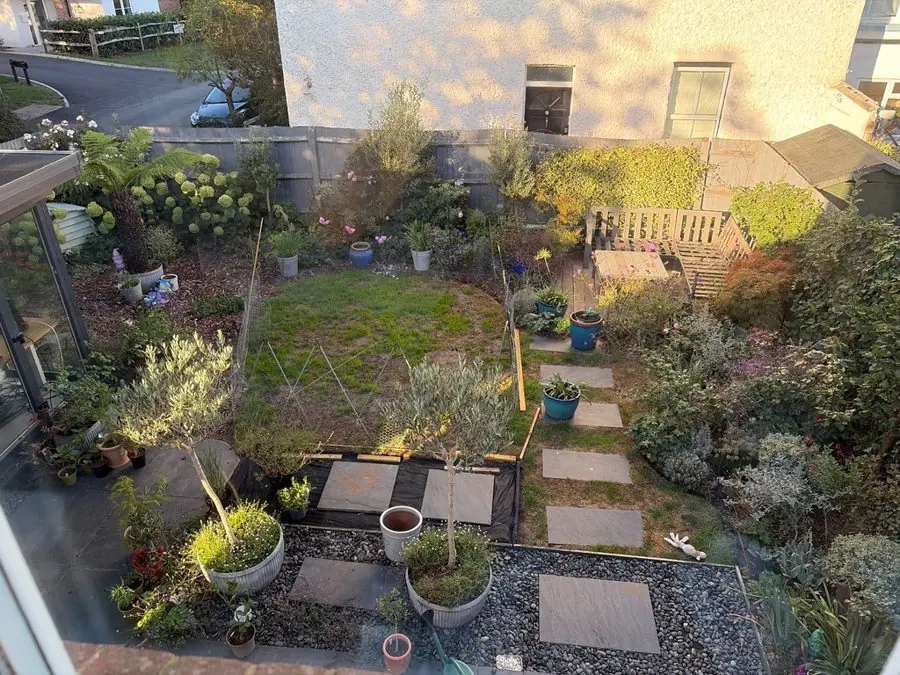
Before: a Small yard with stepping stones in gravel, a lawn patch and pots
Get this yard →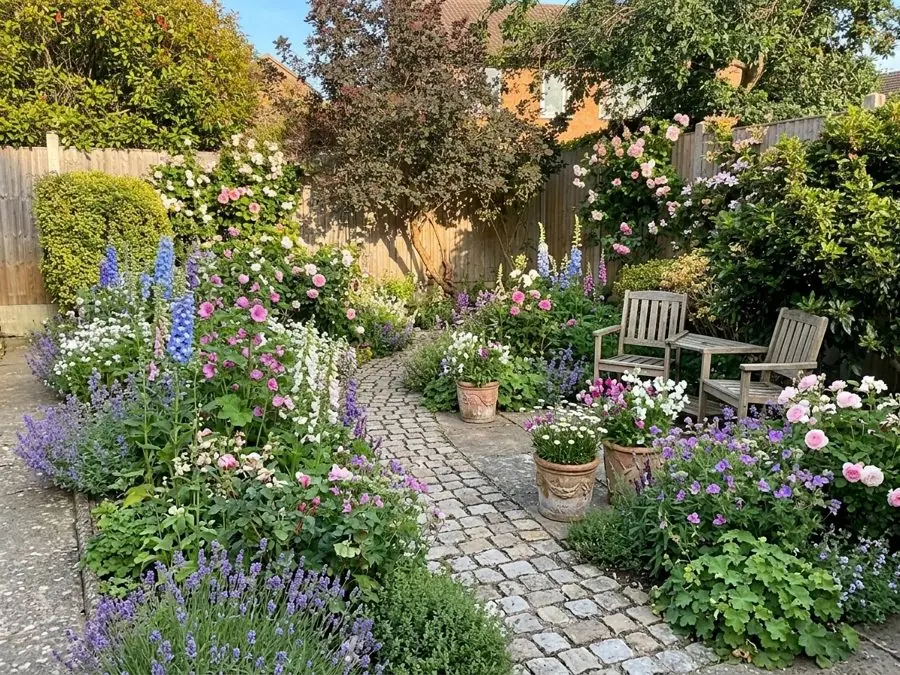
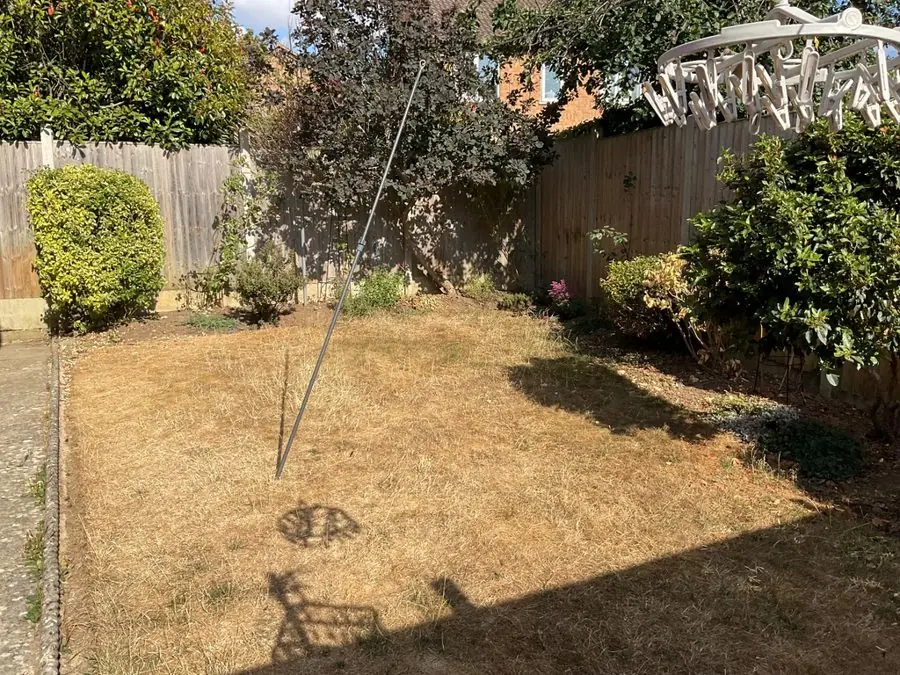
Before: a dry brown lawn with a clothesline, fence and shrubs
Get this yard →Gravel around lavender, grasses and seats, from a single path to a whole yard. 7 yards
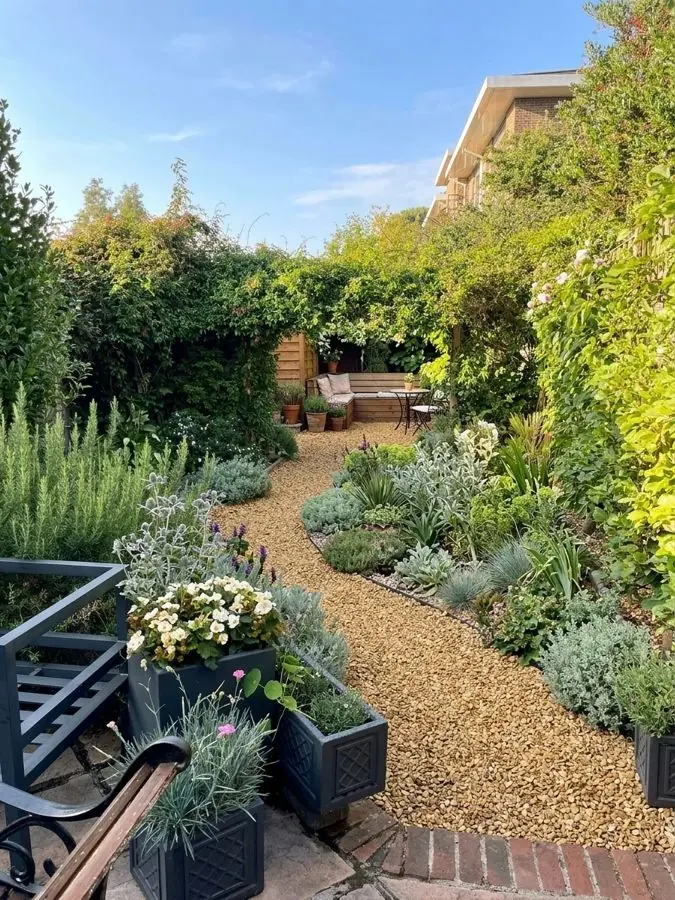
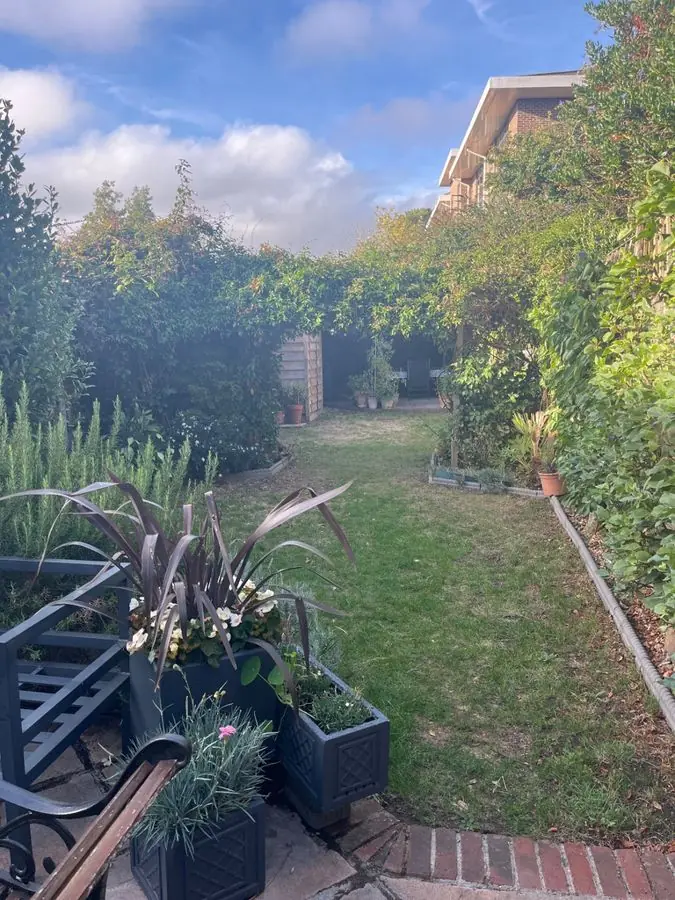
Before: a narrow lawn with planters, a bench and tall hedges
Get this yard →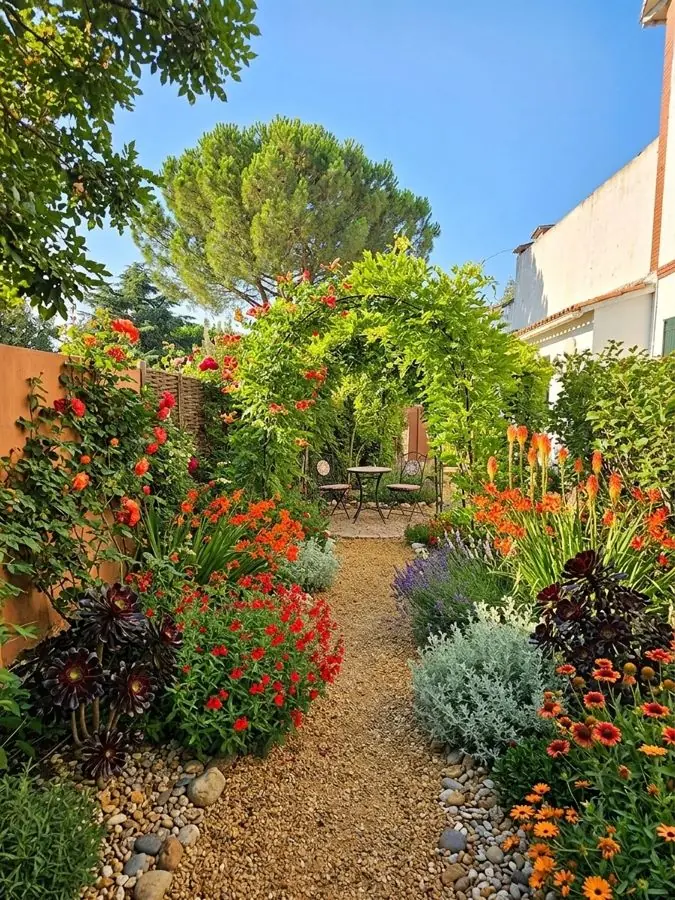
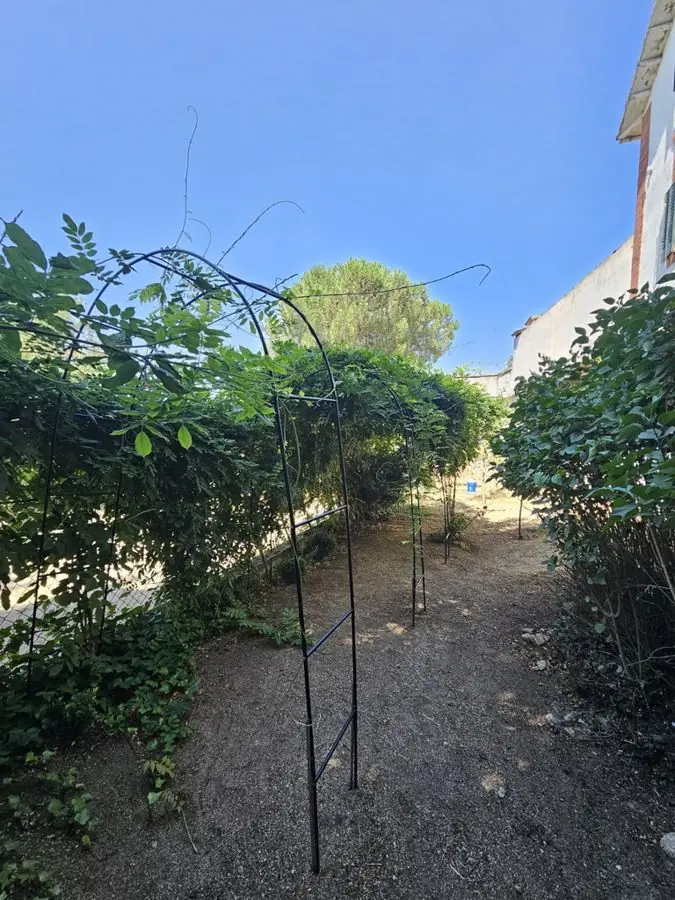
Before: a dry bare path between hedges with a metal arch
Get this yard →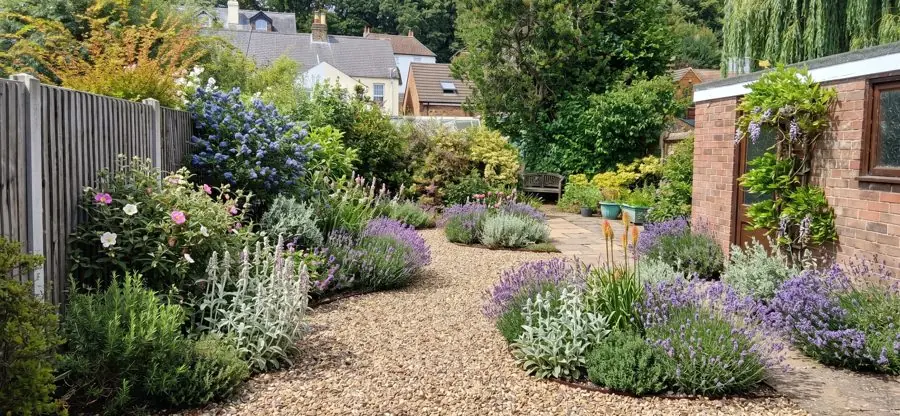
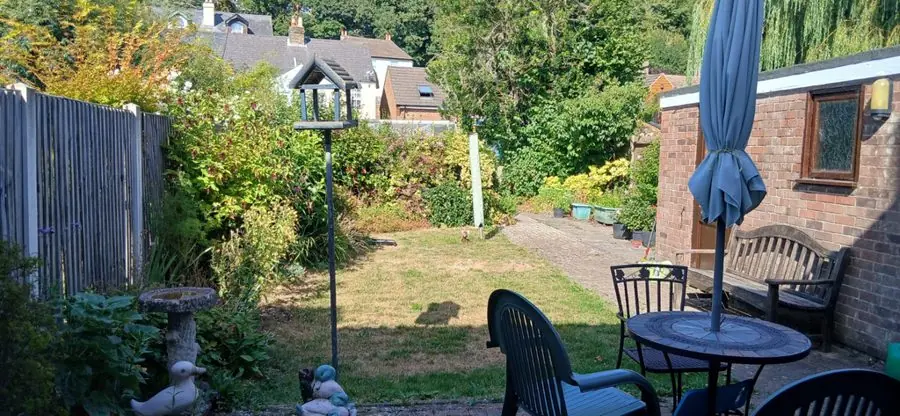
Before: a lawn with a patio table, umbrella and bird bath
Get this yard →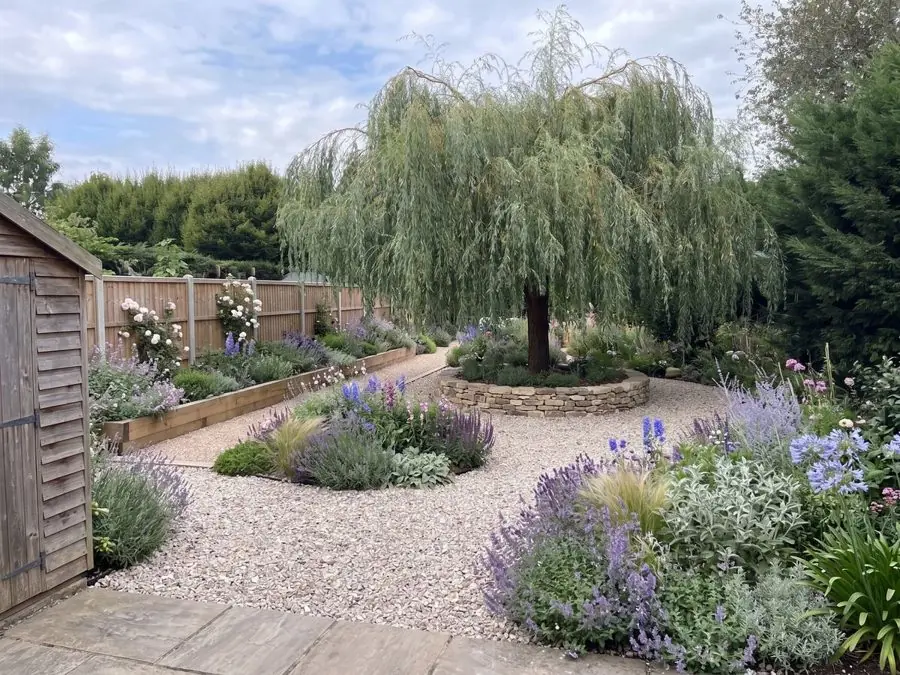
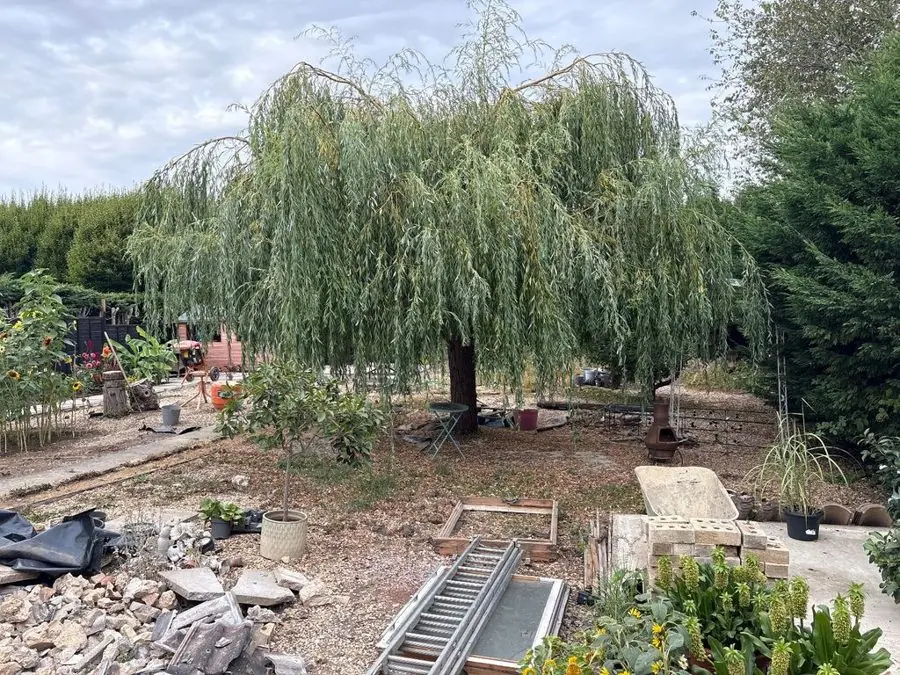
Before: A construction site with rubble and a ladder under a weeping willow
Get this yard →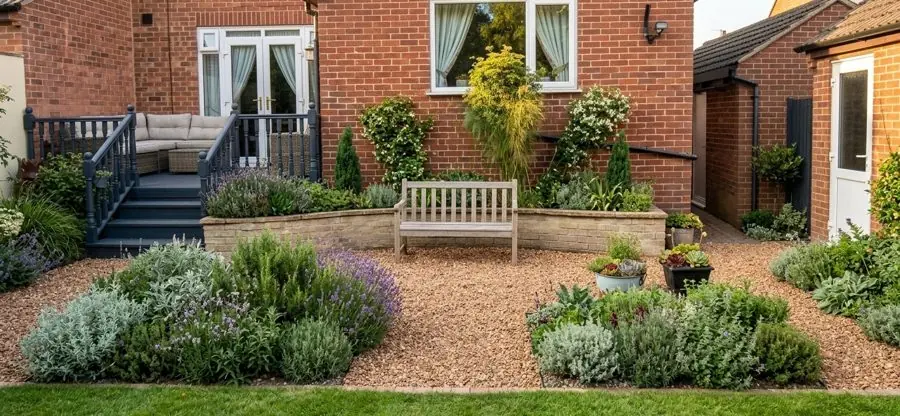
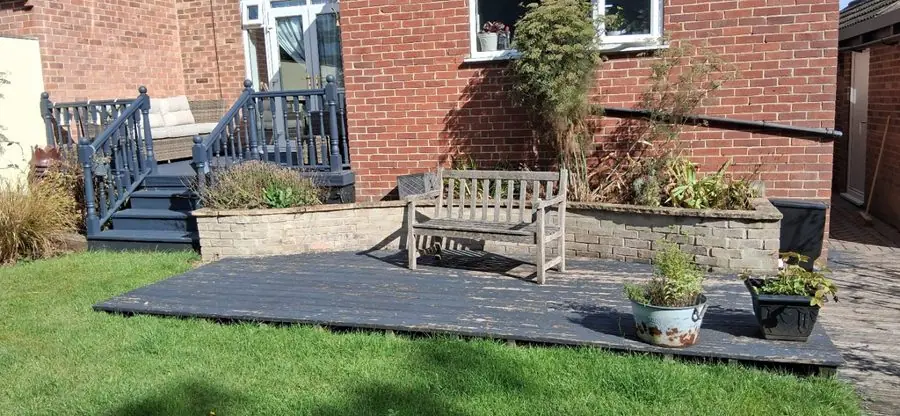
Before: a dark timber deck on a lawn in front of a brick house
Get this yard →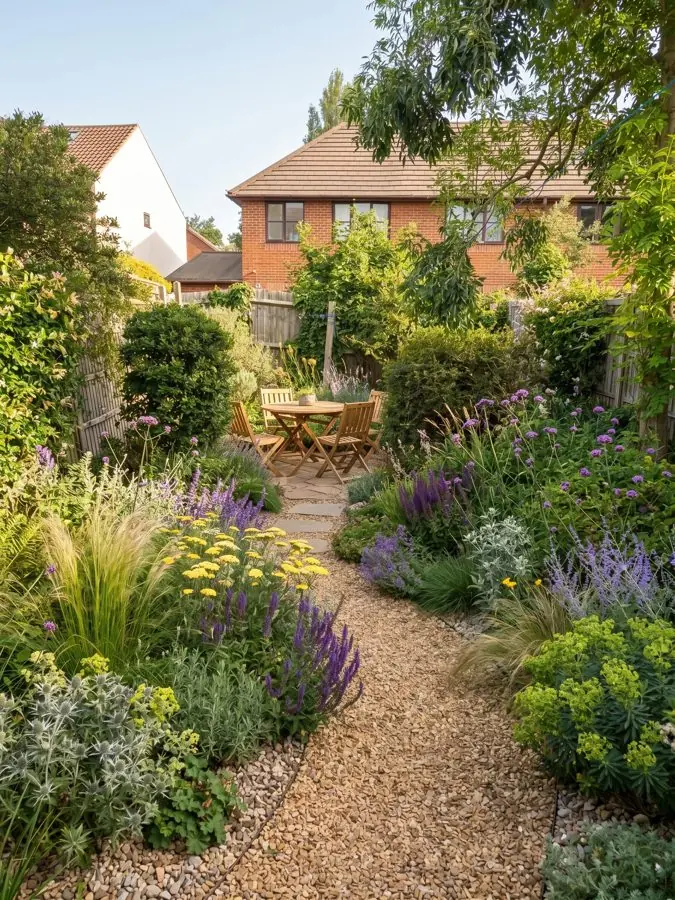
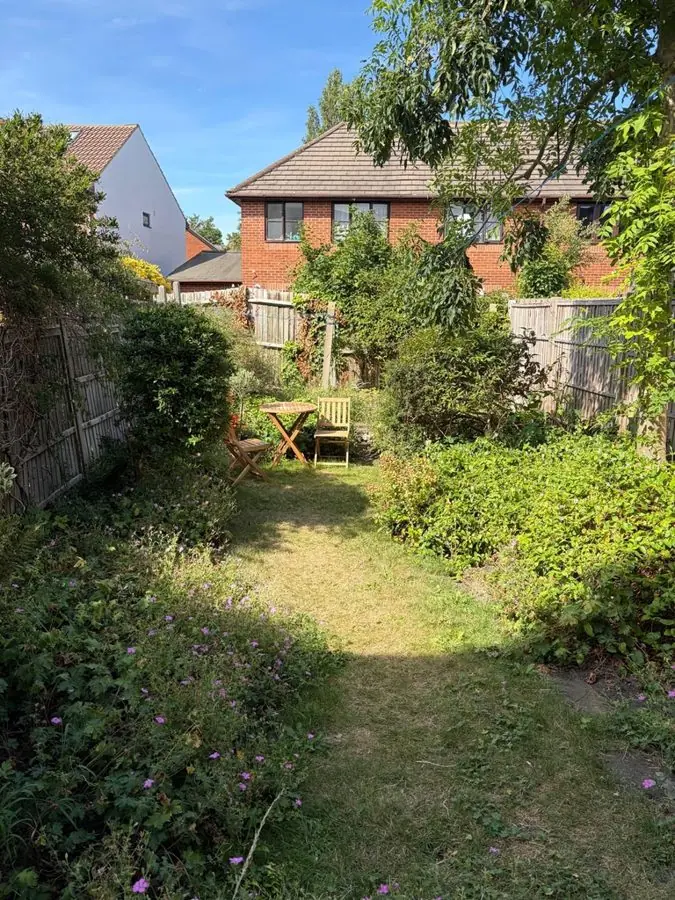
Before: a narrow overgrown garden with a worn grass path to a table
Get this yard →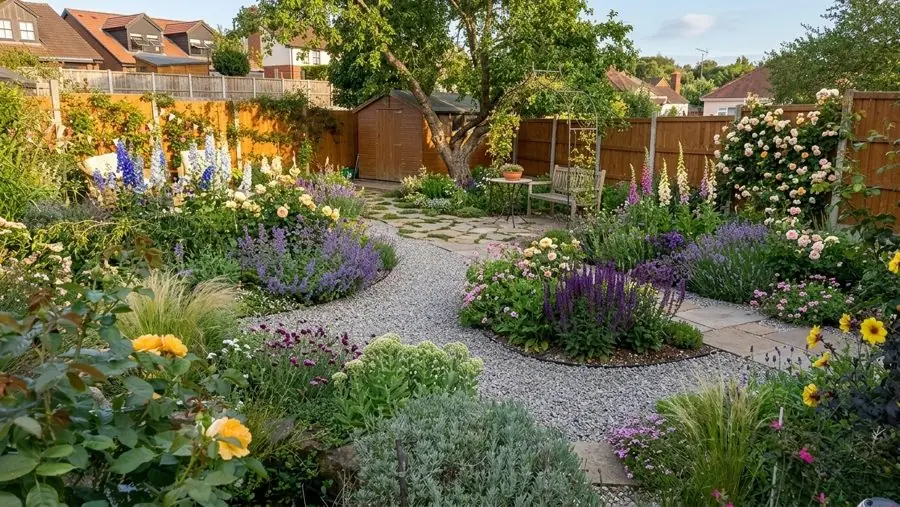
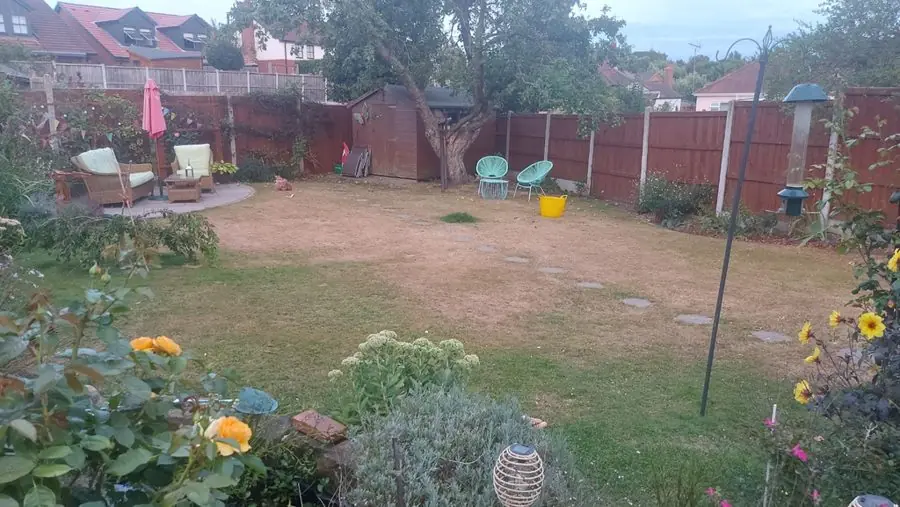
Before: a dry brown lawn with fences, a shed and garden chairs
Get this yard →Take the photo from the spot where you would see the rock best, so the whole area it would cover is in the picture.
One photo from your phone is all it takes. Your ZIP code gives us your USDA zone, so the plants we pick can live through your winters.
Pick one of 15 styles and a color scheme, then ask for anything you want, like "a river rock border" or "boulders beside the path". Keep your paths and patio, or start over with a new layout.
Your real yard, redesigned, in about a minute.
See your own yard redesigned first. When you find the look you love, Pro or Max plans turn it into a yard you can plant: $39 or $65 in the US, one payment.
See what goes into a planting plan before you choose.
Your first 3 designs are free.
Watermarked and lower quality. No card needed.
| One payment, no subscription. | ||
| What you get | ||
| Designs | 20 | 50 |
| Days to use them | 14 | 30 |
| Free designs on top | 5 | 10 |
| Designs at once, side by side | 2 | 4 |
| With every design | ||
| Every plant named, ready to buy | ||
| The materials, gravel to fence, with whole yard designs | ||
| Care guide and flowering calendar | ||
| Higher quality images | ||
| No watermark | ||
| Change any design in your own words | ||
The pot size to buy and how tall each grows. Measured borders also say how many to buy.
| Plant | Pot | Height |
|---|---|---|
| Catmint 'Walker's Low'Nepeta × faassenii | Quart to 1 gal | 4 to 20 in |
| Avens 'Totally Tangerine'Geum | 1 gal | 20 in to 3 ft |
| Giant montbretiaCrocosmia masoniorum | 1 gal | 3 to 5 ft |
| Tellmann's honeysuckleLonicera × tellmanniana | 1 to 2 gal | 8 to 13 ft |
Where it grows best, how to prune it and how it gets through winter.
Every plant, the months it flowers, in its own color.
Avens 'Totally Tangerine'
Catmint 'Walker's Low'
Clematis 'The President'
Lady's mantle
Higher quality images of your design, yours to keep.
 gardendesignapp.ai
Say what you want different, and see it redrawn.
On whole yard designs: the pavers, gravel, edging and fence in the picture.
Anywhere in the US, we take your ZIP code and choose plants suited to your zone, your light and your soil.
Where rock works, which rock to use, what can go wrong with it and how to see it on your own yard first.
Rock landscaping works best when each stone has a job: a path to walk on, an edge for a bed or a boulder to draw the eye. Rock landscaping ideas often mix sizes but stick to one or two kinds of stone, which looks settled rather than piled up. Most landscaping ideas with rocks and stones work best with room left for plants, because a yard of bare stone rarely looks as good. Rock can cut back on mowing and watering, but only if the plants you keep suit your climate. You can also start with what you already have: the biggest rocks in a stony yard can stay where they are, with plants around them.
River rock landscaping uses smooth, rounded stones that look natural but roll underfoot, so they suit borders and dry creek beds better than a main path. A strip along a fence or a winding dry creek bed through a low spot is a common place to start. A band of stones between a bed and the lawn is one of the simplest edges, and it keeps the mower off the plants. River rock for flower beds works as an edge or a strip in front, but keep the stones off the plants' crowns. Landscaping with large river rock, stones the size of a melon or bigger, looks better in groups than spread out evenly. Low maintenance river rock landscaping still needs a leaf blower now and then, since leaves and dust settle between the stones and weeds grow in what collects.
Rock garden ideas work best on a slope or a raised mound, because most rock garden plants want sharp drainage. Rocks for a rock garden look most natural when they are one kind of stone, partly buried and set as if they had always been there. Simple rock garden ideas include a few stones and low plants in a sunny corner. A small rock garden often centers on one larger rock. Tough plants such as sedum and creeping thyme are the easy choice, as long as they suit your winters. Zen rock garden ideas come from Japanese dry gardens, with raked gravel and a few carefully placed stones. Pictures of rock gardens usually show planting that has had years to settle, so expect rock garden designs to look sparser at first. A low maintenance rock garden still needs weeding while the plants get going.
Boulders look most natural in odd numbers and mixed sizes, with about a third of each one set below ground so it does not look dropped on top. They work as an anchor beside a path, a door or a group of shrubs. Plan how the stone gets there: a boulder two feet across can weigh several hundred pounds, which means a contractor with the right equipment. Landscaping with rocks and boulders usually looks best when the boulders and the smaller rock are a similar color. Call 811 before anyone digs, even for one boulder.
In pea gravel landscaping, the gravel is comfortable underfoot but shifts and spreads, so it needs a firm edge to stay put. Crushed rock packs tighter because the pieces are angular, which makes crushed rock landscaping steadier for paths. Lava rock landscaping uses light, porous stone. In black lava rock landscaping, the dark stone sets off green leaves, while red lava rock can fade in hot sun over the years. Gravel usually costs less than pavers, and a few larger stones set into it break up the flat surface. A rock path needs a surface that stays put, so use angular stone or flat pieces set firmly, and keep the path about 3 feet wide.
Rock and mulch landscaping usually puts rock where you walk and wood mulch where plants grow, since mulch breaks down and feeds the soil and rock does not. A common version edges a mulched bed with a band of stones. Rock used as mulch suits plants that like it dry, such as lavender, sedum or agave, but it is hard on plants that want cool, moist roots. Rocks for flower beds work best as an edge or a path through the planting, not a layer over the roots of plants that like rich soil. Rock landscape edging gives a clean line between beds and lawn. Around a tree, keep a wide ring clear of the trunk, since rock piled against it can hold heat, damage bark and stress the roots.
Landscape rock around house walls soaks up sun and gives the heat back for hours, which can stress nearby plants and warm the wall itself, especially on south and west sides. Landscape fabric under rock can fail as it tears or clogs, and weeds still grow in the dust and leaf litter that settle on top. Rock also warms the soil, so roots can struggle, and it does not save water by itself: the plants you choose and how you water do that. Once it is down, rock is heavy, slow and often expensive to remove, so see the look on a photo of your yard first. Check your HOA rules too, before you buy or remove anything.
This draws a design and names plants. It does not survey, price, build or install anything, and it will not work out how much rock you need. Heavy boulders, drainage and any digging belong with a contractor, and you should call 811 before anyone digs, because buried lines can be shallow. Your HOA may have rules about rock in a yard, and your city may have its own, so check first. You can take the design to whoever does the work.

Got a narrow strip beside the house? Side yard landscaping shows what can work there.

Want somewhere to sit out? See backyard patio ideas pictured on your own yard.

Planning beds full of color? See flower bed ideas drawn into a photo of your yard.

Neighbors looking right in? See backyard privacy ideas pictured on your own yard.

Got big trees or a shady corner? See shade garden ideas drawn into a photo of your yard.

Want clean lines? Modern landscaping keeps to simple shapes and a tidy lawn or patio.

Ready to plant? See what goes into a planting plan: every plant, how big each grows and where it goes.
It depends on the spot. Rock lasts for years and suits paths and plants that like it dry. Mulch breaks down and feeds the soil, which most flower beds and shrubs prefer.
River rock for borders, angular crushed rock for paths, lava rock where you want lighter stone or strong color, and boulders for height. One or two kinds usually look better than many.
Not for good. Weeds grow in the dust and leaf litter that settle on top, and landscape fabric underneath can tear or clog over time. Expect to pull them now and then.
It can be in full sun, especially in places with hot summers. Rock holds heat and can stress nearby plants and warm the wall. Shade and plants between the rock and the house help.
Usually, yes. Even a boulder two feet across can weigh several hundred pounds, so it takes the right equipment and a clear way in. Call 811 before anyone digs.
It depends on your HOA. Some limit rock or how much lawn you can remove, so check the rules before you buy anything.
Add one photo, pick a style, choose a new layout and ask for river rock, gravel or boulders. You see your yard redesigned in about a minute, and your first 3 designs are free.
No. It draws the design, and Pro or Max adds the plant list and the materials shown in the picture. A local supplier or contractor can measure and price the work.
Your ZIP code gives us your USDA zone and your summer heat, and the plants come from a list of more than 1,400 chosen for your winters, your light and your soil.
No. It runs in your browser, on a phone or a computer.
Add one photo of your yard and see it redesigned in about a minute. Your first 3 designs are free, with no card.
Design my yard