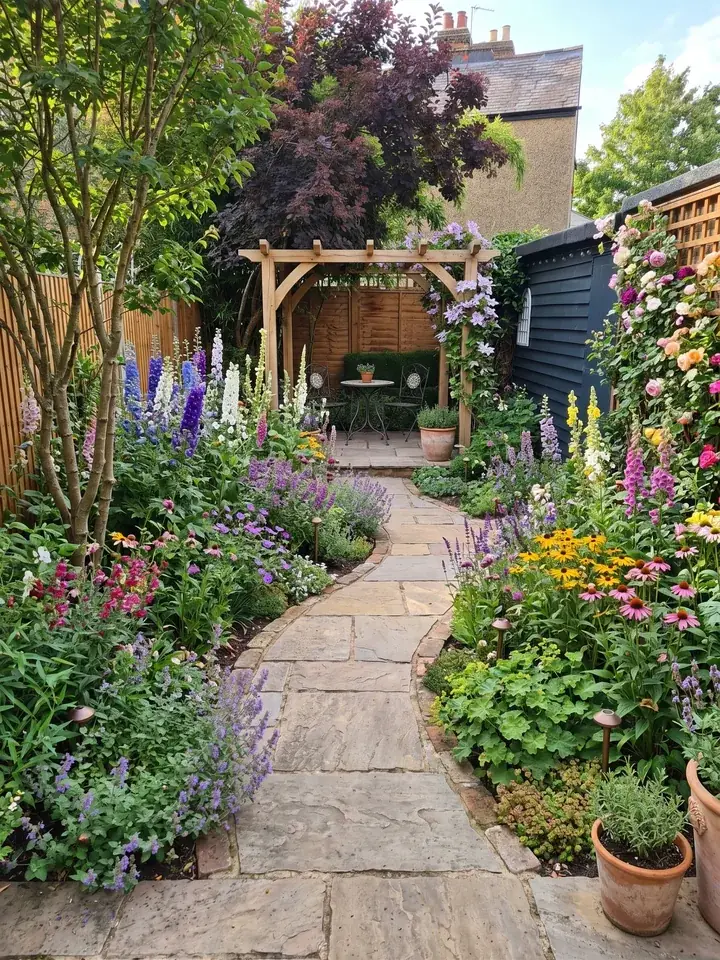
How to make a garden more private: start with where you are seen from
If your question is how to make my garden more private without boxing it in, start small. The problem may be one upstairs window, one gap in the fence or the stretch of boundary beside the patio, rather than the whole garden. The RHS's guide to screening says it "all depends on the angle you view it from", and that good screening balances shelter and privacy "while not blocking too much light and views out".
So sit where you actually sit and note who can see you. That tells you how to make your garden more private with the least work, because you only need to screen the views that matter.
- Find the spots you use most: the patio, a bench, the back door.
- Note where you are seen from: a neighbour's window, a path, a gap in the fence.
- Pick the right kind of screen for each spot: a fence, a hedge, climbers, trees or a free standing screen.
- Check the rules before you build: fence height, planning conditions and your neighbours.
Fences: how high can you build without planning permission?
The Planning Portal (England) says you will not need planning permission for a new fence, wall or gate if it is no more than 2 metres high from ground level, or no more than 1 metre where it is next to a road used by vehicles or that road's footpath. If an existing fence, wall or gate is already taller than that, you can still alter or maintain it without permission as long as you do not make it any higher and the other conditions are met.
You will need planning permission, whatever the height, if any part of the site is a listed building or within the grounds (curtilage) of one, if the fence forms a boundary with a neighbouring listed building or its grounds, or if the right to put up or alter fences has been removed by an article 4 direction or a planning condition. In a conservation area you might need permission even to take a fence down. The guidance covers England; Wales may differ. The Planning Portal measures height from ground level and does not mention trellis, so if a fence plus trellis would go over 2 metres, check with your council first.
The RHS notes that vertical feathered boards make a more solid barrier than horizontal lap panels, and that slatted fencing lets views and light through while still giving some shelter.
What can I plant along my fence for privacy?
If you are asking what you can plant along your fence for privacy, the RHS answer is a hedge in front of it. In its article on plants for privacy, the RHS says that if there is space, planting what is in effect a hedge in front of a panel fence "can work very well", giving solidity, sound absorption and a good visual barrier. Laurel is singled out as especially good, and yew and star jasmine also work well. The same article warns never to plant Leyland cypress there, because it gets "far too big, far too quickly", and adds that all of these need clipping.
Evergreen or deciduous? The RHS's hedge guide says evergreens give privacy all year round but take more upkeep, ideally pruned twice a year. You will not get the same privacy from a deciduous hedge, though beech holds its brown leaves until spring and so still screens in winter. Not sure which hedge will grow in your garden? Garden Design App picks plants to thrive where you live, in your light and soil, so you are not guessing, and Pro or Max plans name every plant, ready to buy.
| Plant | Evergreen? | RHS height band | What the RHS says |
|---|---|---|---|
| Cherry laurel 'Rotundifolia' (Prunus laurocerasus) | Yes | 90 to 180cm, or taller as a screen | Laurel is especially good as a hedge in front of a panel fence |
| Portuguese laurel (Prunus lusitanica) | Yes | 90 to 180cm, or taller as a screen | Dense, bushy, tolerates partial shade |
| Yew (Taxus baccata) | Yes | 90 to 180cm, or taller as a screen | An excellent formal dense hedge; slower, but can grow 30cm a year in good conditions |
| Holly 'J C van Tol' (Ilex aquifolium) | Yes | 90 to 180cm, or taller as a screen | Leaves almost spineless |
| Elaeagnus × ebbingei | Yes | Can be kept above 180cm | Large leaves, fast growing |
| Beech (Fagus sylvatica) | No, but keeps brown leaves until spring | 90 to 180cm, or taller as a screen | Still gives screening in winter |
| Hornbeam (Carpinus betulus) | No | 90 to 180cm, or taller as a screen | Like beech but holds its leaves for less long; better in cold spots |
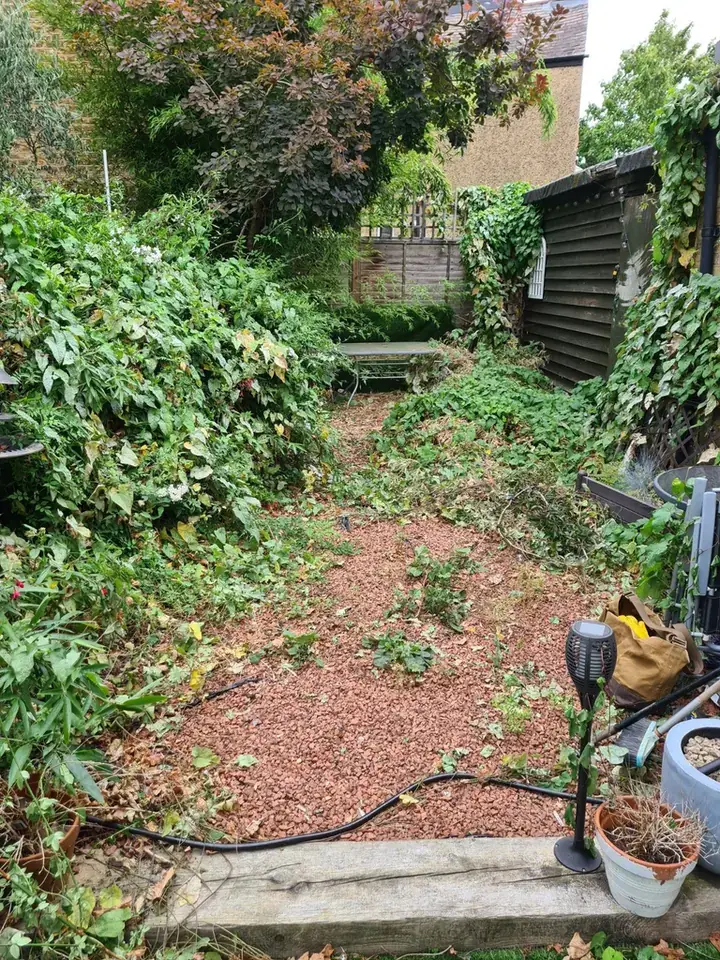
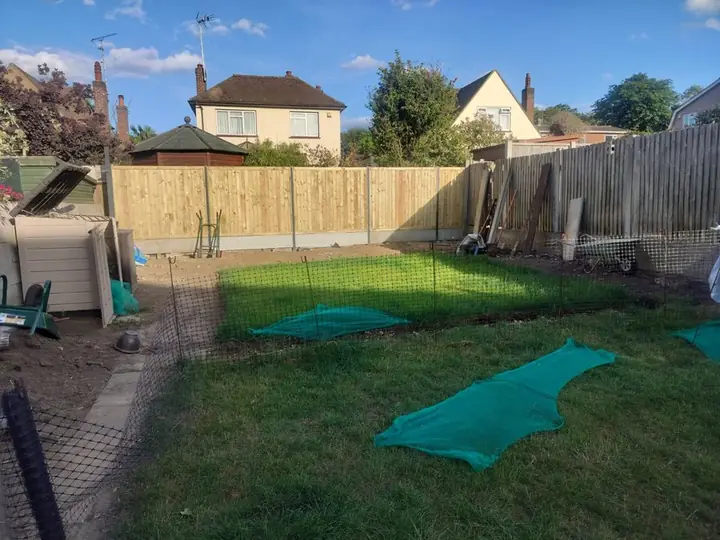 Before
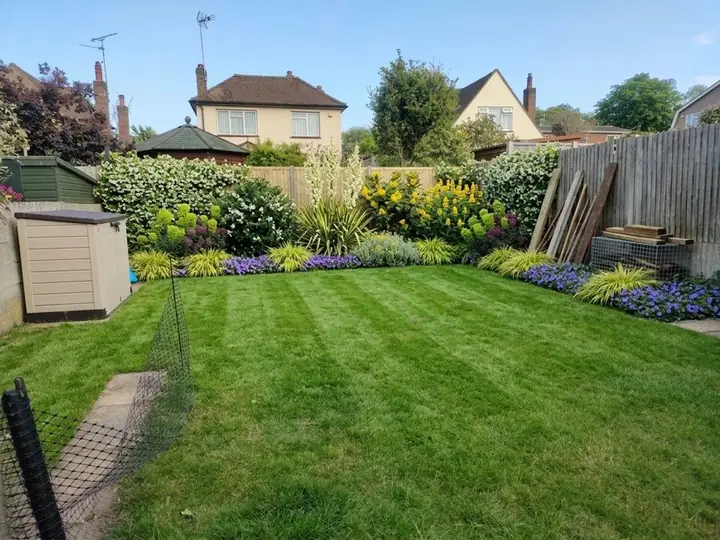 After
Climbers and trellis: quick height on a fence
The simplest trellis ideas for privacy pair the trellis with climbers. For a new garden, the RHS suggests trellis panels covered in climbers to make it feel established quickly, and its budget guide suggests climbers on wire mesh or trellis for screening. While a hedge grows, the RHS suggests quick climbers for "almost instant action": climbing nasturtiums, runner beans and tougher morning glories such as 'Grandpa Otts', which it says are much more effective than sweet peas. It warns that clematis, honeysuckle and Chilean glory vine put most of their growth at the top, so they fail to screen lower down unless pruned thoughtfully.
If all that separates you from next door is a trellis or a chain link fence, the RHS's answer is a fedge: ivy, star jasmine or another evergreen climber trained through the fence to make a solid screen. Bamboo plants for screening are popular, but the RHS is cooler on them: in pots they give more elegance than privacy and suffer badly if they dry out completely, and planted in the ground, the shoots of some types can come up through the cracks in your paving, or next door's.
How to make an overlooked garden more private: screen above the fence
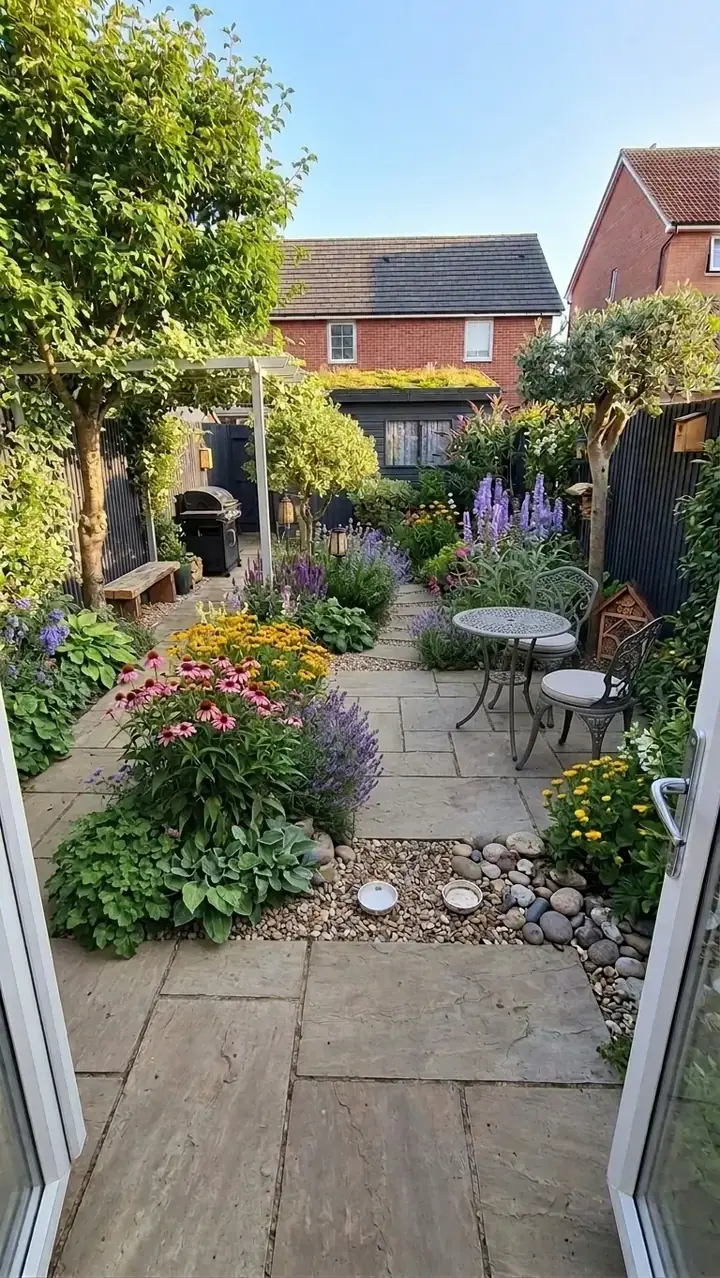
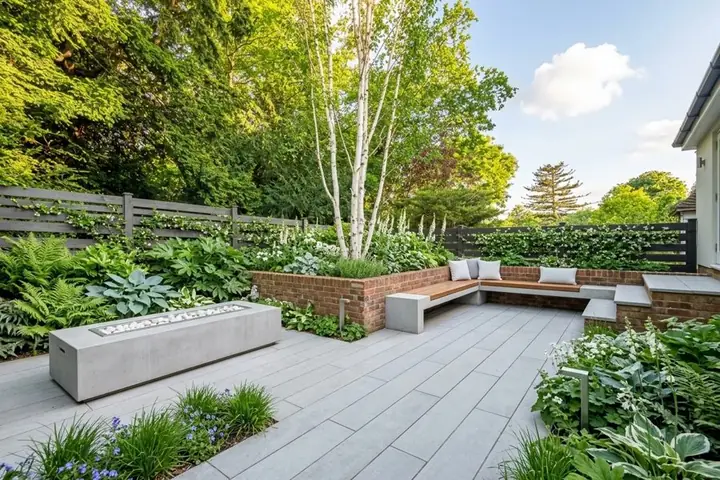
If you have a garden overlooked by neighbours' upstairs windows, consider pleached trees (trained forms on a clear stem), which the RHS recommends because they give privacy "without taking up too much room at ground level". They take time to train yourself or money to buy ready trained, and need pruning every year. Crab apples add spring blossom; hornbeams keep their russet leaves, giving extra privacy in winter.
In a smaller garden, the RHS suggests a row of narrow trees such as Italian cypresses or 'Skyrocket' junipers, which can block an unwanted view from the house while still letting light through. That is how to get privacy in an overlooked garden and keep the light.
Screening trees do not need to be big when you buy them. The RHS's guide to new build gardens calls planting trees one of the best solutions to a lack of privacy, and says they are generally best bought fairly young and left to get established. A pergola for privacy works too: the same guide says pergolas and trees block views into the garden, and that trellis and pergolas planted with climbers are a useful way of getting height quickly.
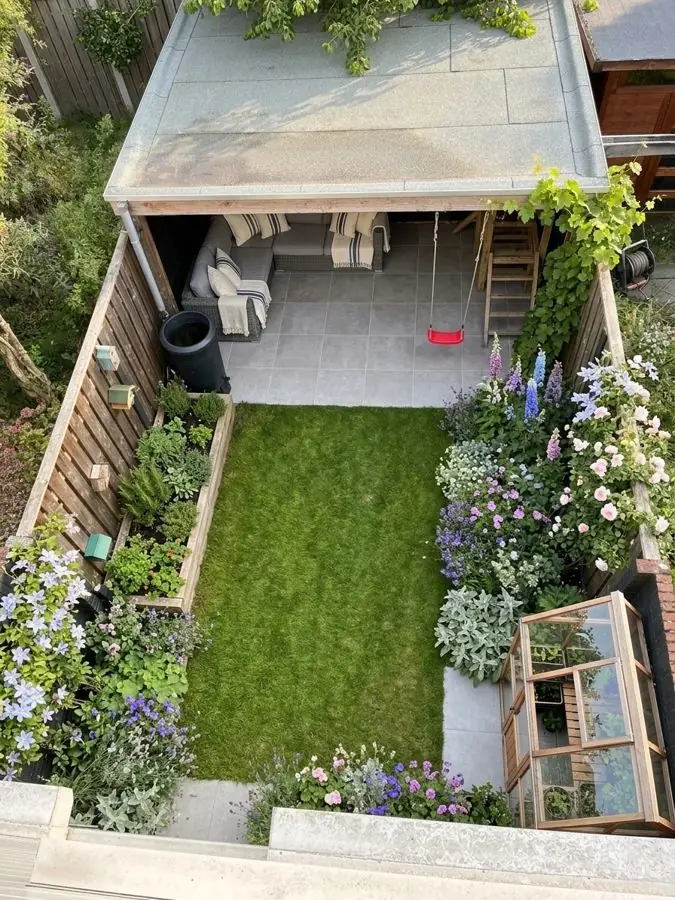
For a privacy screen for patio seating, think about where you sit and the angle you are seen from. The RHS says lower level screens can be useful, and where privacy is less of an issue they can be permeable, which also filters the wind and helps avoid turbulence. To picture a screen before you pay for one, add a photo of your garden taken from where you sit and ask Garden Design App for pleached trees or a pergola on that side; you see it redesigned in about a minute.
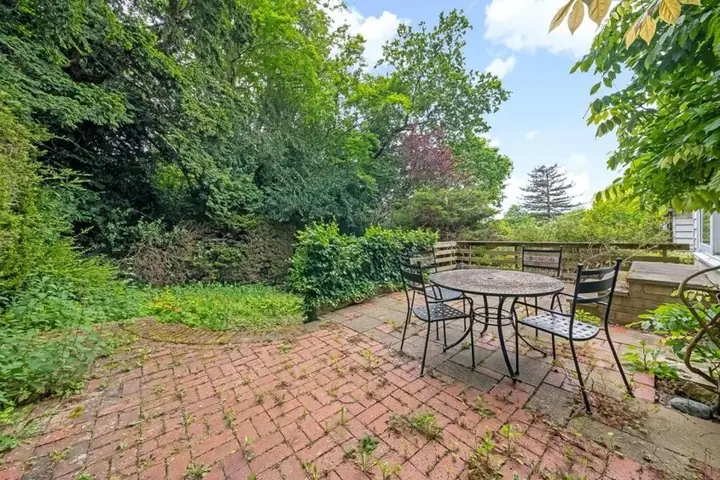 Before
 After
How to make your garden private from neighbours without falling out
Hedges do not need planning permission as such, says the Planning Portal, unless a planning condition or covenant limits planting, for example on an open plan estate or where a driver's sight line could be blocked.
Tall evergreen hedges can lead to disputes, and there is a set route for them. GOV.UK says you can ask your council for a complaint form if a hedge is all of these: 2 or more mostly evergreen or semi evergreen trees or shrubs, over 2 metres tall, and affecting someone's enjoyment of their home or garden because it is too tall. You must try to settle it informally first, and the council might charge a fee. GOV.UK also says owners are responsible for keeping their hedges so they do not grow too high.
You can trim branches from a neighbour's hedge that cross into your property, but only up to the boundary, says GOV.UK.
Front gardens next to a road
In England, a new fence or wall next to a road used by vehicles, or its footpath, needs planning permission if it is over 1 metre high. A hedge needs no planning permission as such, so it can give more height there, but check first that no planning condition or covenant restricts planting, for example on an open plan estate or where a driver's sight line could be blocked, as the Planning Portal warns.
Two of our garden makeovers to look at
Our tiered garden makeover shows screening at work: a slab patio, a step and a raised lawn are redesigned as a cottage garden with roses on the fences for privacy. Our winding path garden makeover turns a lawn into a winding gravel path through borders of roses and catmint. If you want to know how to make a garden private and still full of flowers, start with the tiered one.
Why use Garden Design App?
You don’t need to know the name of a single plant.
Your own garden, from one photo
One photo from your phone is all it takes. Your real garden, planted, in about a minute.
Ask for anything you want
Pick one of 15 styles and a colour scheme, then ask for anything you want, like “add a wildlife pond”.
The garden stays familiar
Your trees, fences and house stay, and you choose whether the patio and paths stay too.
Plants you can find
Garden centre favourites and RHS Award of Garden Merit winners, chosen by a professional gardener.
Right for where you live
UK, US or anywhere else: plants matched to your climate, your light and your soil, so they thrive.
Help beyond planting day
Every paid design comes with a care guide and a flowering calendar.
Questions people ask
How high can a garden fence be without planning permission?
In England, the Planning Portal says up to 2 metres from ground level, or 1 metre next to a road used by vehicles or its footpath. Different rules apply to listed buildings, conservation areas and where an article 4 direction or planning condition removes the right. Wales may differ.
How can I make my garden more private quickly?
For fast cover, the RHS suggests quick climbers on the fence, such as climbing nasturtiums, runner beans or morning glory 'Grandpa Otts'. For a hedge in a hurry, semi mature plants give instant height but cost more and need careful watering for two years.
How can I make my garden more private on a budget?
Grow a hedge from bare root plants rather than buying instant hedging. The RHS's 2023 guide to a budget garden says instant hedging is not the budget choice, prices bare root hedging plants from 60p to £3 each, calls them the best value way to a hedge that lasts, and says they usually thicken into a healthy hedge over a few years. The RHS hedge guide adds that buying in bulk from specialist growers is generally cheaper than buying from shops, and that small plants about 60cm tall establish more quickly than larger ones. For screening, the budget guide suggests climbers on wire mesh or trellis, and an inherited fence that is still sound can be given a brush down and a lick of paint. Seeing it first means you only spend on screening you know you want: Garden Design App's first 3 designs are free, so you can try screening ideas on your own garden before you buy a single plant.
Can I complain about my neighbour's tall hedge?
Yes, if it is 2 or more mostly evergreen or semi evergreen trees or shrubs, over 2 metres tall and affecting your enjoyment of your home or garden because it is too tall. GOV.UK says you must try to settle it informally first, and the council might charge a fee.
Should I plant Leyland cypress for privacy?
Not in front of a fence: the RHS says it gets far too big, far too quickly there. Its hedge guide calls it useful as a quick tall screen but less satisfactory as a smaller trimmed hedge, and says it must be planted and kept with care.
Sources (8)
- Planning Portal, Fences, gates and garden walls: planning permission, read 13 November 2026
- GOV.UK, Resolving neighbour disputes: high hedges, trees and boundaries, read 13 November 2026
- RHS, How to screen off your garden, read 14 November 2026
- RHS, Plants for privacy (Graham Rice), read 14 November 2026
- RHS, Hedges: selection tips, read 14 November 2026
- Garden Design App, homepage, read 13 November 2026
- RHS, How to create a budget-friendly garden (Natalie Ashbee, 22 Nov 2023), read 13 November 2026
- RHS, Getting started with a new-build garden (Gareth Richards), read 13 November 2026