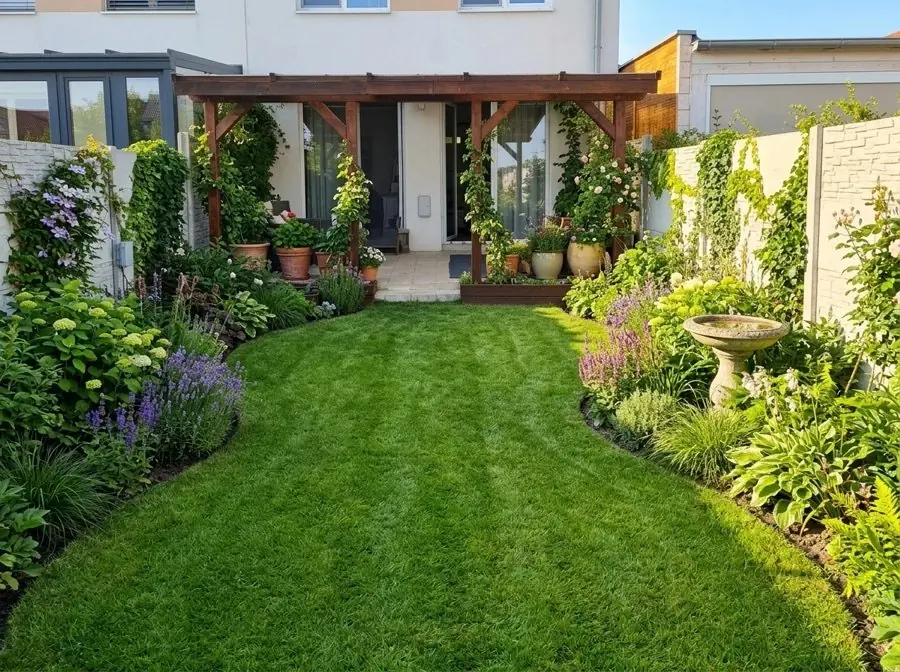
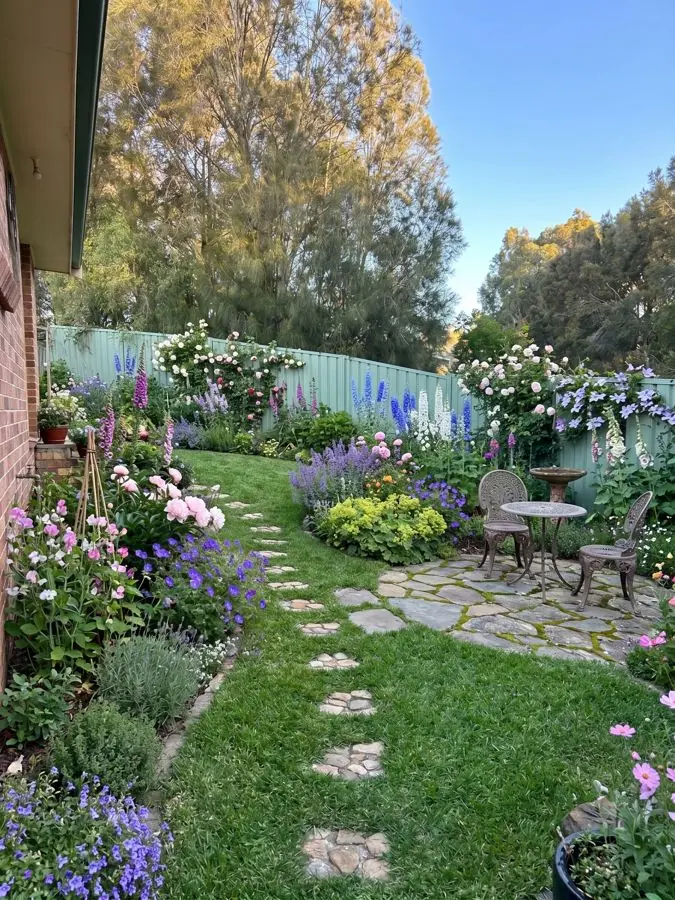
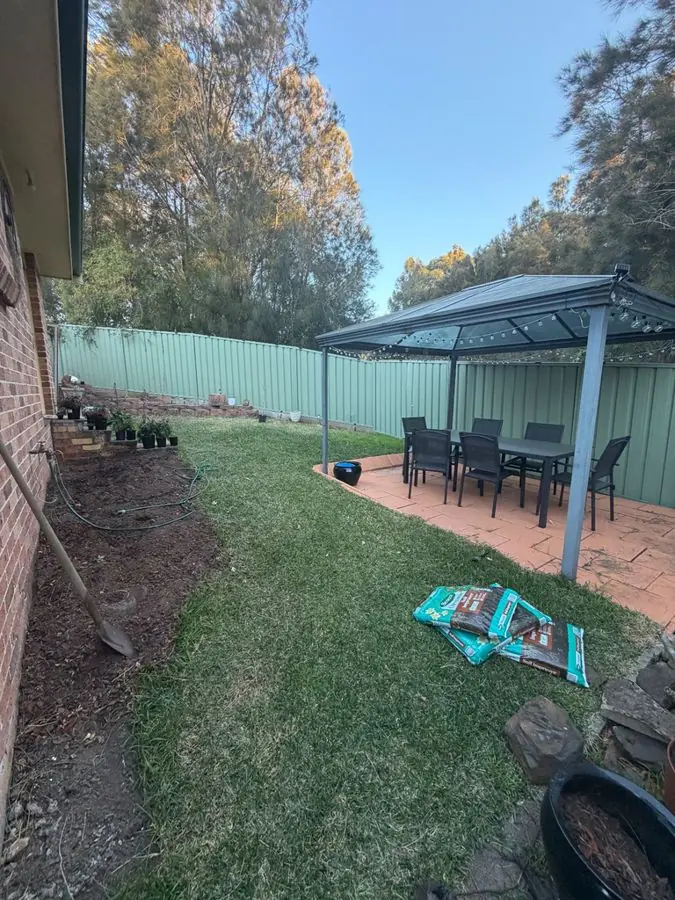
Lawn with stepping stones and a bistro table
Before: a lawn beside the house with a metal gazebo over patio furniture
Get this yard →First 3 designs free · No card
Roses by the door, a brick path through foxgloves or borders around the lawn? Add one photo, ask for it and see your yard redesigned in about a minute.
Add your ZIP code: plants picked for your USDA zone, your summer heat, your light and your soil.
Design my yardOver 500 yard designs made.
Every one is a real yard, redesigned from one photo, and each says what was there before. Tap Before to see the photo. Like one? Tap Get this yard to design your own yard in the same style, with the same plants.
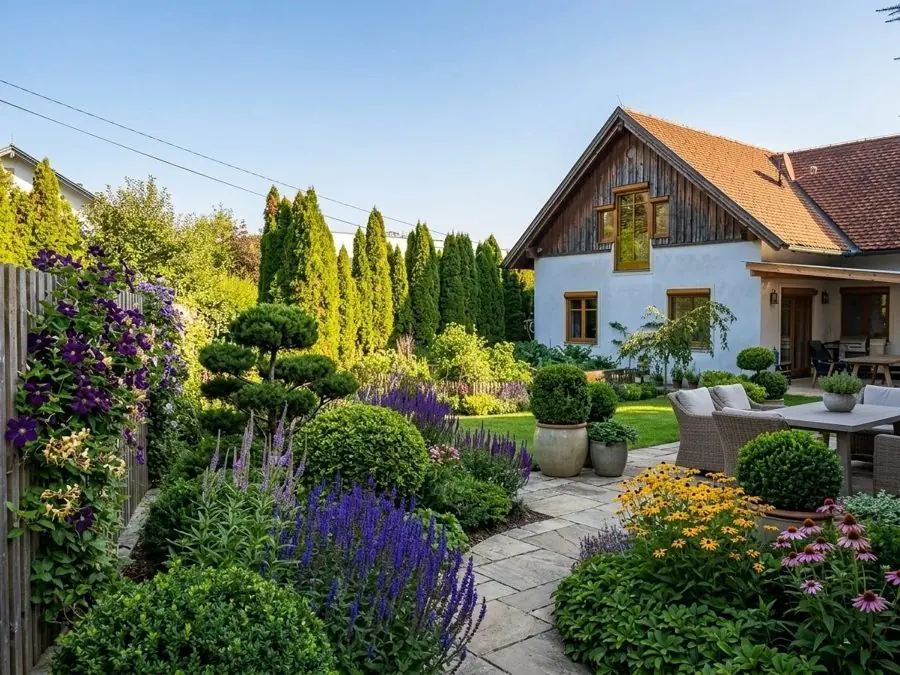
Lawns framed by deep, mixed borders of cottage flowers. 5 yards
Before: a lawn beside the house with a metal gazebo over patio furniture
Get this yard →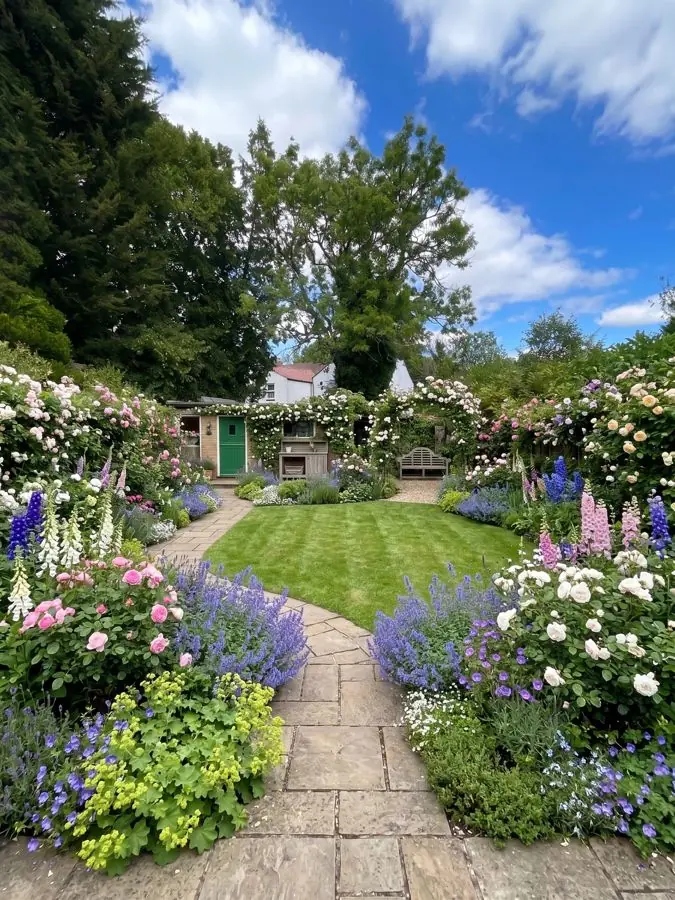
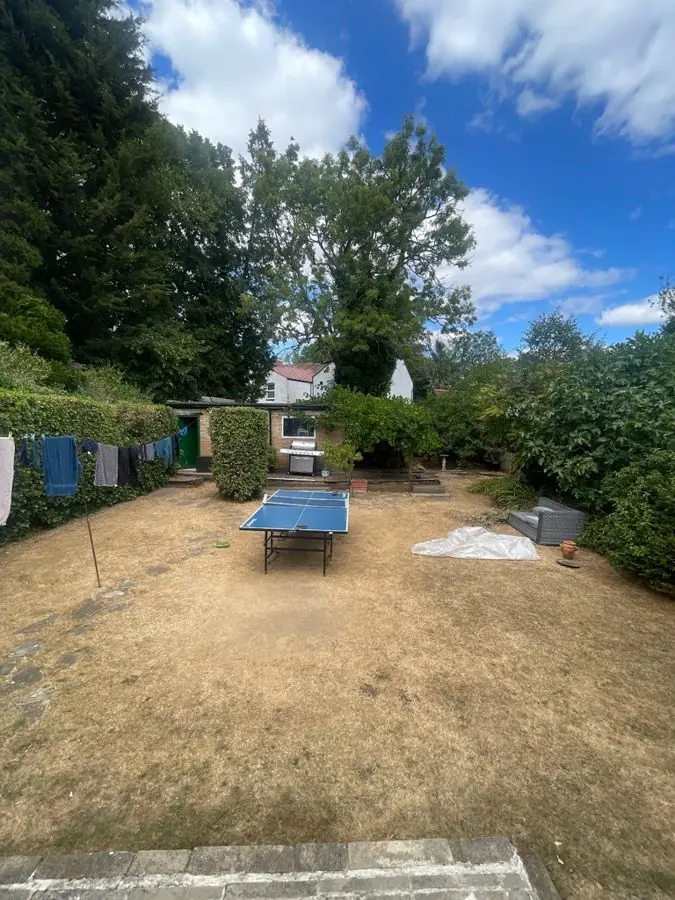
Before: a dry, patchy lawn with a table tennis table and a clothesline
Get this yard →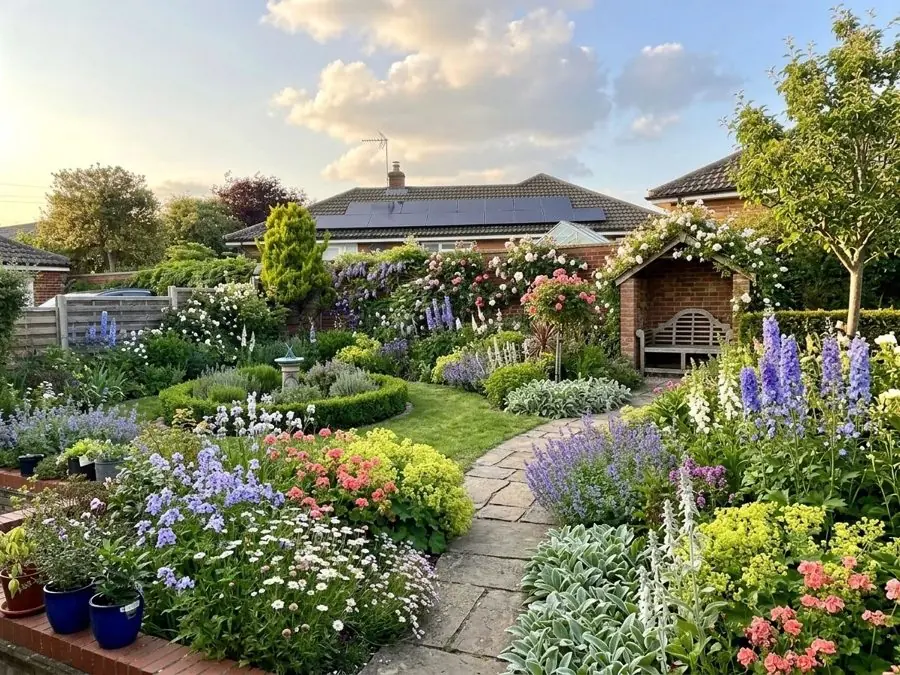
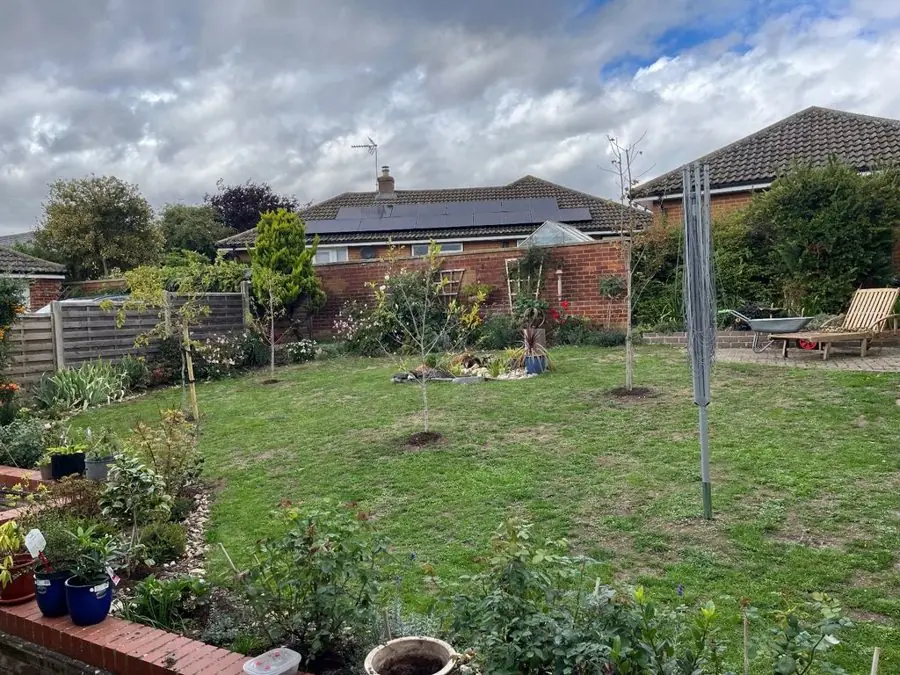
Before: a big lawn with young trees, an umbrella clothesline and loungers
Get this yard →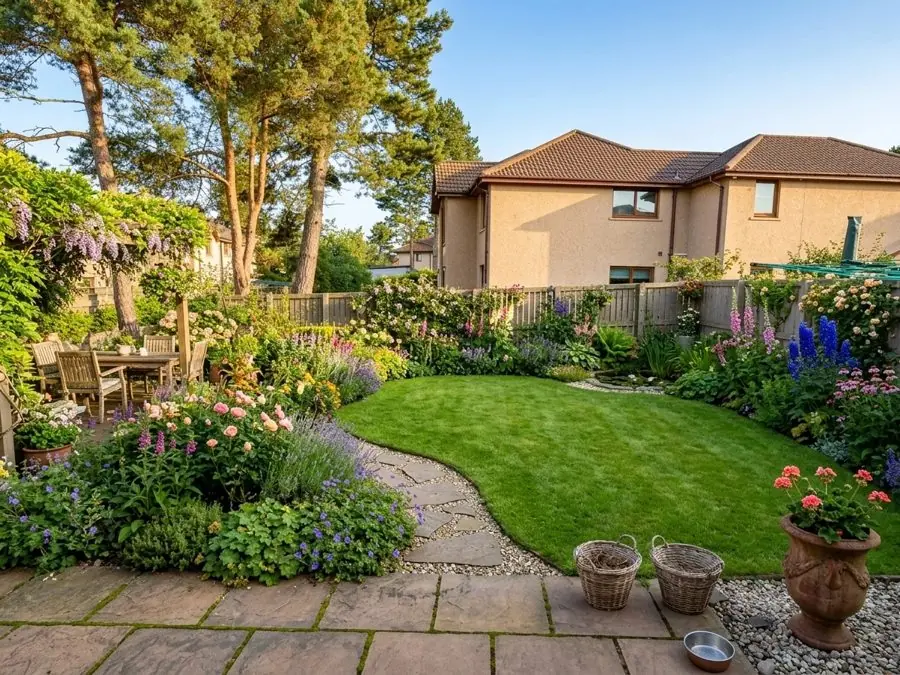
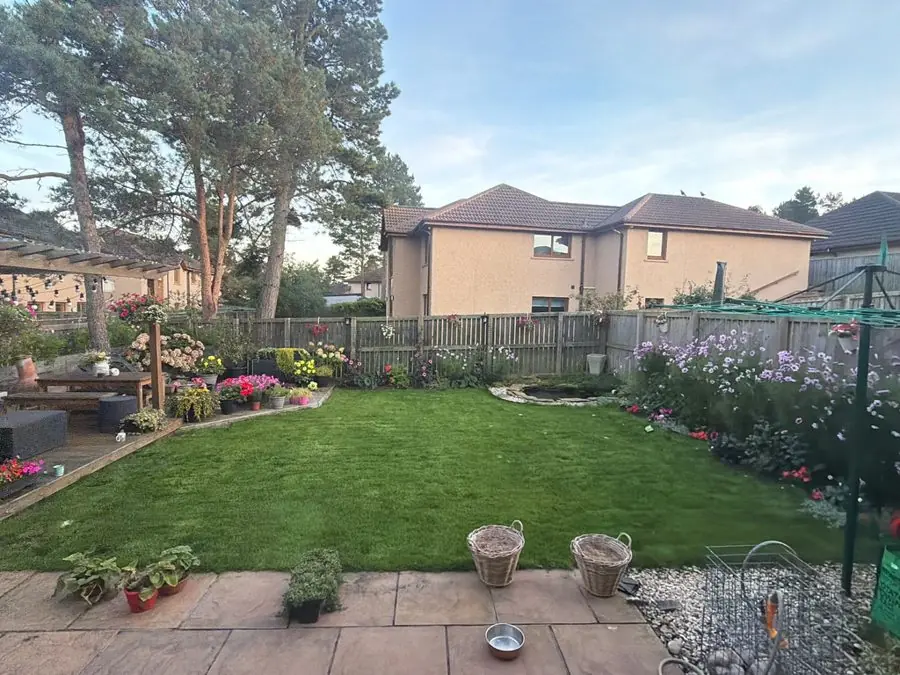
Before: a square lawn with a patio and pine trees behind a fence
Get this yard →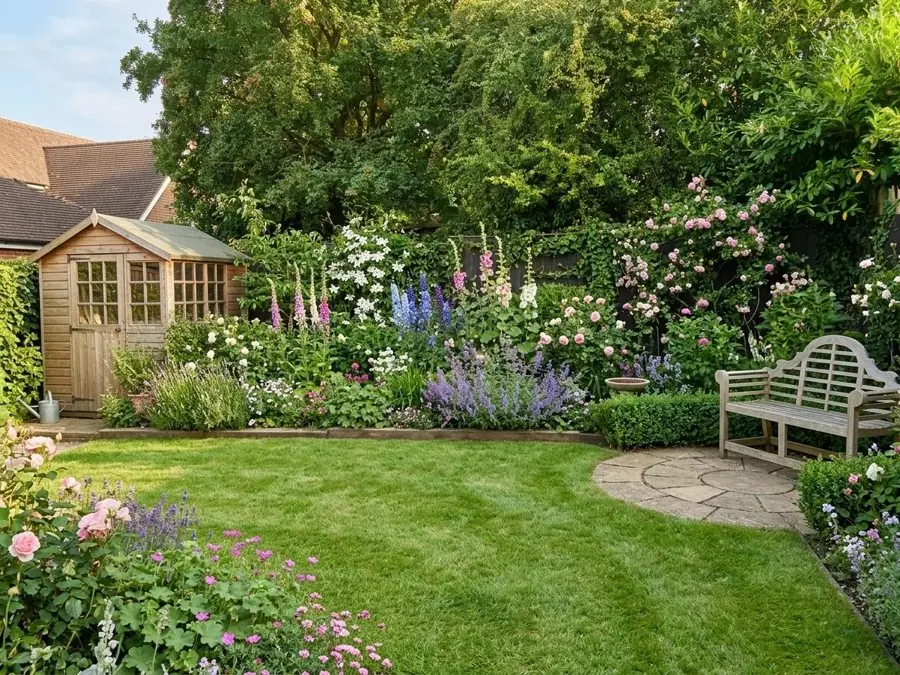
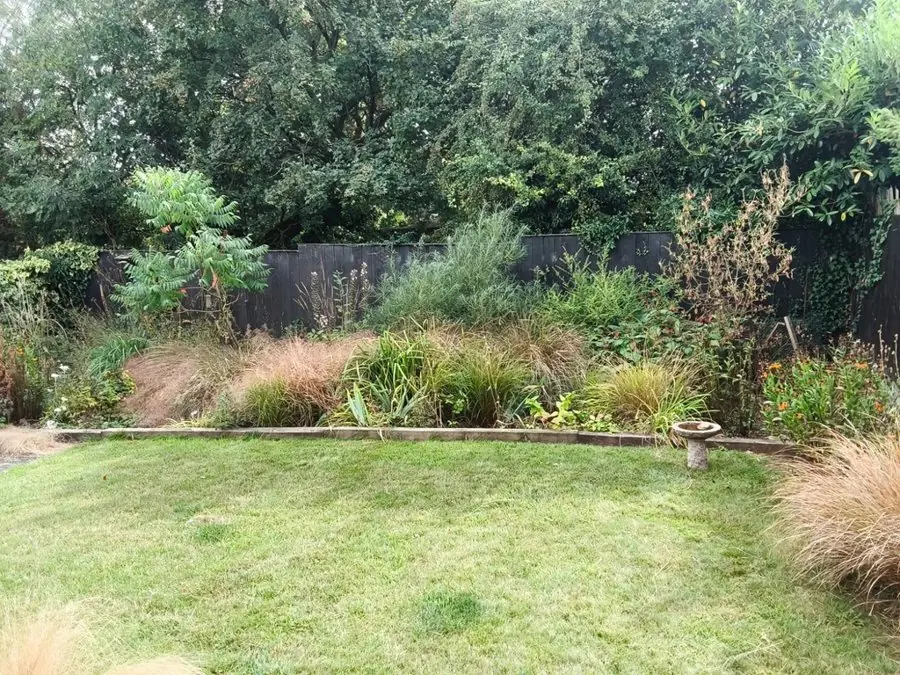
Before: a lawn in front of a border of grasses under tall trees
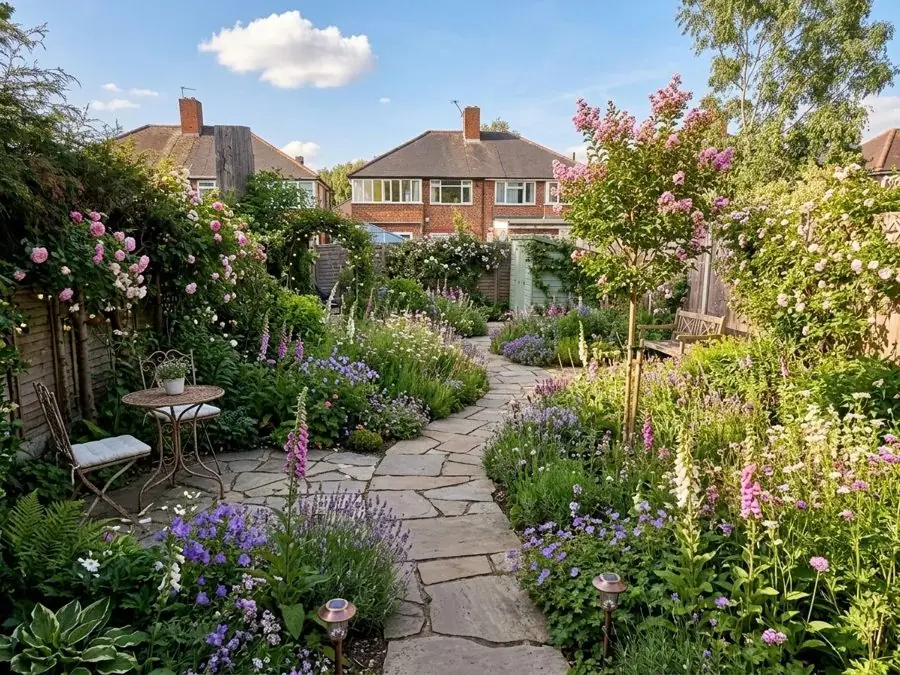
Get this yard →Paths of stone, brick or gravel through cottage planting, with no lawn to mow. 10 yards
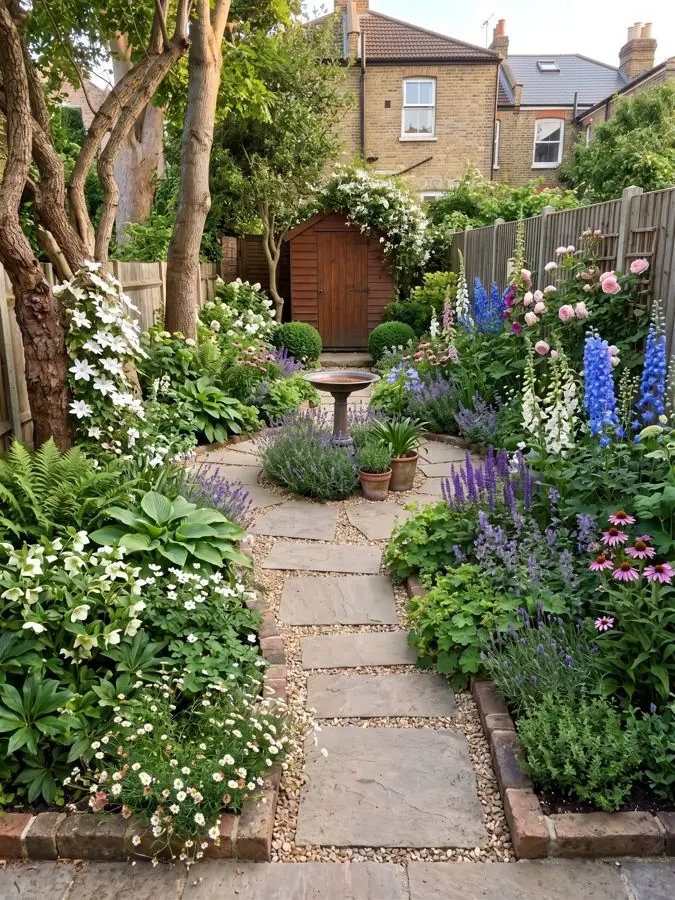
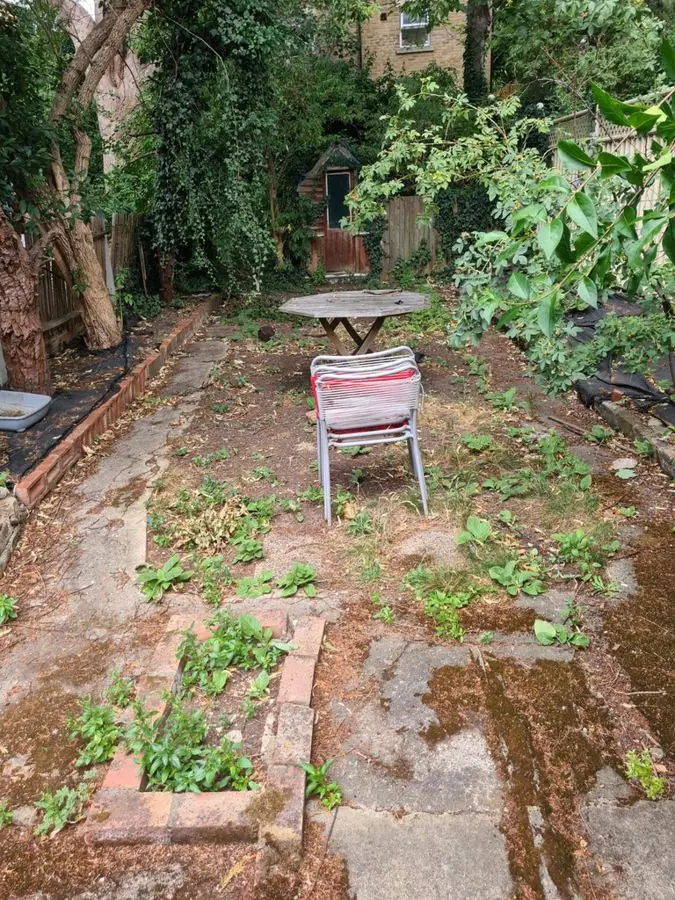
Before: Cracked, weedy pavers with a small table and a chair
Get this yard →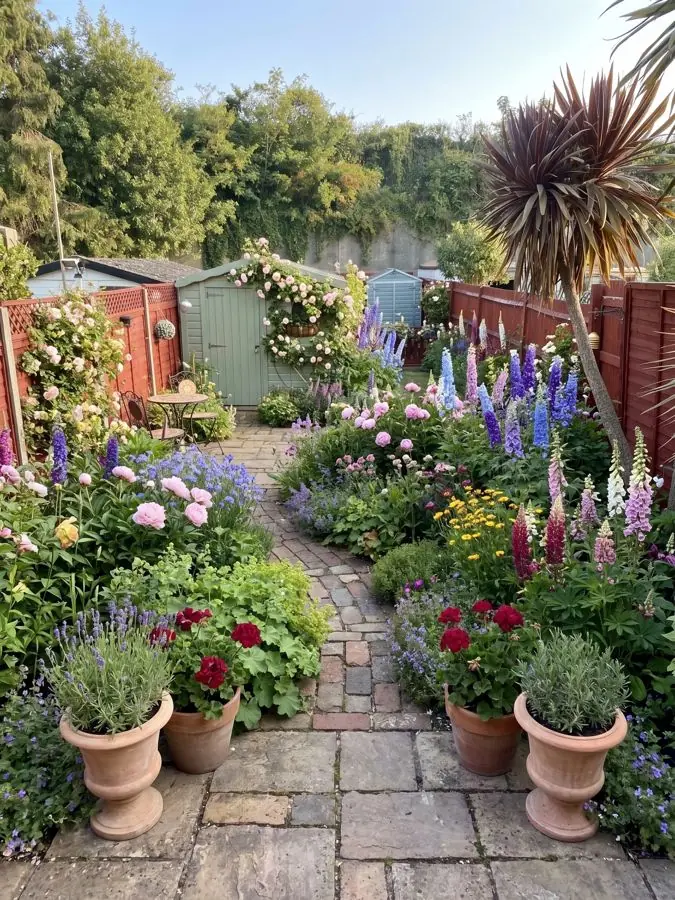
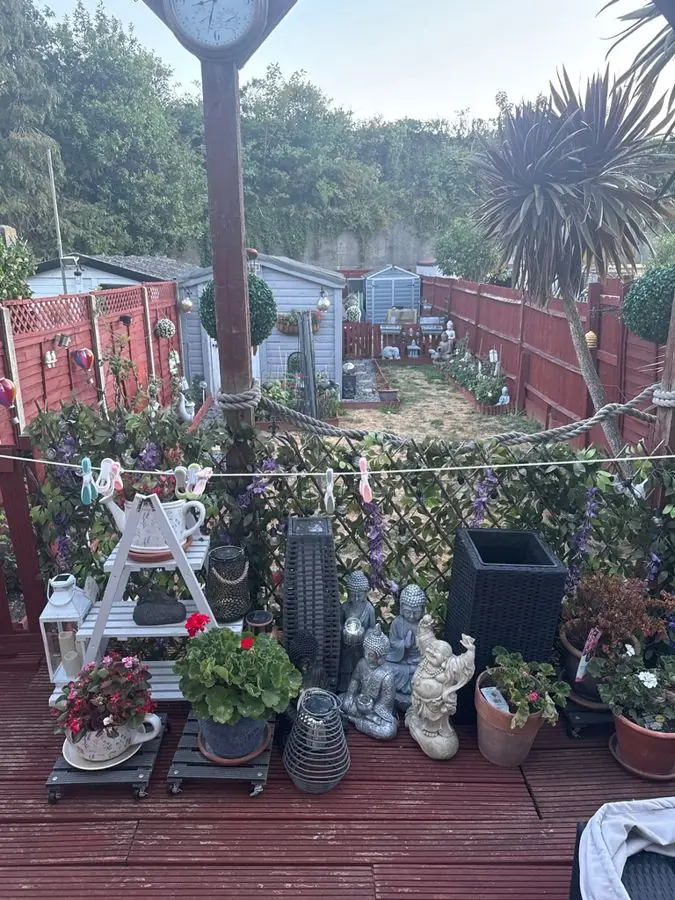
Before: a red deck crowded with pots and ornaments, a palm and red fences
Get this yard →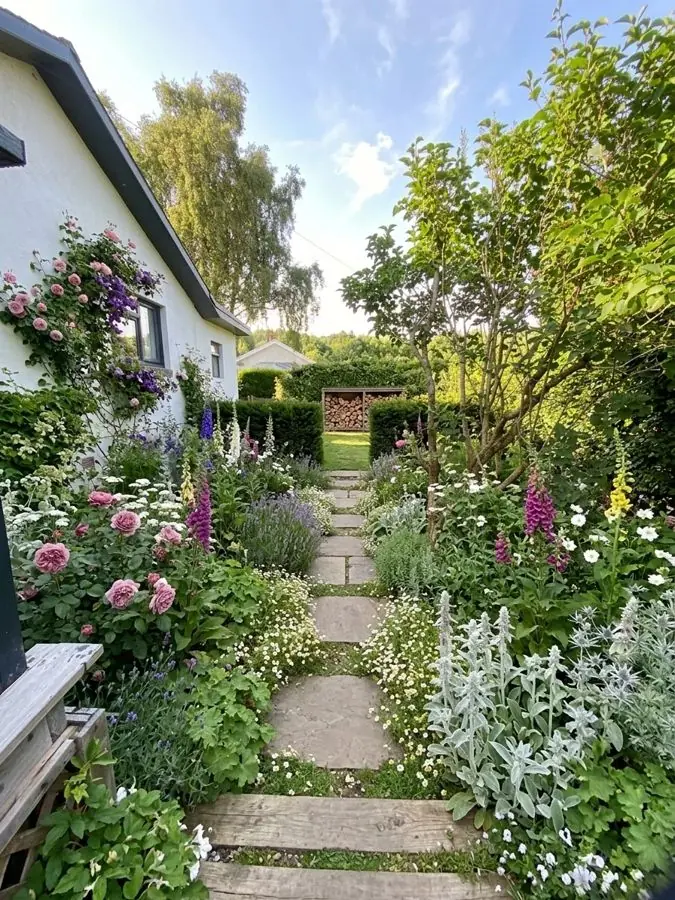
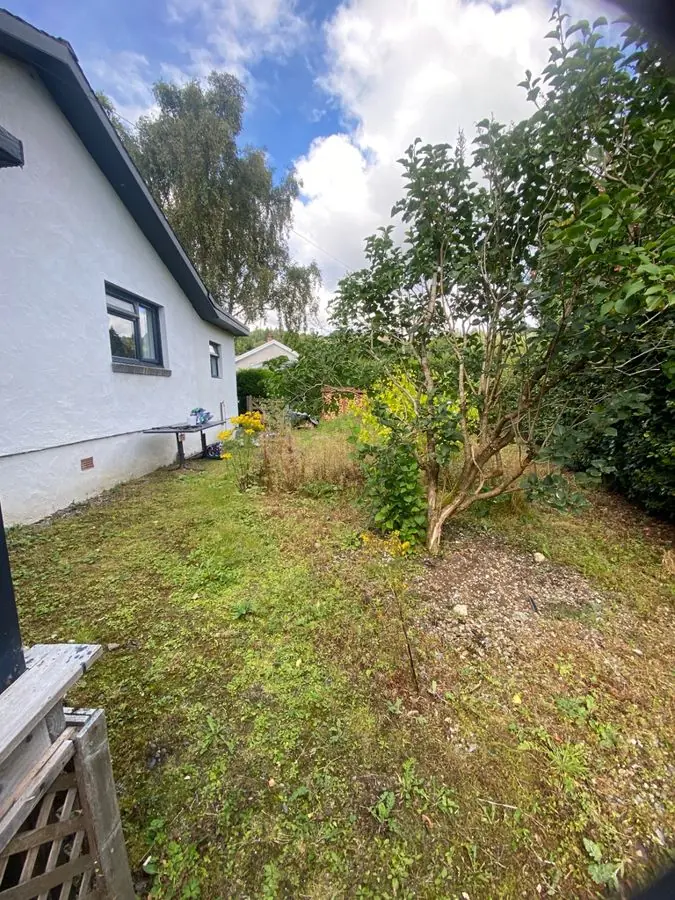
Before: a rough lawn beside a white house with a young tree
Get this yard →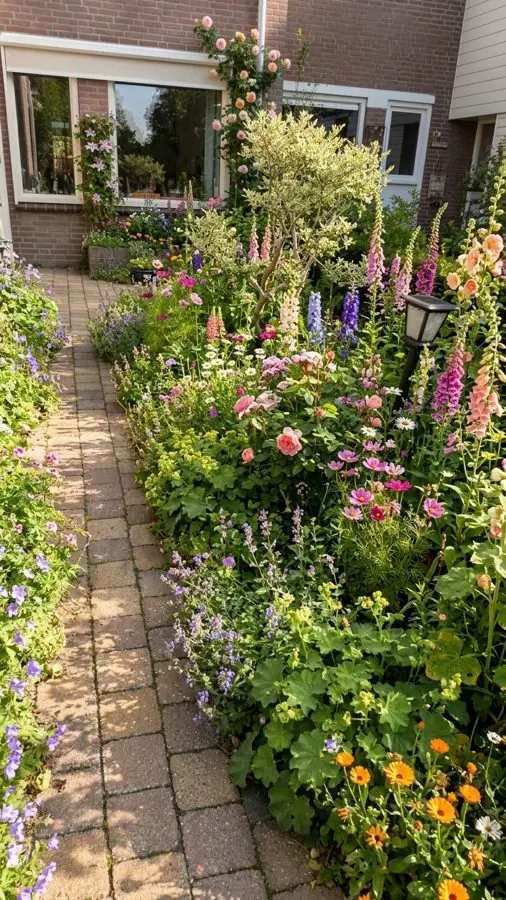
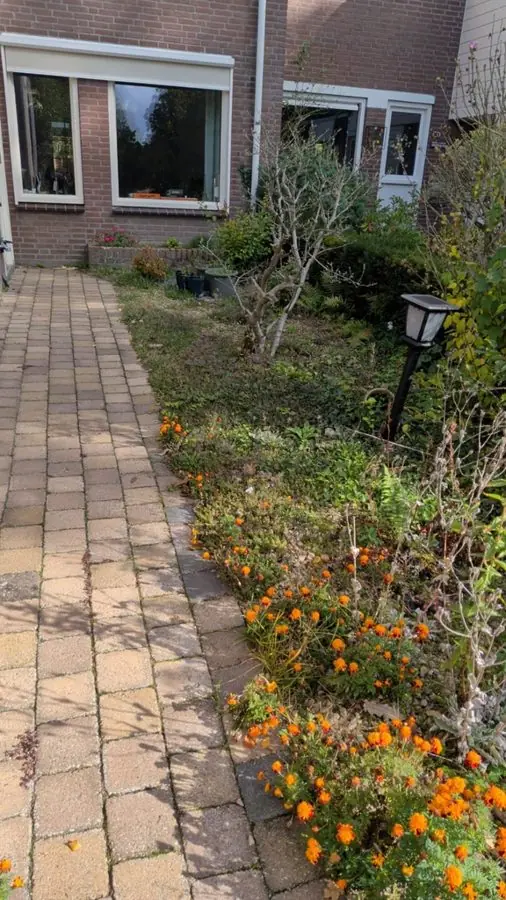
Before: a brick paver path beside a narrow bed of orange flowers
Get this yard →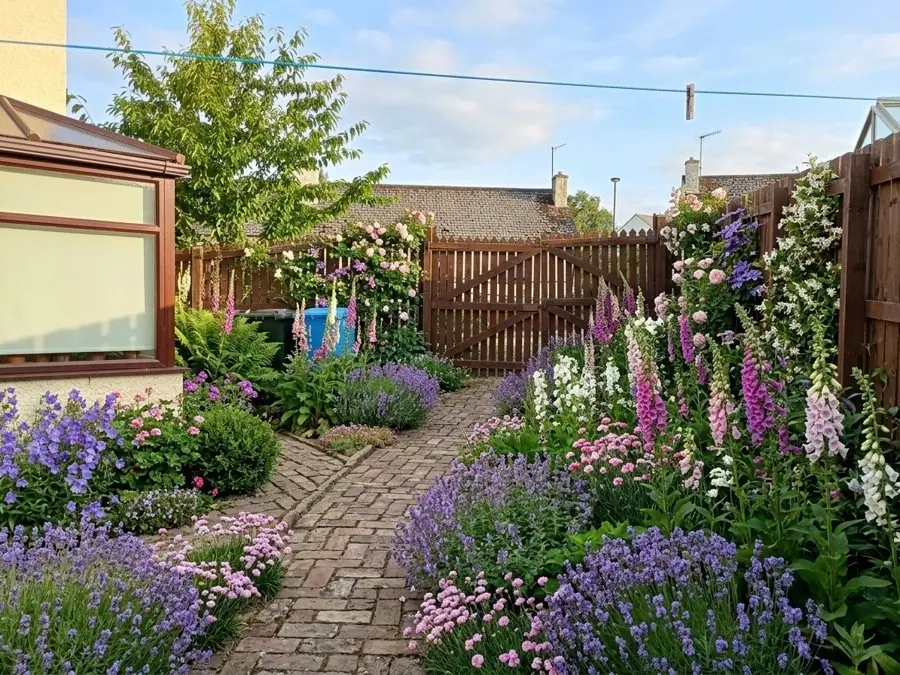
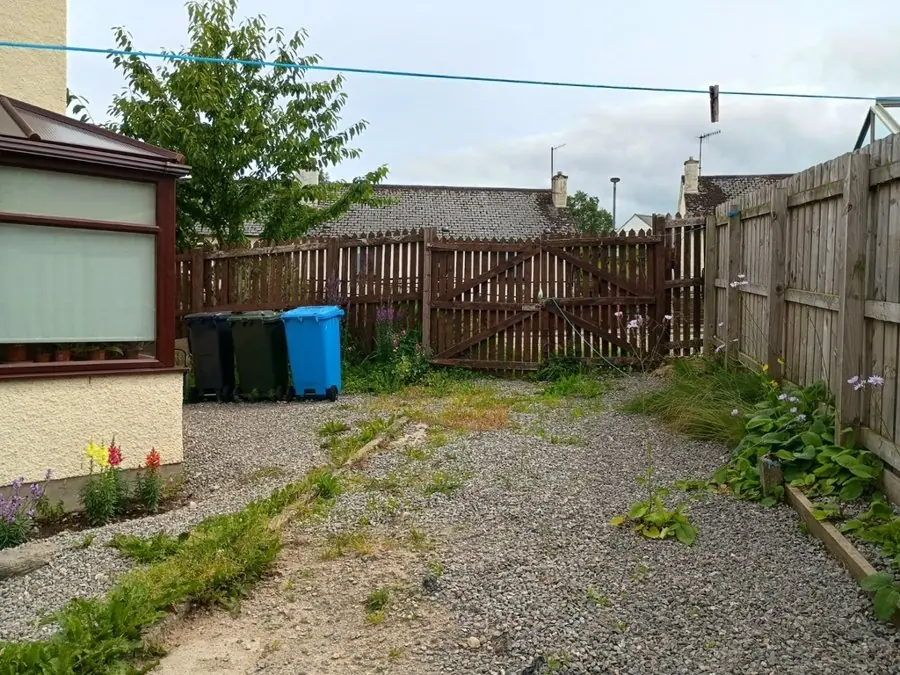
Before: a gravel yard with trash cans by a wooden gate and a laundry line
Get this yard →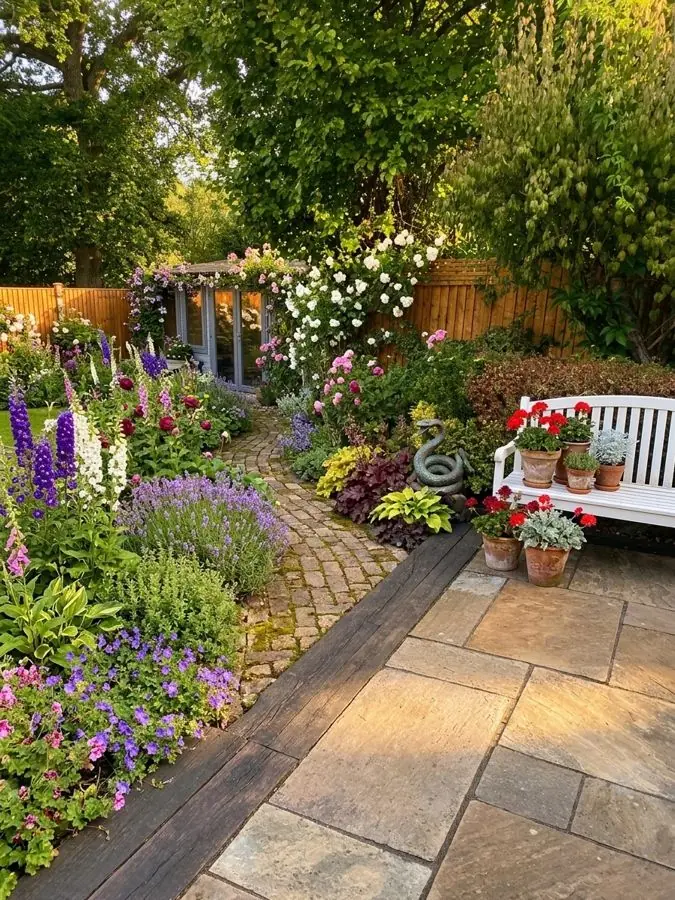
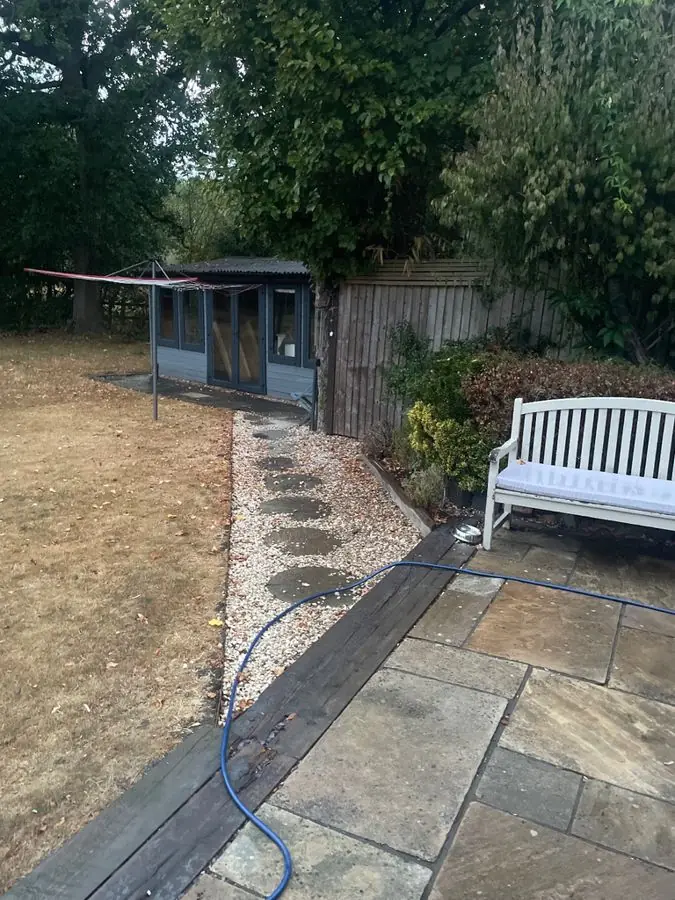
Before: a dry lawn with stepping stones, a garden house, bench and patio
Get this yard →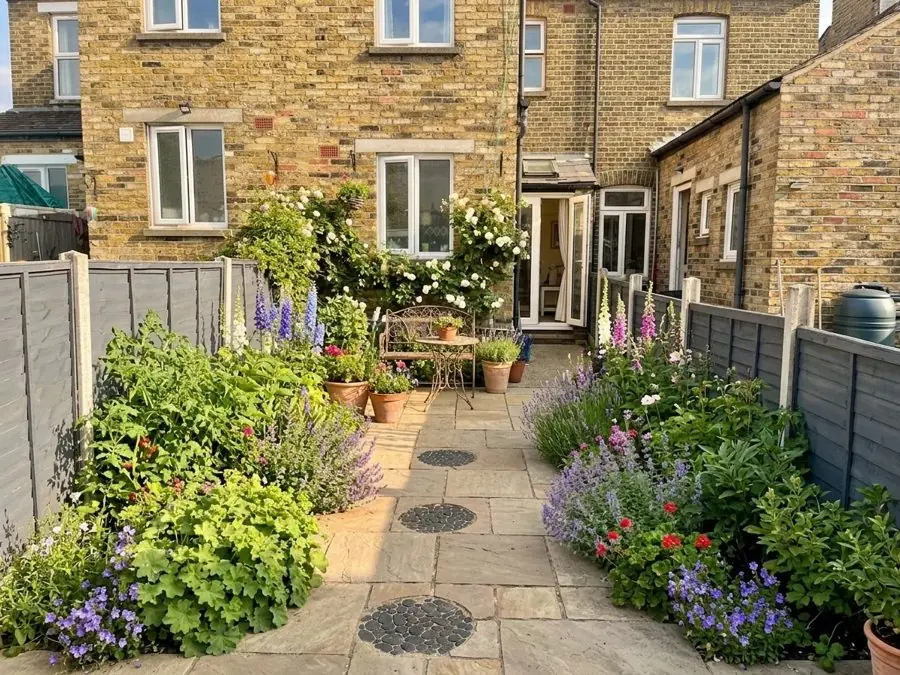
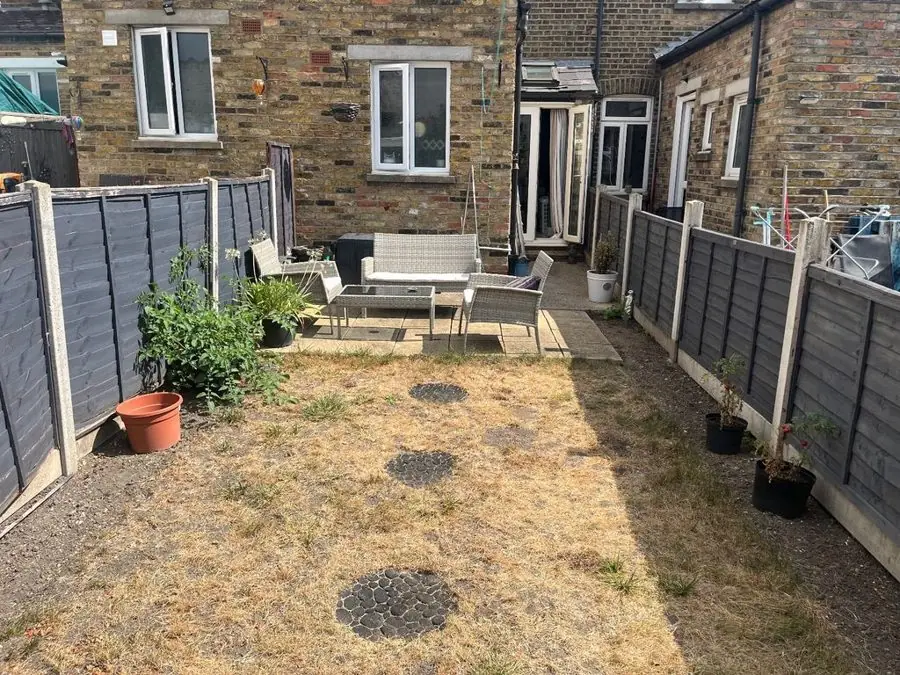
Before: a dry lawn with stepping stones and patio furniture by the house
Get this yard →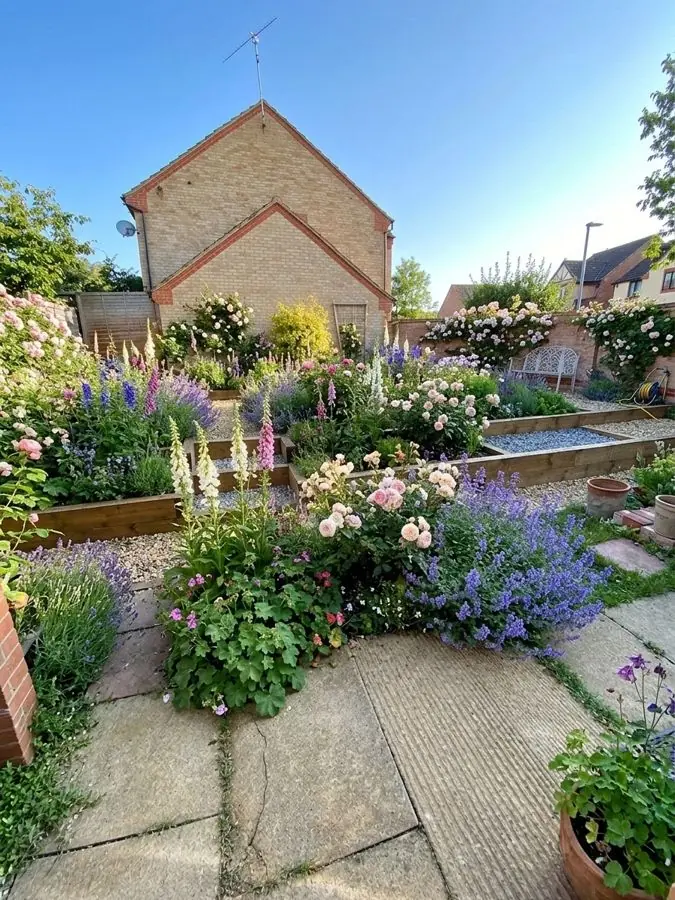
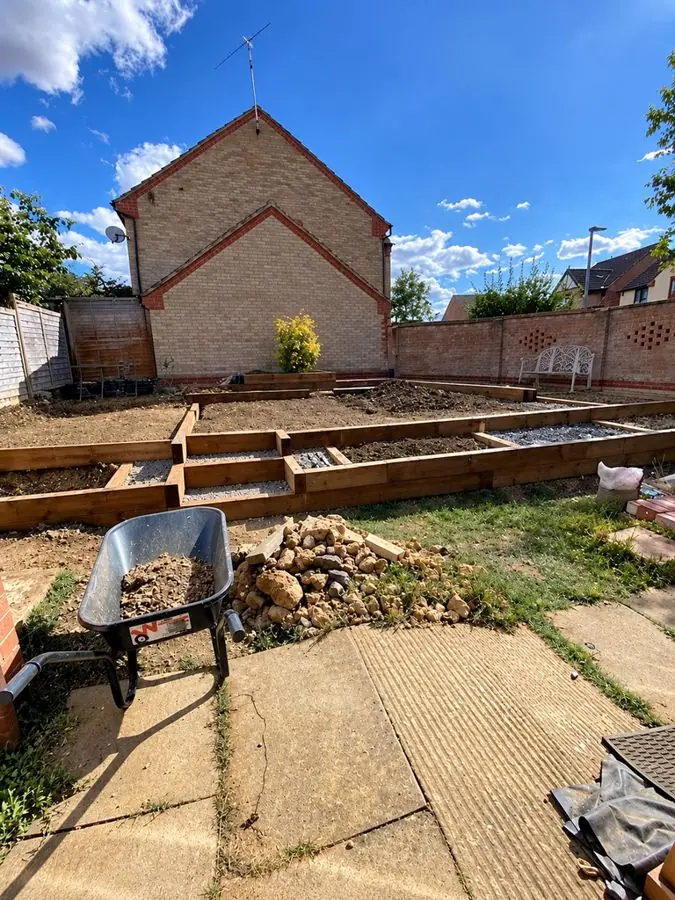
Before: empty raised beds, a wheelbarrow and rubble on cracked concrete
Get this yard →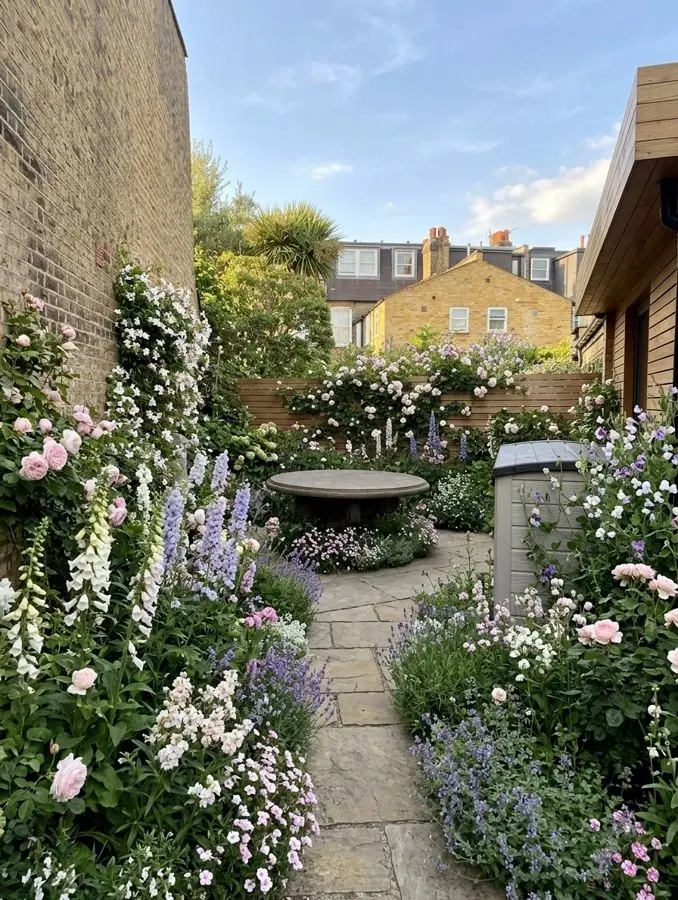
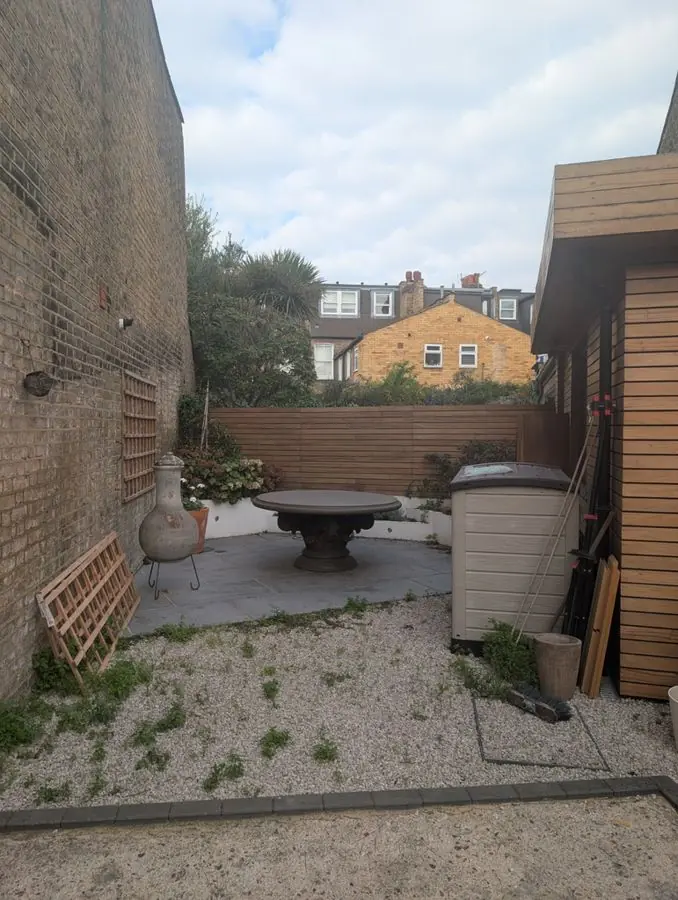
Before: a gravel yard with a stone table, a brick wall and shed
Get this yard →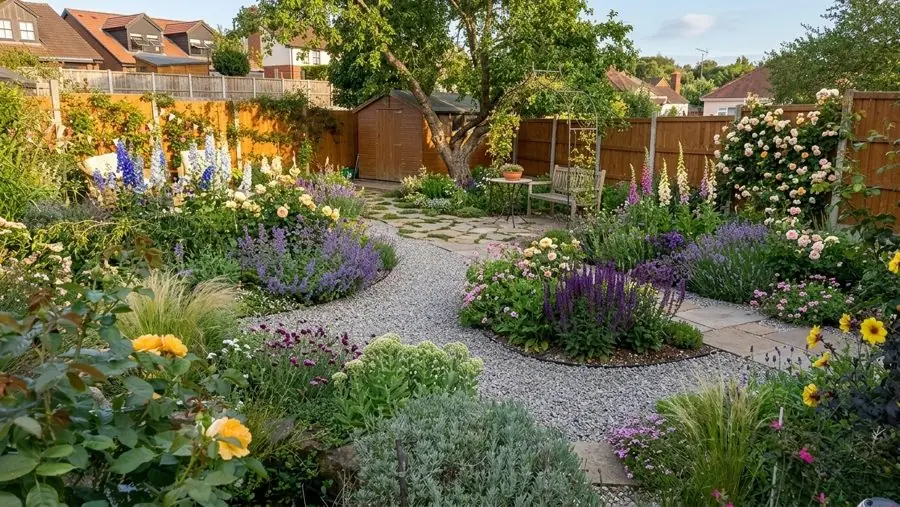
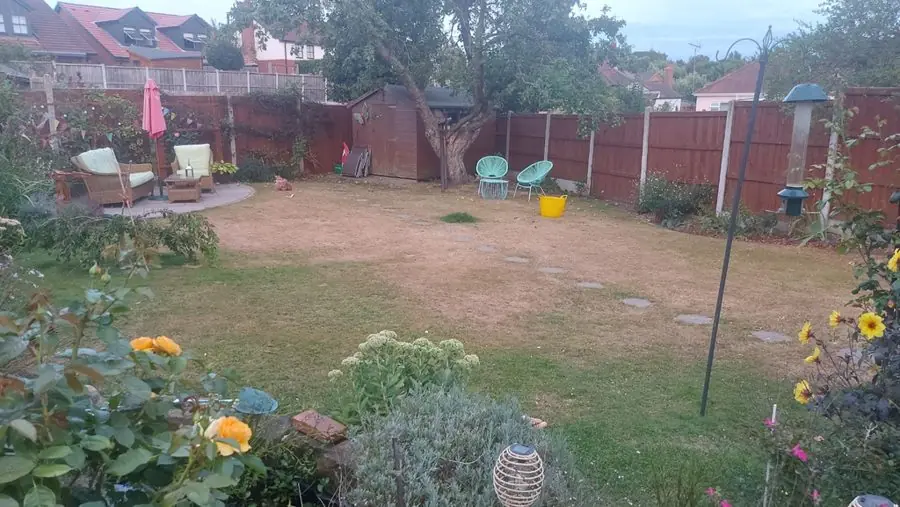
Before: a dry brown lawn with fences, a shed and garden chairs
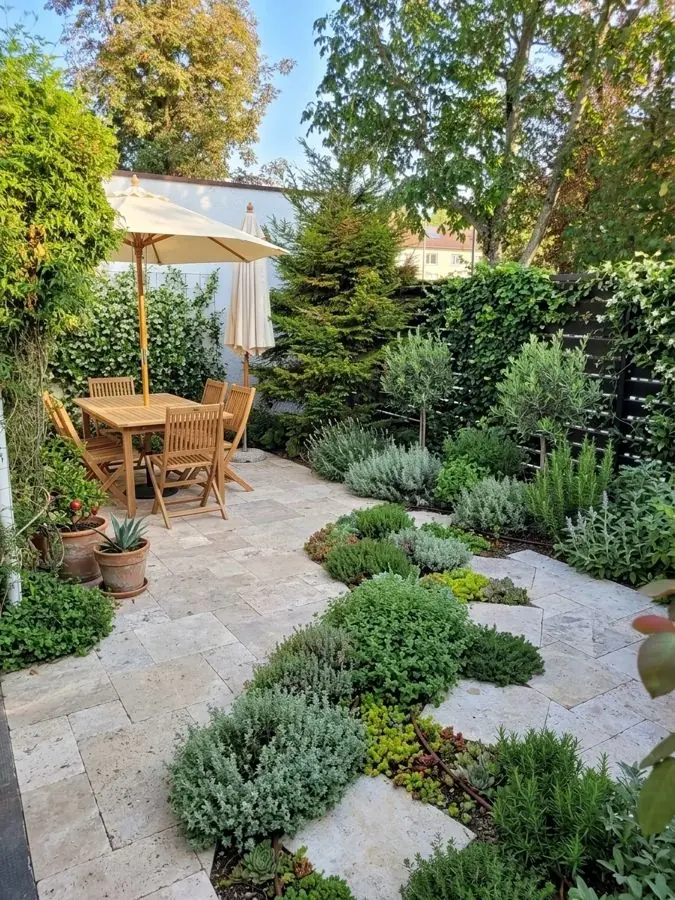
Get this yard →Three front yards, a bed by a porch and a small fenced backyard seen from above. 5 yards
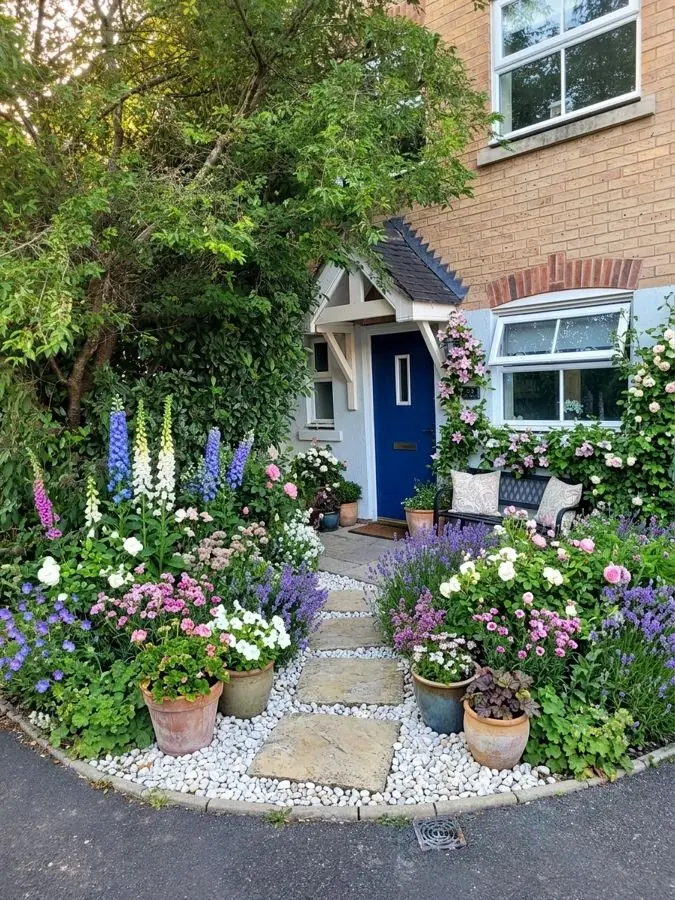
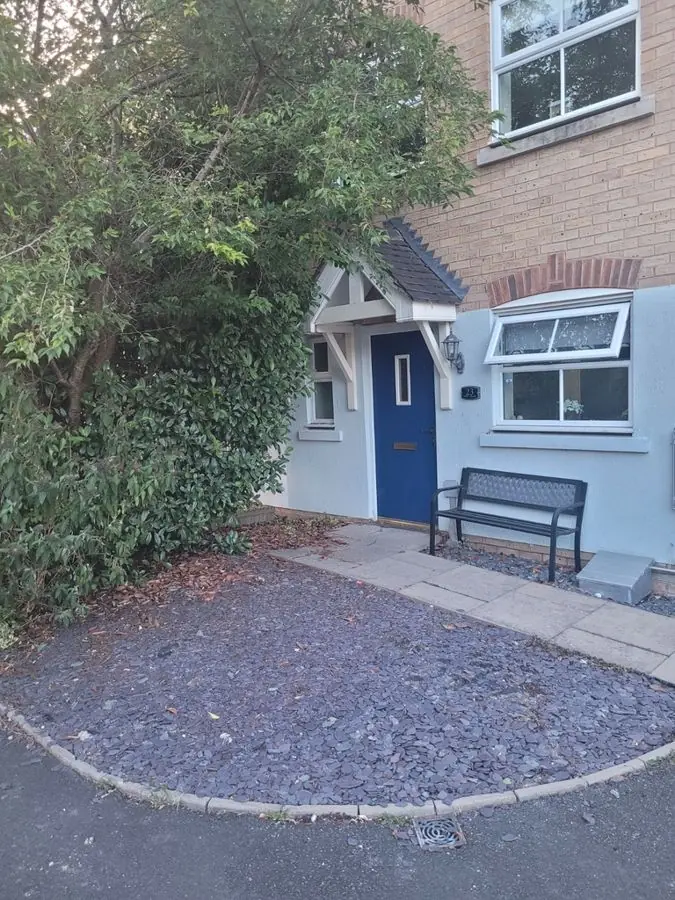
Before: a slate chip front yard by a blue door and bench
Get this yard →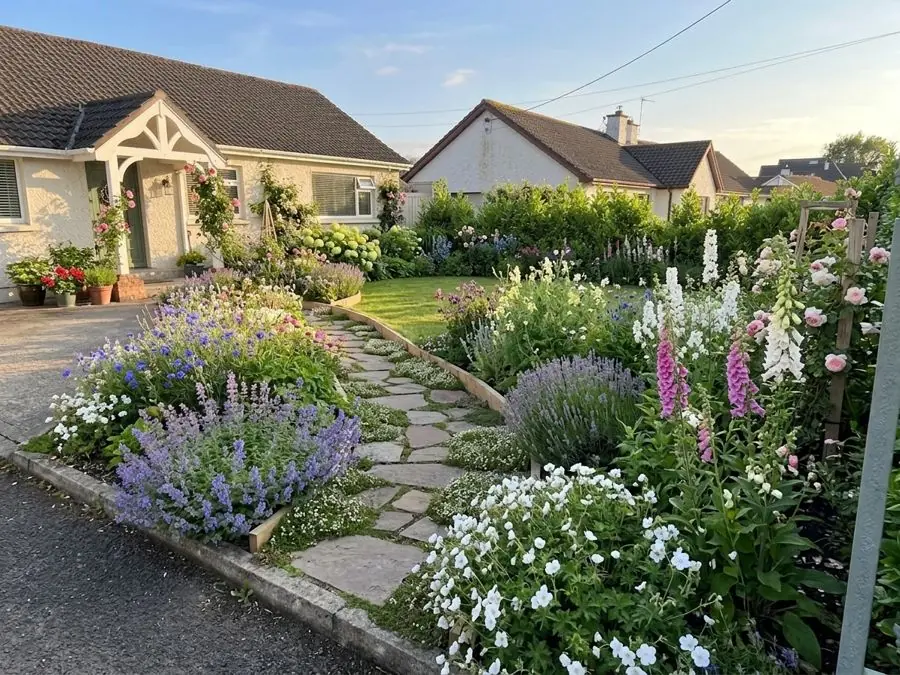
Before: a dry front lawn beside a driveway and a low hedge
Get this yard →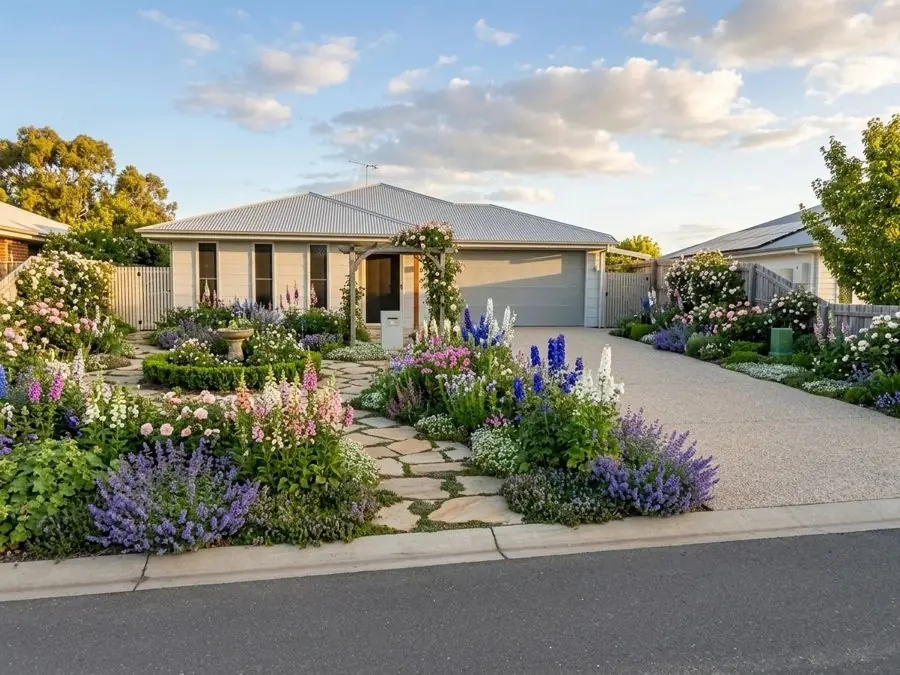
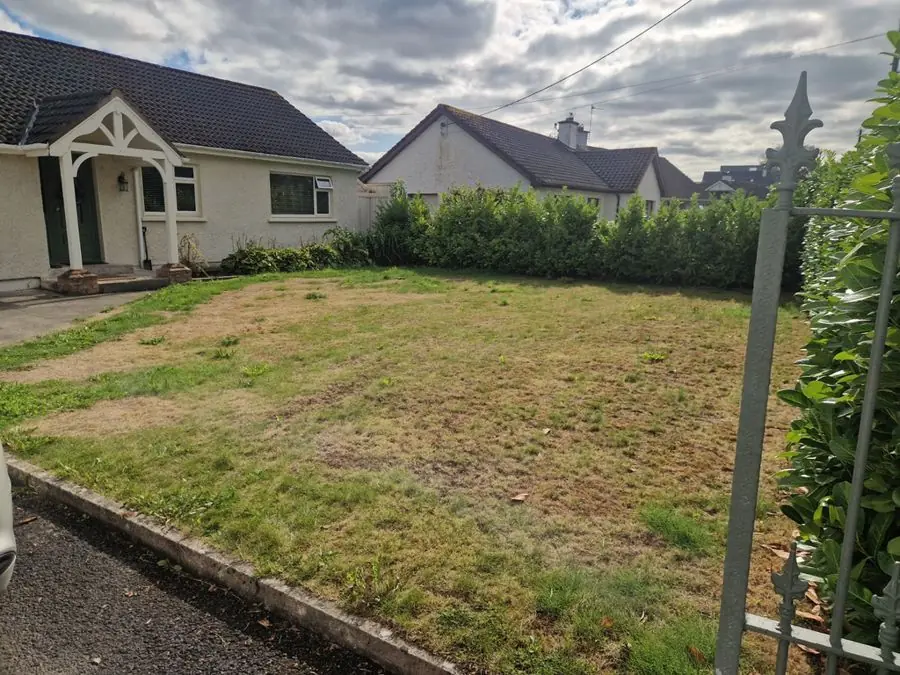
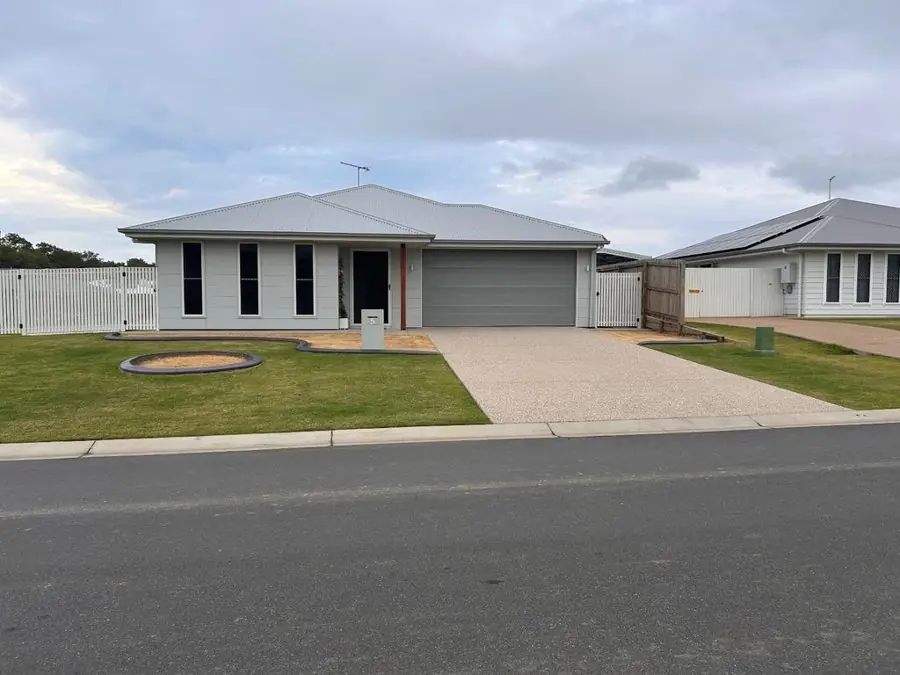
Before: a plain front lawn and driveway by a bungalow
Get this yard →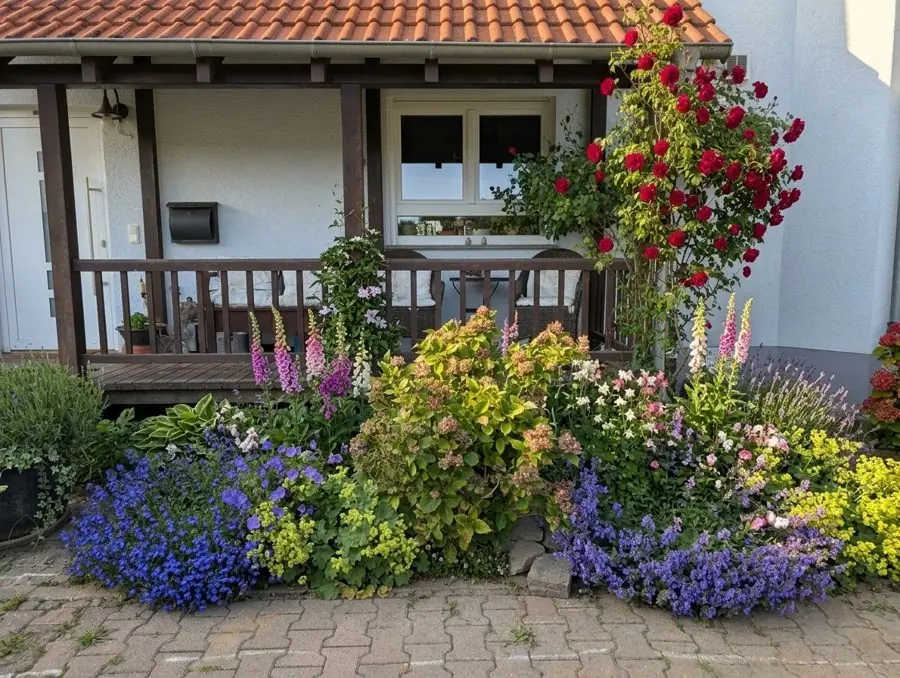
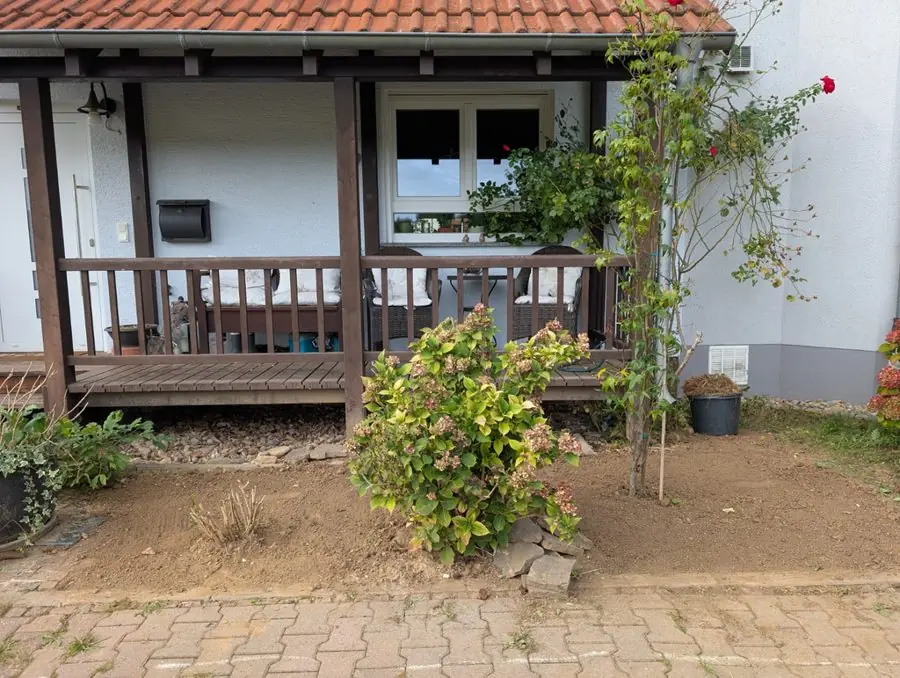
Before: bare soil and a lone shrub in front of a wooden porch
Get this yard →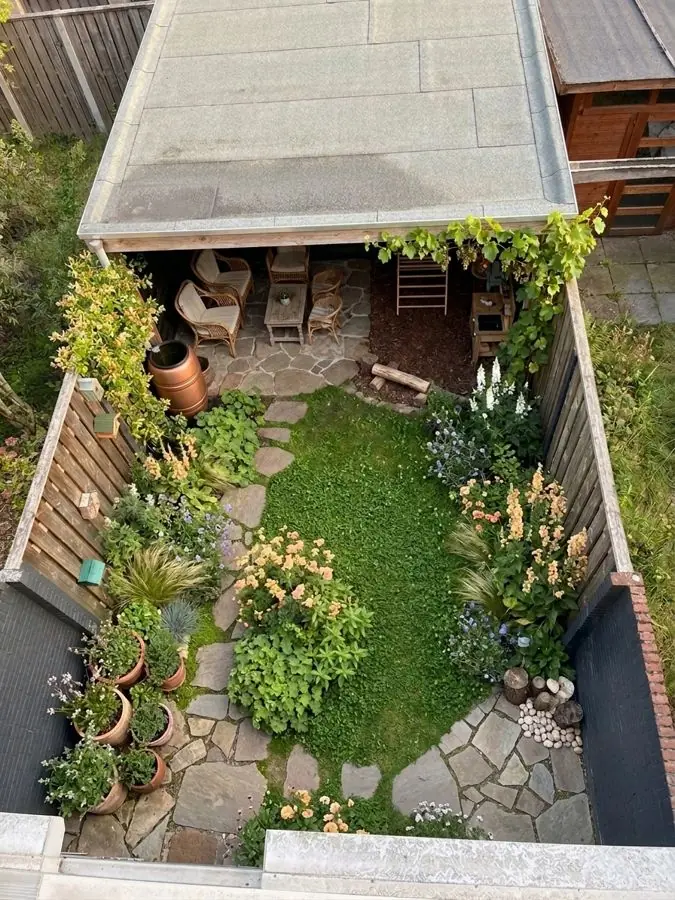
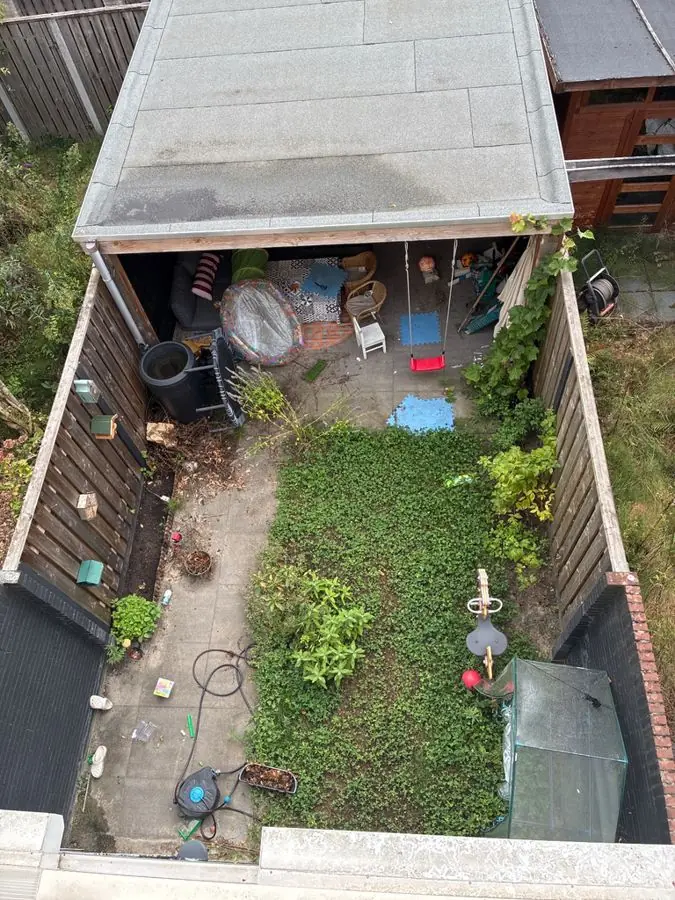
Before: a narrow yard from above, patchy grass and clutter under a shelter
Get this yard →Take the photo from where you see the yard most, like the porch, the patio or the sidewalk, so the beds, the lawn and any path are in the picture.
One photo from your phone is all it takes. Your ZIP code gives us your USDA zone, so the plants we pick can live through your winters.
Pick one of 15 styles, Cottage among them, and a color scheme, then ask for anything you want, like "roses and foxgloves along a brick path" or "a gravel path through lavender and catmint". Keep your paths and patio, or start over with a new layout.
Your real yard, redesigned, in about a minute.
See your own yard redesigned first. When you find the look you love, Pro or Max plans turn it into a yard you can plant: $39 or $65 in the US, one payment.
See what goes into a planting plan before you choose.
Your first 3 designs are free.
Watermarked and lower quality. No card needed.
| One payment, no subscription. | ||
| What you get | ||
| Designs | 20 | 50 |
| Days to use them | 14 | 30 |
| Free designs on top | 5 | 10 |
| Designs at once, side by side | 2 | 4 |
| With every design | ||
| Every plant named, ready to buy | ||
| The materials, gravel to fence, with whole yard designs | ||
| Care guide and flowering calendar | ||
| Higher quality images | ||
| No watermark | ||
| Change any design in your own words | ||
The pot size to buy and how tall each grows. Measured borders also say how many to buy.
| Plant | Pot | Height |
|---|---|---|
| Catmint 'Walker's Low'Nepeta × faassenii | Quart to 1 gal | 4 to 20 in |
| Avens 'Totally Tangerine'Geum | 1 gal | 20 in to 3 ft |
| Giant montbretiaCrocosmia masoniorum | 1 gal | 3 to 5 ft |
| Tellmann's honeysuckleLonicera × tellmanniana | 1 to 2 gal | 8 to 13 ft |
Where it grows best, how to prune it and how it gets through winter.
Every plant, the months it flowers, in its own color.
Avens 'Totally Tangerine'
Catmint 'Walker's Low'
Clematis 'The President'
Lady's mantle
Higher quality images of your design, yours to keep.
gardendesignapp.aiSay what you want different, and see it redrawn.
On whole yard designs: the pavers, gravel, edging and fence in the picture.
Anywhere in the US, we take your ZIP code and choose plants suited to your zone, your light and your soil.
What makes the style, how to lay it out, which plants last in American summers and winters, what to watch for and how to see it on your own yard first.
The cottage garden style comes from England: flowers planted close together with little bare soil between them, a path to the door and plants that seed themselves where they like. Roses, foxgloves, delphiniums, hollyhocks, lavender and catmint are the classic plants, often with herbs mixed in. It looks loose, but the best English cottage garden ideas still have order underneath: a clear path, a few plants repeated, and something with structure, like a clipped shrub, a fence or an arch, to hold the mix together. Most cottage garden inspiration you see online comes from gardens that have had years to fill in, so expect a new one to look thin in its first year.
An English cottage garden grows in a mild, damp climate with cool summers. Much of the US has hotter, more humid or drier summers and colder winters, so a plant that thrives in one state can fail in the next. Your USDA zone tells you which plants live through your winters, but not how they cope with summer heat, so check both. Delphiniums, for example, struggle where summers are hot and usually do best in cooler regions such as the Pacific Northwest and the northern states. Where summers are hot, coneflowers, black-eyed Susans, salvias and daylilies give the same full, mixed look and stand the heat better. In dry regions, lavender, yarrow and salvias suit better than plants that need steady water.
Most cottage garden layouts start with a path, straight or gently curved, from the gate or the sidewalk to the door or a seat, with deep beds on either side. Good cottage garden design puts tall plants such as hollyhocks, foxgloves and climbing roses at the back of a border or against a fence or the house, mid-height plants in front of them and low, spilling ones like catmint along the path. Repeat a few plants and colors along the beds so the mix reads as one design rather than one of everything. Let self-seeders such as foxgloves, poppies, larkspur and cosmos fill the gaps, and thin them where they come up too thick. A bench, an arch or a picket fence gives the eye somewhere to rest.
Cottage garden path ideas use simple materials: old brick, flagstone, stepping stones or gravel, with plants spilling over the edges. A main path about 4 feet wide lets two people walk side by side once the plants lean in; 2 to 3 feet is enough for a side path. Gravel costs least and drains well, but it travels on shoes and needs an edge to stay put. Brick and stone cost more and last longer, and set on a base of gravel and sand they are less likely to heave in frost.
Some people searching for cottage garden plans want a printed plan: a drawn layout with a plant list, sold by nurseries and designers or given away free online. Cottage garden layout plans like these are drawn for someone else's bed, sun and climate, so check each plant against your zone before you copy one. This app works differently: it draws the design into a photo of your own yard. On Pro or Max you also get a plant list that names each plant, with its pot size and how many, and the materials in the picture. It does not make a measured drawing, so for exact bed sizes you measure the yard yourself or ask a designer.
A cottage garden takes more work than most yards: deadheading, staking tall plants, cutting back in fall or spring and pulling seedlings where you do not want them. Low maintenance cottage garden ideas mostly mean choosing long-lived perennials and shrubs over annuals, such as shrub roses, catmint, salvias, coneflowers and daylilies, planting them close so weeds have less room, and mulching the gaps until the plants fill in. Leave out plants that need staking, like tall delphiniums, and keep a few evergreens so the beds do not look empty in winter.
Cottage gardens grew up around English cottages, often right to the front door, so the look suits a front yard well. Front yard cottage garden ideas usually start with the walk to the door: a brick, stone or gravel path lined with low flowers, beds under the windows and climbing roses on a fence, an arch or a porch post. A cottage garden front yard can replace some or all of the lawn, but check your HOA rules first, since some limit plant height, how much lawn you keep or what grows by the sidewalk. Keep tall plants back from the driveway and the corner of the lot so drivers can still see.
A small yard can hold a cottage garden if you choose fewer kinds of plants in bigger groups, since a small space with one of everything looks busy. Small cottage garden layouts often use one path, a bed on each side and height from a climbing rose or clematis on a fence or trellis rather than wide shrubs. Pots by the door add more flowers without more digging.
A soil test through your county extension service tells you the pH and what your soil lacks, usually for a small fee, before you buy anything to add. Spread mulch about 2 to 3 inches deep and keep it a few inches clear of stems, but leave some bare soil where you want foxgloves and poppies to seed. Foxgloves are usually biennial, growing leaves in their first year and flowering in their second, and every part is poisonous if eaten, so keep them away from where children play and pets chew; larkspur and delphiniums are poisonous too. Deer and rabbits eat some cottage flowers and leave others, and what they eat varies by area, so ask your extension office or your neighbors what gets eaten locally. Call 811 a few working days before you dig new beds or a path.
This draws a design and names plants. It does not survey, price, build or install anything, and it makes no measured drawings. It does not sell seed mixes or plants, and it does not mark which plants are native. Cottage garden landscaping that means laying paths, building walls or digging near buried lines belongs with a contractor, and you should call 811 before anyone digs. Your HOA may have rules for front yards, so check first. You can take the design to whoever does the work, or plant it yourself.

Comparing tools? Here is how landscape design software that draws for you compares with drawing it yourself.

Got a bare fence to soften? See fence line landscaping drawn into a photo of your yard.

On your phone? The landscape design app runs in your browser, with nothing to download.

Tired of mowing? See lawn alternatives like gravel, meadow and ground cover on your own yard.

Curious about AI? See what AI landscape design does, and which part a gardener's rules decide.

Got big trees or a shady corner? See shade garden ideas drawn into a photo of your yard.

Ready to plant? See what goes into a planting plan: every plant, how big each grows and where it goes.
It depends on your USDA zone and your summer heat. Classic choices are roses, foxgloves, hollyhocks, delphiniums, lavender, catmint, salvias, cosmos and poppies. Where summers are hot, coneflowers, black-eyed Susans and daylilies usually last better than delphiniums.
Flowers planted close together in a loose mix, with little bare soil showing, usually along a path and often with herbs, roses on a fence or arch and plants that seed themselves.
Start with the path to the door or a seat and give it deep beds on both sides. Put tall plants at the back, mid-height ones in the middle and low, spilling plants along the path, and repeat a few plants and colors so it reads as one design.
It is a rule of thumb rather than a standard: plant in groups of three, five or seven of the same plant, because odd numbers tend to look more natural than pairs or rows.
Every part of a foxglove is poisonous if eaten, so plant them away from where small children play and pets chew. Larkspur and delphiniums are poisonous too.
Yes, with plants that stand the heat. Delphiniums and some other English favorites struggle in hot summers, while coneflowers, black-eyed Susans, salvias and daylilies give a similar full look.
On Pro or Max you get a plant list that names each plant, with its pot size and how many, and the materials in the picture. It does not make a measured drawing.
No. It names the plants, and you buy them wherever you like, such as a local nursery or garden center.
Add one photo, pick the Cottage style and ask for what you want, like "roses and foxgloves along a brick path". You see your yard redesigned in about a minute, and your first 3 designs are free.
Your ZIP code gives us your USDA zone and your summer heat, and the plants come from a list of more than 1,400 chosen for your winters, your light and your soil.
No. It runs in your browser, on a phone or a computer.
Add one photo of your yard and see it redesigned in about a minute. Your first 3 designs are free, with no card.
Design my yard