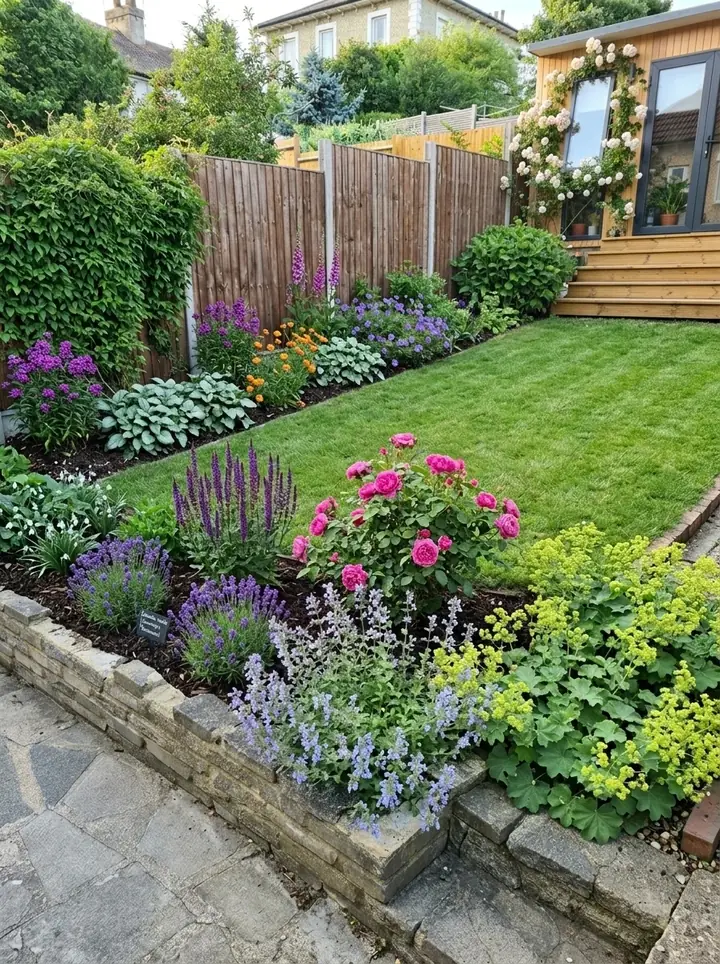
How to decide what to plant in my garden: five questions
If you are standing in the yard asking "what should I plant in my garden?", the honest answer is that the best things to plant in a garden are the ones that suit it. A plant that thrives in one bed can sulk in the bed next to it. Oklahoma State University Extension puts it simply: every landscape has its own amount and type of sunlight, soil, moisture and hardiness zone, and plants do best when they match all four. Work through these five questions before you shop. Or skip the guesswork: add a photo of your yard and your ZIP code to Garden Design App, and in about a minute you see it redesigned with plants picked for your USDA zone, your summer heat, your light and your soil.
- Find your hardiness zone. The USDA Plant Hardiness Zone Map shows it when you type in your ZIP code.
- Count the sun. Note how many hours of direct sun each bed gets on a clear day.
- Check the soil. Does water drain away after rain, or sit in puddles?
- Measure the space, so you know how much room each bed really has.
- Decide what you want from it: flowers for color, a screen for privacy, food, or a yard that mostly looks after itself.
Start with your USDA plant hardiness zone
The USDA calls its Plant Hardiness Zone Map the standard gardeners use to tell which perennial plants are most likely to thrive in a place. Each zone is based on the average annual extreme minimum winter temperature, shown in zones 10 degrees F wide that are split into half zones of 5 degrees F. Enter your ZIP code on the USDA map and it shows your zone.
Then read the plant tag. Oklahoma State University Extension notes that plant labels and catalog listings usually give a hardiness rating that matches the USDA map. If your zone is inside the range on the tag, the plant should survive your winters. The zone tells you nothing about summer heat, rainfall or soil, so it is the first filter, not the only one. Garden Design App does this step for you: add your ZIP code and every plant in your design is picked for your USDA zone.
Then match sun, soil, water and space
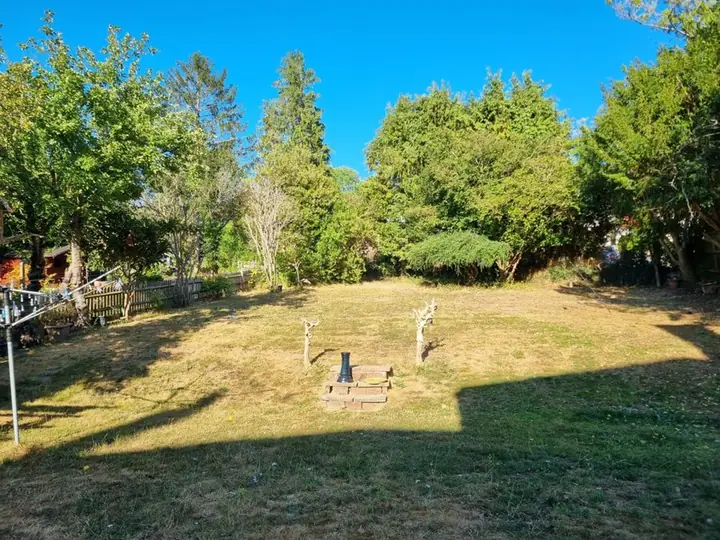 Before
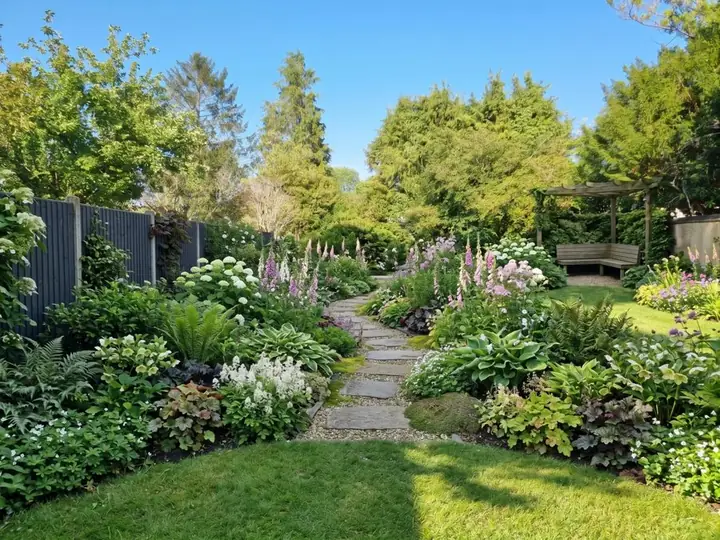 After
Sun and shade
Plant tags say full sun, part sun or shade. Oklahoma State University Extension defines full sun as at least 6 hours of direct light, and points out that afternoon sun is hotter and more intense than morning sun. Shade runs from the indirect light on the north side of a house to the deep shade under evergreens, and true shade plants, such as many ferns, can die in too much sun.
Soil and water
Some plants thrive in wet conditions while others need well drained soil, the same extension column says. After a heavy rain, see where water lingers. A low, soggy corner wants different plants from a dry bed against the house.
Space and what you want
Then pick for the job. If the job is color, the flower picks below help. If you want privacy, food or less work, say so at the nursery and ask which plants rated for your zone and light do that job.
What can I plant in my garden now? What to plant in fall and early winter
So what can I plant in my garden now? In fall and early winter, it depends on where you live. To work out what to plant now by ZIP code, use two lookups: type your ZIP code into the USDA map for your zone, and check your state's extension office for your own first frost date. The dates below are examples from Iowa and Illinois. Fall planting works because, as University of Illinois Extension explains, soils hold onto heat longer while the air cools, which gives new roots time to establish before winter. In Iowa, spring bulbs can still go in as late as December if the ground is not frozen; Iowa State gives earlier fall planting windows for trees, shrubs and perennials.
- Bulbs: if you are asking what flowers can I plant now, in fall the answer in these guides is spring bulbs. Iowa State University Extension suggests planting large bulbs such as tulips, daffodils and hyacinths 6 to 8 inches deep, and small ones such as crocus, squill and snowdrops 3 to 4 inches deep. Nearly all need well drained soil.
- Perennials: water them well when you plant, and as needed up to the first hard frost (University of Illinois Extension). Iowa State adds a few inches of mulch, such as straw or pine needles, in late fall.
- Don't rush bulbs: planted too early, while the soil is still warm, some tulips come up in fall (Iowa State).
| What to plant | When (the extension guide's dates for its state) | Source |
|---|---|---|
| Spring bulbs: tulips, daffodils, hyacinths, crocus | Iowa: October is ideal; as late as December if the ground is not frozen | Iowa State University Extension |
| Deciduous trees and shrubs | Iowa: August through early November | Iowa State University Extension |
| Evergreens such as pine and spruce | Iowa: mid August through September; those planted in late October or November may not settle in before winter | Iowa State University Extension |
| Trees, spring and summer flowering shrubs, spring blooming ephemerals | About six weeks before the first frost | University of Illinois Extension |
| Garlic | Iowa: October to early November | Iowa State University Extension |
What flowers should I plant in my garden? Starter picks
If you are wondering what flowers should I plant in my garden, start with plants that the extension guides name and that suit your zone and light. Check each tag against your zone, sun and soil.
- For spring color, where the ground is still workable (Iowa State gives October to December for Iowa): daffodils, tulips, hyacinths and crocus. Iowa State says most bulbs want full or part sun, and early bulbs often do well beneath a deciduous tree with high branches because they usually flower before it fully leafs out.
- For big drifts: Iowa State suggests at least five of one variety for large bulbs, and at least 25 of small ones such as grape hyacinths and crocus, ideally 50 or more.
- Perennials: peony, iris, daylily and garden phlox, which Iowa State lists among the perennials you can move or divide in late summer and early fall.
- For fall containers and beds: cool season annuals. Iowa State says many tolerate a light frost, often surviving down to 28°F, and add color late into autumn.
What should I plant in my flower garden to make it look planned?
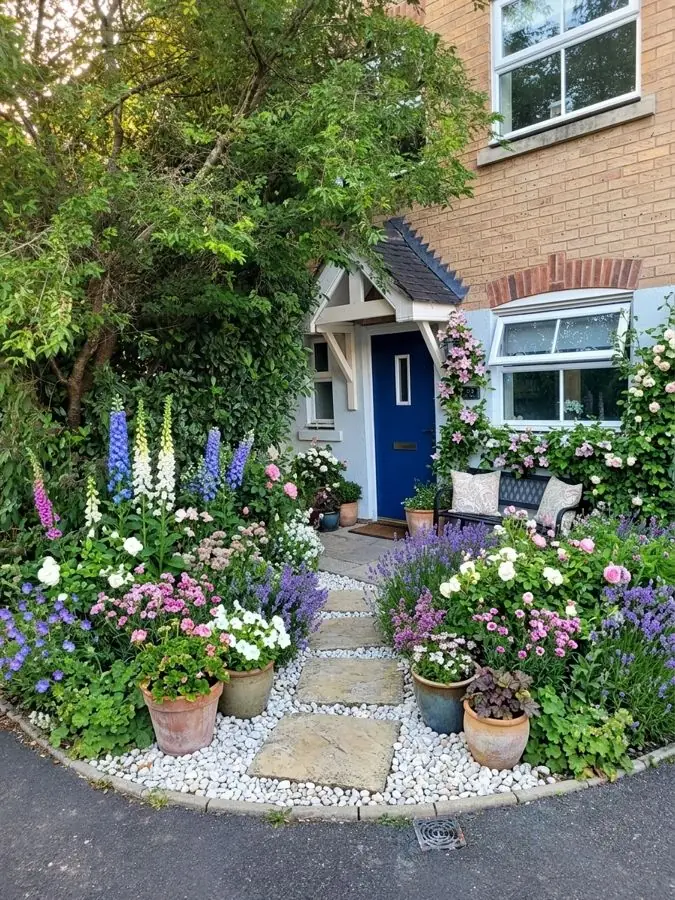
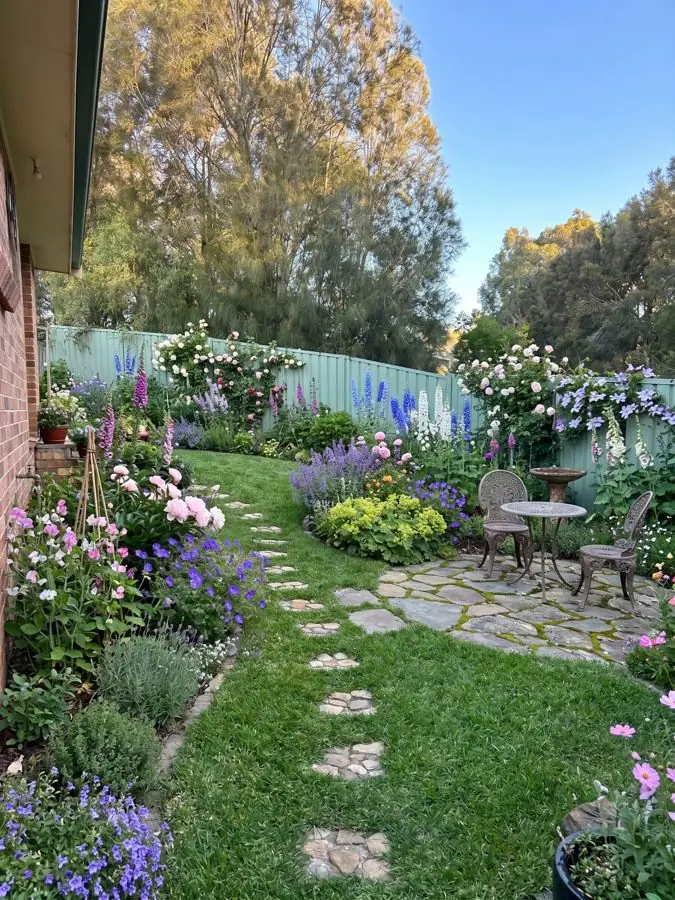
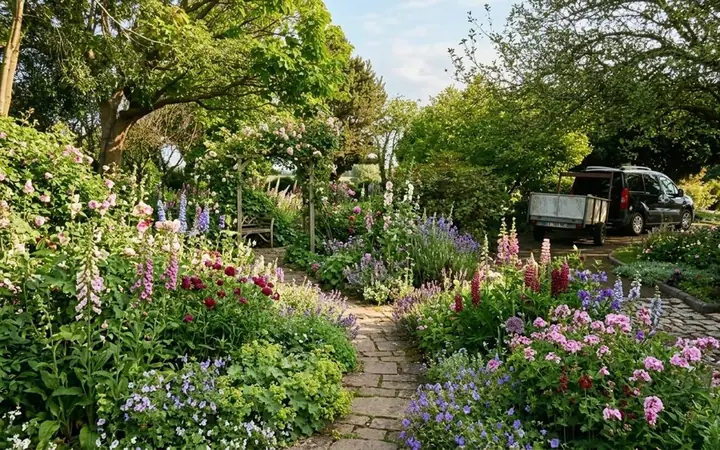
Once you know what grows, the question "what should I plant in my flower garden?" becomes one of arrangement. Plant bulbs in groups or clusters. Iowa State notes that bulbs planted one at a time or in single rows are generally not as effective. For early blooming bulbs, Iowa State's spring bulb guide suggests a spot along a commonly used walkway or near the front door, where the flowers will be seen.
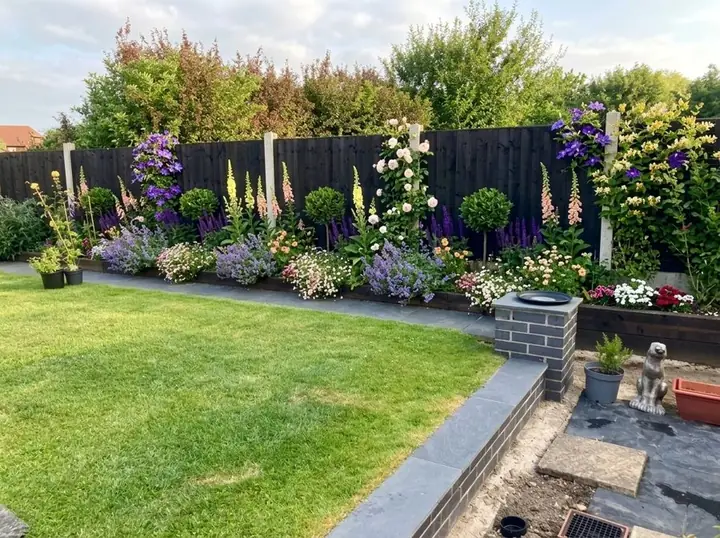
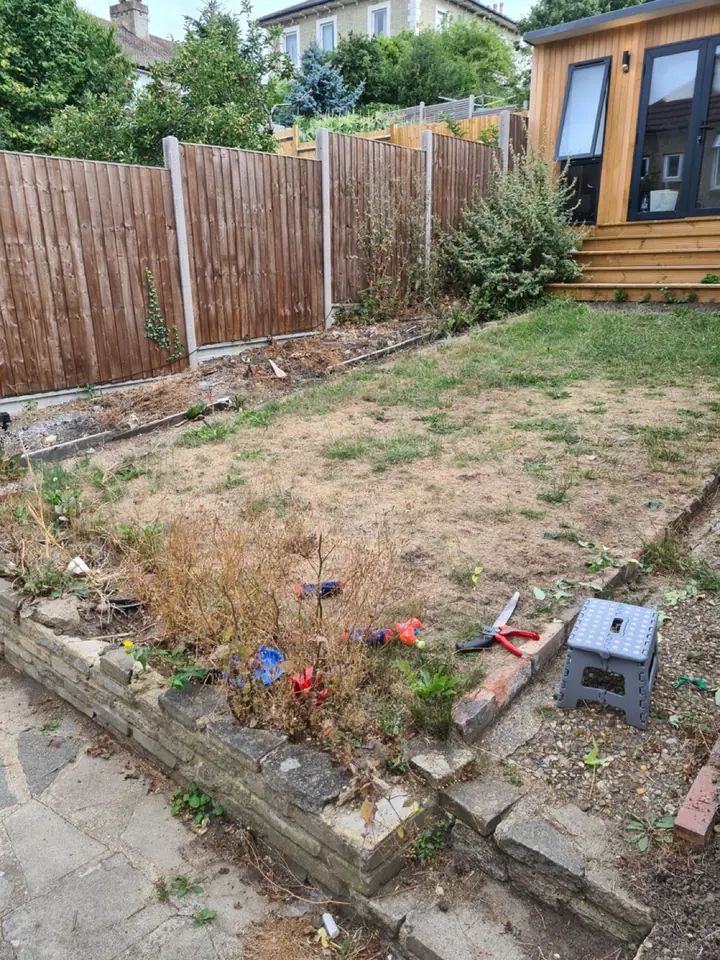
This is where seeing it first helps. With Garden Design App you add a photo of your yard and get your yard redesigned in about a minute, with plants picked for where you live. Our planting plan then names every plant, so you can take the list to the nursery and check each tag against your zone and light.
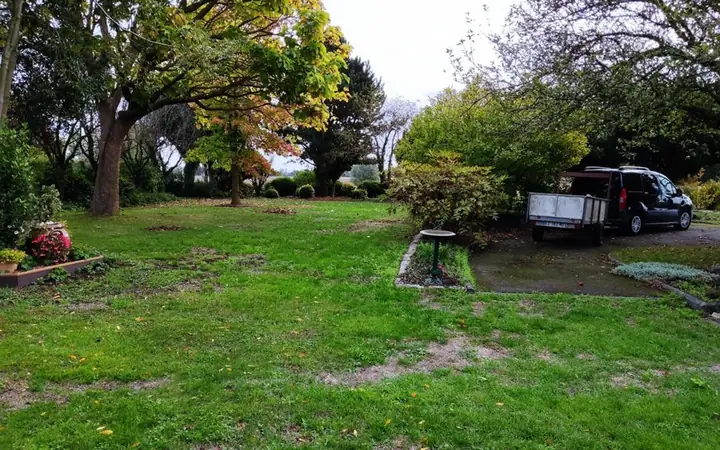 Before
 After
Why use Garden Design App?
You do not need to know plant names or draw to scale.
Your own yard, from one photo
One photo from your phone is all it takes. Your real yard, planted, in about a minute.
Ask for anything you want
Pick one of 15 styles and a color scheme, then ask for anything you want, like “add a fire pit” or “more shade”.
Keep what works
Keep your paths and patio, or start over with a new layout.
A designer’s structure
Height, color and balance arranged the way a professional would.
Plants for your zone
Your ZIP code gives us your USDA zone, so the plants we pick can live through your winters.
Nothing to download
This online landscape design runs in your browser with nothing to download.
Questions people ask
How do I find my USDA hardiness zone?
Type your ZIP code into the USDA Plant Hardiness Zone Map. It shows your zone and half zone. Then pick plants whose tag includes your zone.
How do I find plants for my zone?
Read the plant tag or catalog listing. Oklahoma State University Extension notes that these usually give a hardiness rating that matches the USDA map, a number tied to average minimum winter temperatures. Pick plants whose rating includes your zone. The zone says nothing about summer heat, rainfall or soil, so check the light and drainage too. Or add a photo of your yard and your ZIP code to Garden Design App, and every plant in your design is picked for your USDA zone.
What plants should I plant in my garden if I am a beginner?
The best garden plants for beginners are ones rated for your zone that suit your light. In fall, spring bulbs such as daffodils and tulips go in well drained soil and full or part sun (Iowa State University Extension), and Iowa State calls late summer and early fall an excellent time to plant many perennials. Add a few at a time and see what thrives.
What should I plant now in my garden in November?
What to plant in November depends on your state. In Iowa, Iowa State University Extension says spring bulbs such as tulips and daffodils can go in as late as December if the ground is not frozen, and deciduous trees and shrubs through early November. Check your state's extension office for your own dates.
Is it too late to plant perennials in fall?
University of Illinois Extension advises planting trees, spring and summer flowering shrubs and spring blooming ephemerals about six weeks before the first frost, so roots have time to establish. Iowa State University Extension also calls late summer and early fall an excellent time to plant many perennials.
How many hours of sun is full sun?
Oklahoma State University Extension defines full sun as at least 6 hours of direct light a day. Afternoon sun is hotter than morning sun.
Can an app tell me what to plant in my garden?
Garden Design App redesigns your yard from a photo in about a minute, with plants picked for your USDA zone, and Pro or Max plans add a professional planting plan naming every plant. Your first 3 designs are free.
Sources (6)
- USDA Agricultural Research Service, Plant Hardiness Zone Map, read November 14, 2026
- Oklahoma State University Extension, Put the right plant in the right place (2022), read November 14, 2026
- Iowa State University Extension, Planting in late summer and early fall, read November 14, 2026
- Iowa State University Extension, Selecting and planting spring-blooming bulbs, read November 14, 2026
- University of Illinois Extension, Establishing perennials in the early fall, read November 14, 2026
- Garden Design App, US homepage, read November 13, 2026